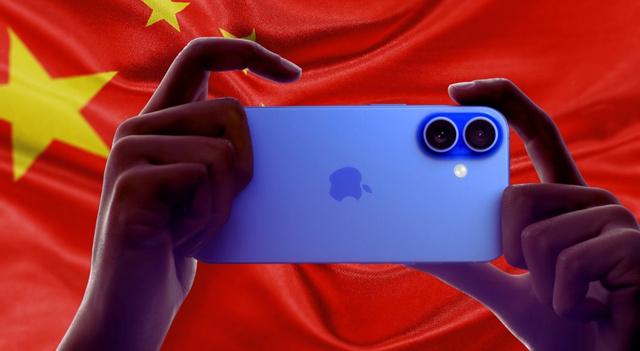
Apple’s iPhone sales in the U.S. spiked sharply year-over-year in April, with new data suggesting consumer anxiety over potential tariffs may have prompted a wave of panic buying, according to a recent survey from KeyBanc Capital Markets.
Using its proprietary Key First Look Data (KFLD), KeyBanc reported a 34% increase in iPhone sell-through compared to April 2024, which had seen a 24% decline. Analysts attributed the unexpected surge to consumers rushing to buy iPhones ahead of feared tariff-driven price hikes.
While the year-over-year data showed strong gains, month-over-month trends were more subdued. April iPhone sales in the U.S. declined 4% compared to March, falling short of the five-year average drop of 3%. In-store sales dipped 6% m/m but grew 20% y/y, while online sales slipped 1% m/m and surged 52% y/y.
For context, March iPhone sales had climbed 12% m/m, outpacing the historical average of 3%, and rose 9% y/y.
Apple’s broader hardware spending metrics also showed improvement. According to KFLD, indexed spending fell just 2% m/m in April—far better than the average three-year drop of 16%—and jumped 38% y/y, compared to 17% growth in March. Analysts attributed this to both tariff concerns and momentum from March product launches.
However, the picture wasn’t entirely rosy. KeyBanc highlighted a negative sales mix shift: demand for higher-end models like the iPhone 16 Pro and Pro Max lagged, while inventories for those devices increased. Conversely, base model iPhones saw stronger demand, and the premium iPhone SE4 underperformed.
“This reflects indirect impacts of tariffs and overall market uncertainty,” the firm noted, pointing to a consumer pivot toward lower-priced devices.
In response, carriers ramped up promotions:
Verizon boosted trade-in credits for the iPhone 16 Pro Max to $1,200.
T-Mobile launched its first no trade-in deal for the Pro model, offering up to $1,000 in credits with trade-ins.
AT&T kept existing promotions but eased some trade-in requirements.
Despite the sales boost, KeyBanc sees the April results as a negative for Apple’s supply chain, citing excess inventories and weaker margins from increased lower-end sales. The report specifically named Arm Holdings (NASDAQ:ARM), Broadcom (NASDAQ:AVGO), Cirrus Logic (NASDAQ:CRUS), Qualcomm (NASDAQ:QCOM), Qorvo (NASDAQ:QRVO), and Skyworks Solutions (NASDAQ:SWKS) as potential downstream concerns.
The firm maintained a Sector Weight rating on Apple (NASDAQ: AAPL), pointing to subdued upgrade activity around the iPhone 16 and Apple Intelligence, as well as several lingering headwinds: ambitious 2026 growth targets, a slow upgrade cycle, intense competition in China, and regulatory pressures tied to its Services segment.
With Apple trading at roughly 21x projected 2026 EBITDA, in line with its three-year average, KeyBanc concluded the stock looks “expensive” relative to its current growth trajectory.