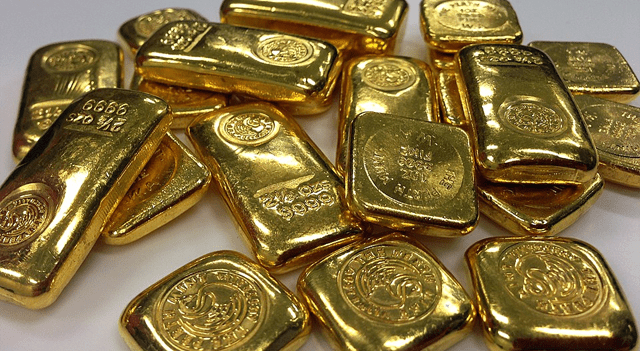
Gold prices are closing in on the $5,000 mark, buoyed by escalating geopolitical tensions and renewed concerns over the independence of the U.S. Federal Reserve—factors that have weighed heavily on the dollar and intensified demand for alternative safe-haven assets.
In early trading, spot gold touched a new record of $4,967.48 an ounce, extending weekly gains to roughly 8%. February futures were trading at $6,969.69. Silver followed gold’s lead, surging to a fresh all-time high of $99.38 an ounce in spot markets.
After delivering its strongest annual performance since 1979, gold has continued its sharp ascent, rising a further 15% since the start of the year. Fresh criticism of the Federal Reserve by U.S. President Donald Trump, alongside military intervention in Venezuela and renewed threats to annex Greenland, have reinvigorated what investors describe as the “degrade trade”—a move away from sovereign bonds and currencies toward hard assets such as gold.
“Gold is undergoing a steady revaluation, as cracks in the postwar rules-based order appear,” said Yuxuan Tang, head of Asia macroeconomic strategy at JP Morgan Private Bank. “Investors are increasingly seeing gold as a reliable hedge against these hard-to-quantify regime-change risks,” he added.
Supply-side constraints are also amplifying price sensitivity. “Gold supply is not sufficient to diversify the US market and political tensions, which makes price ceilings quite fragile,” explains Ahmad Assiri, strategist at Pepperstone Ltd Group.
Central bank demand remains a key pillar of support. Poland’s central bank—the world’s largest buyer of gold—approved plans this week to acquire an additional 150 tonnes amid heightened geopolitical instability. At the same time, India’s holdings of U.S. Treasuries have fallen to a five-year low, while allocations to gold and other alternative assets have increased, reflecting a broader diversification trend among major economies away from the world’s largest bond market.
Markets are also watching developments in Washington closely. Investors are awaiting President Trump’s nomination for the next Federal Reserve chair after he said discussions with candidates had concluded and reiterated that he has a preferred choice. A more dovish appointment could reinforce expectations for further interest rate cuts this year—supportive for precious metals following three consecutive reductions.
Geopolitical negotiations are adding another layer of uncertainty, with investors monitoring talks between Russian President Vladimir Putin and U.S. envoys Steve Witkoff and Jared Kushner on a proposed peace plan to end the war in Ukraine.
Bullish sentiment has prompted banks to lift price targets. Goldman Sachs raised its year-end gold forecast to $5,400 an ounce from $4,900, citing robust demand from private investors and central banks. The bank attributes the rally to sustained inflows into Western ETFs and continued purchases by emerging market central banks, estimated at around 70 tonnes annually in 2026, as part of a longer-term currency diversification strategy.
JP Morgan projects an average gold price near $5,055 in the fourth quarter of 2026, underpinned by elevated official-sector demand of roughly 755 tonnes per year—well above pre-2022 norms—and a gradual increase in institutional portfolio allocations to gold.
Other major lenders, including UBS, Bank of America, Morgan Stanley and Deutsche Bank, have clustered around 2026 price targets between $4,800 and $5,000 an ounce. Some forecasts anticipate a sustained move above $5,000 between late 2026 and 2027, driven by persistent geopolitical stress, debt sustainability concerns, a potential revival of ETF inflows and mine supply struggling to keep pace.
Strategists increasingly argue that gold is “breaking historical rules.” After surging in 2025 and reaching new highs in 2026, the metal is widely seen as a potential top-performing asset again this year. However, analysts caution that any easing in fiscal or monetary pressures—or reduced demand for macro hedges—could trigger profit-taking and inject greater volatility into the climb toward projected price levels.
Silver, benefiting from gold’s momentum, has more than tripled over the past year. The metal has also been propelled by an unprecedented short squeeze and strong retail demand, forcing banks and refiners to scramble to meet surging physical requirements.
Uncertainty around changes to China’s export licensing rules has heightened perceptions of supply scarcity, while volatility remains elevated even after the United States opted not to impose sweeping tariffs on imports of key minerals, including silver and platinum.
High prices and sharp market swings are reshaping risk behaviour among financial institutions. According to Robert Gottlieb, a former precious metals trader, banks can no longer operate as they once did. This means banks “have to significantly reduce their positions, resulting in greater volatility and wider spreads,” he said.