Tesla Inc (NASDAQ:TSLA) posted fourth-quarter results that came in ahead of Wall Street expectations, highlighting a growing strategic emphasis on artificial intelligence even as its core automotive operations continue to face pressure.
Shares of the electric-vehicle maker inched higher in premarket U.S. trading after the company reported adjusted earnings of $0.50 per share on revenue of $24.9 billion, beating consensus forecasts of $0.45 per share and $24.78 billion, respectively.
A key feature of the update was the board’s approval of a $2 billion investment in xAI, Elon Musk’s artificial intelligence startup. The move forms part of a broader strategy to fuse digital intelligence with physical products. Management characterised 2025 as a turning point marked by the company’s “transition from a hardware-centric business to a physical AI company.”
Automotive revenue declined 11% year on year during the quarter, but this was partly offset by strong momentum in other areas. Tesla’s energy storage segment achieved record deployments of 14.2 gigawatt-hours, while the group said its vertically integrated structure enables it to “identify the limiting factor and develop bespoke and scalable solutions” across its product portfolio.
The company also flagged progress in autonomy, noting the removal of safety monitors from its Robotaxi fleet in Austin. This milestone is designed to support an expansion in service coverage as the offering moves toward a fully unsupervised operating model across the Austin metropolitan area.
Efficiency gains offered some relief, with total unadjusted gross margin rising to 20.1% despite lower vehicle deliveries. Looking ahead, Tesla plans to scale up six new production lines for vehicles, robots and batteries in 2026 as it prepares for its next phase of growth.
Capital expenditure remained elevated at $8.5 billion for the full year, reflecting continued investment in the company’s “Cortex” AI training clusters in Texas. Tesla said it aims to “maximize capital efficiency by scaling training compute judiciously” as demand for its AI-driven products and services expands.
The humanoid robot programme, Optimus, continues to be positioned as a major long-term growth driver. A third-generation design is scheduled to be unveiled in the first quarter and is intended for mass production, with an eventual target capacity of one million units per year. “First generation production lines for Optimus are being installed in anticipation of volume production,” management said.
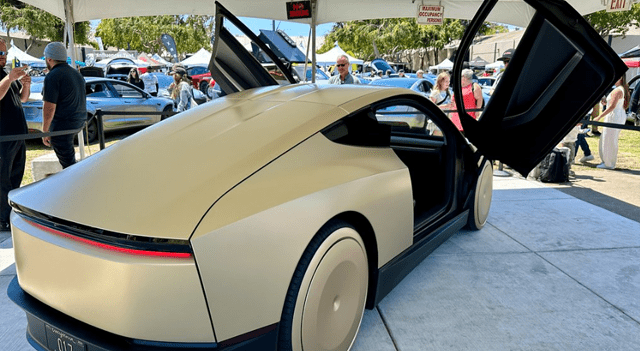
Tesla, which has ceded its position as the world’s largest EV manufacturer, closed the year with $44.1 billion in cash and investments. Investor attention is now shifting to the planned production ramp-ups of the Tesla Semi and the Cybercab, both expected in the first half of 2026.
“While we continue to believe that Tesla will grow its broader AI related businesses over time (with the company having competitive strengths in our view including with its data access, engineering capabilities, and vertical integration/cost), we also expect competition to moderate the degree of profit growth,” analysts at Goldman Sachs said in a note.