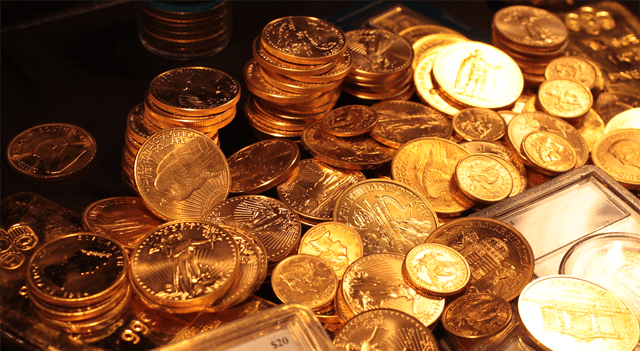
Gold prices ticked lower on Tuesday, giving back part of the previous session’s strong advance as investors stayed cautious ahead of a heavy slate of U.S. economic releases later this week.
Other precious metals also moved lower. Silver and platinum declined despite some overnight support from a weaker dollar, which later stabilized during Asian trading hours.
By 08:15 ET (13:15 GMT), spot gold was down 0.3% at $5,042.29 an ounce, while April gold futures slipped 0.3% to $5,064.31 per ounce. Spot silver fell 0.8% to $81.575 per ounce, and spot platinum dropped 1.1% to $2,094.35 per ounce.
Gold, metals remain volatile as dip-buying stays cautious
Precious metals have experienced pronounced price swings over the past week, as profit-taking and crowded positioning pushed prices off record highs. Uncertainty surrounding U.S. monetary policy — particularly ahead of a possible leadership change at the Federal Reserve — has added to the volatility.
Safe-haven demand has also been uneven amid mixed signals from U.S.-Iran relations. While officials pointed to some progress in nuclear talks over the weekend, Washington nonetheless issued a warning on Monday advising U.S.-flagged vessels transiting the Strait of Hormuz to exercise caution.
Although gold and other metals have recovered some recent losses, prices remain well below the peaks reached in late January, with traders appearing hesitant to chase the rebound.
“Dip-buying has been selective rather than aggressive, indicating participants are still sensitive to macro signals,” OCBC analysts said in a note.
They added that while de-dollarization trends have supported gold over the past year, near-term price direction will still depend largely on the U.S. labor market and its implications for monetary policy.
Analysts at Heraeus noted that gold and silver are no longer behaving like traditional safe-haven assets and have instead entered a period of heightened volatility.
“The seeds of the price decline were sown in the preceding rally that for a supposedly low-volatility safe-haven asset was exceptional,” Heraeus said. “The price of gold has gone up 5x in 10 years but the dollar index is at the same level that it was in 2015. With such a sharp price drop there was likely an element of leveraged positions being unwound, with stop losses being hit and rising margin requirements. Exchanges are still raising margin requirements for futures’ positions.”
U.S. data-heavy week in focus
Attention this week is firmly on key U.S. economic indicators that could offer further clarity on the health of the world’s largest economy and the outlook for interest rates.
December retail sales figures are being closely watched for signs of consumer resilience as labor market conditions show signs of strain. January nonfarm payrolls data is due on Wednesday, followed by the latest consumer price index reading on Friday. Both releases are expected to play an important role in shaping Federal Reserve policy expectations, given the central bank’s focus on inflation and employment.
Markets are also continuing to assess the potential impact of Kevin Warsh, U.S. President Donald Trump’s nominee to succeed Jerome Powell as Fed chair when his term ends in May.
Warsh is widely seen as less dovish, and his nomination previously triggered sharp sell-offs across precious metals markets — losses that have yet to be fully recovered. Gold fell from near-record levels around $5,600 per ounce, while silver dropped from highs above $120 per ounce.