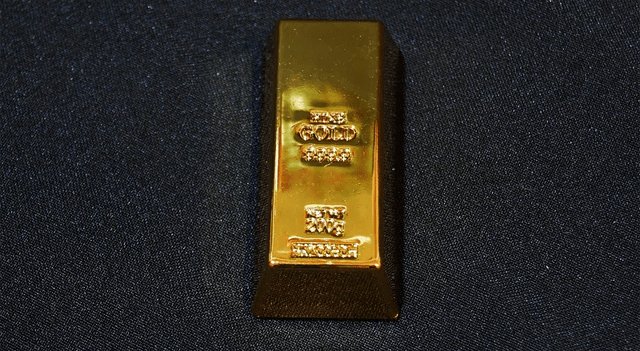
Gold prices moved higher on Thursday as intensifying conflict in the Middle East reinforced demand for safe-haven assets.
At 06:05 ET (11:05 GMT), spot gold was up 0.5% at $5,167.00 per ounce after earlier climbing above $5,200/oz during the session. U.S. gold futures rose 0.8% to $5,176.35/oz.
The precious metal had already gained about 1% in the previous session. That rebound followed a sharp pullback of nearly 5% on Tuesday when a stronger U.S. dollar pressured prices.
Gold supported by persistent Middle East tensions
Geopolitical risks remain high after the United States sank an Iranian warship in international waters, while Iran continued missile launches across several countries in the region and reportedly targeted critical energy infrastructure.
The escalation has heightened concerns about a prolonged regional conflict, prompting investors to scale back exposure to riskier assets and turn to gold, traditionally viewed as a store of value during geopolitical instability and market volatility.
“Looking ahead, gold faces competing macro forces,” said analysts at ING in a research note. “The inflationary impact of the Middle East conflict, via sharply higher energy prices, could reinforce expectations of higher interest rates for longer — a headwind for non yielding assets such as gold.”
“However, elevated geopolitical uncertainty continues to support a risk premium, helping to underpin prices despite the challenging rates backdrop,” they added.
Dollar strength restrains gold’s advance
Traders are also closely monitoring the U.S. Dollar Index, which rebounded on Thursday after falling 0.3% overnight. The index had logged two straight sessions of solid gains earlier in the week.
A stronger dollar tends to weigh on gold by making the metal more expensive for buyers using other currencies.
“Uncertainty typically supports safe havens, implying upside for gold,” Morgan Stanley strategists led by Amy Gower wrote in a note, but added that recent price action has been “more mixed with USD strength.”
Several factors are currently shaping gold prices at the same time, including expectations around Federal Reserve interest-rate cuts, currency fluctuations, geopolitical tensions and broader market liquidity conditions.
According to the strategists, the recent sell-off in gold may reflect investors raising cash during periods of market stress rather than a change in the broader outlook.
“We think gold’s underperformance is likely to be temporary if the current situation continues, with recent selling most likely due to the need for liquidity,” the strategists said.
Among other precious metals, silver climbed 1.6% to $84.53 per ounce, while platinum rose 1% to $2,176.200/oz.
Benchmark copper futures on the London Metal Exchange declined 1.2% to $12,904.00 per ton, while U.S. copper futures dropped 1.3% to $5.8308 per pound.