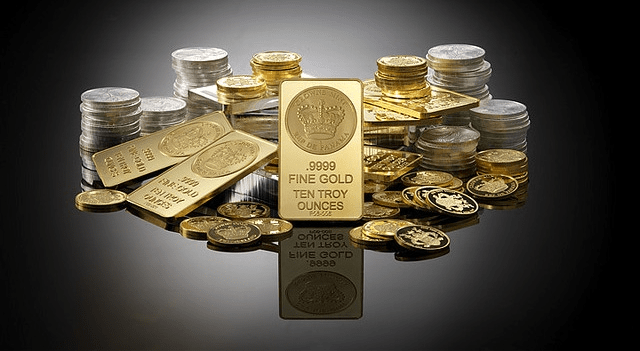
Gold prices moved lower during Asian trading on Thursday, dropping back into the range that has held for more than a week as the ongoing U.S.-Israel conflict with Iran continued to support oil prices and the U.S. dollar.
Although bullion remained largely confined between $5,000 and $5,200 per ounce, it continued to show some resilience as geopolitical tensions maintained a degree of safe-haven demand.
Spot gold declined 0.6% to $5,147.05 per ounce by 01:33 ET (05:33 GMT), while gold futures fell 0.5% to $5,151.86 per ounce.
Gold pressured as Iran conflict fuels inflation worries and supports the dollar
Gold came under pressure as continued fighting between the U.S., Israel and Iran kept investor attention focused on the strengthening dollar and surging oil prices.
The dollar index gained 0.2% in Asian trading, hovering near a two-month high.
Crude prices jumped sharply on Thursday, briefly rising above $100 per barrel after media reports indicated that two international oil tankers had been struck near Iraq. Additional reports suggested Oman was evacuating a major oil export terminal, while Iran was seen blocking the Strait of Hormuz, a crucial route for about one-fifth of the world’s oil supply.
Higher oil prices heightened concerns that inflation could rise over the longer term, which in turn fueled expectations that central banks may adopt a more hawkish stance in the months ahead — a scenario that typically weighs on gold.
Other precious metals also declined on Thursday. Spot silver slipped 0.2% to $85.5635 per ounce, while spot platinum edged down 0.1% to $2,167.26 per ounce.
Conflicting signals surrounding the Iran conflict have also triggered volatile moves in metal markets this week. U.S. President Donald Trump and several officials have repeatedly suggested that the war with Iran could be nearing an end, despite the ongoing clashes between the U.S., Israel and Iran.
February CPI offers limited guidance; focus turns to PCE data
Gold briefly moved above $5,200 per ounce on Wednesday but retreated below that level following the release of U.S. consumer price index data.
Although the February CPI figures came in line with expectations, they did little to ease concerns about the possibility of higher inflation driven by rising energy prices.
Attention this week is now turning to the January reading of the PCE price index, scheduled for release on Friday, which could provide clearer signals on inflation trends.
The PCE index is the Federal Reserve’s preferred measure of inflation and is likely to play an important role in shaping longer-term expectations for price growth.
While the upcoming data is unlikely to capture the immediate impact of energy price shocks linked to the Iran conflict, it is expected to provide additional insight into the performance of the U.S. economy during the first month of 2026.