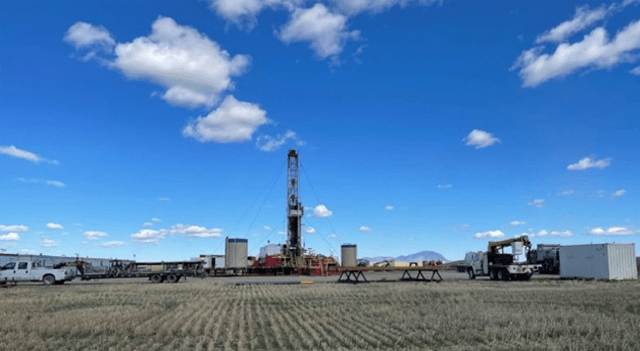
U.S. Energy Corp (NASDAQ:USEG) has secured a five-year helium offtake agreement with an investment-grade counterparty, marking a major step toward predictable, long-term cash flow. This milestone, alongside recently secured funding, positions the company’s Big Sky Carbon Hub as a transitioning asset—from development stage to a contracted industrial gas platform with clear visibility on revenue and production timelines.
A recent interview with the CEO of U.S. Energy, Ryan Smith discusses the following highlights from the agreement:
- Key terms of the 5-year helium offtake agreement
- Why plant-gate pricing materially improves margins
- Transition from development to contracted cash flow model
- Major upcoming milestones, including EPA approval and first production
- Strategic implications for Phase Two and long-term growth
Ricki:
In energy projects, funding gets you started, but long-term contracts are what actually de-risk the business. So what happens when both fall into place? Today we’re looking at how a new helium offtake agreement could lock in cashflow and what that means as US energy moves towards commercial operations. And I’m joined once again by Ryan Smith, president and CEO of U.S. Energy Corp. Ryan, welcome back to the Watchlist.
Ryan:
Hey Ricki, good morning and good to see you.
Ricki:
It’s always a pleasure. So tell us, Ryan, you’ve just announced a five year helium offtake agreement with an investment grade counterparty, which establishes long-term contracted cashflow for Big Sky. Can you walk us through the key highlights of that agreement and what it means for the business?
Ryan:
Yeah, absolutely. And again, thanks for having me. So this is a defining milestone for U.S. Energy and for our big Sky Carbon hub in Montana. The agreement is a five year helium sales contract with an investment grade industrial gas company with global distribution infrastructure one of the largest helium purchases in the world. It’s a take or pay structure on 100% of the helium produced at our Big Sky facility with pricing fixed at $285 per MCF and annual CPI escalation beginning in 2028. And the point I would really emphasize is that the $285 is an all in plant gate price. Our counterparty picks up the helium at our facility and handles all downstream transportation, tolling and distribution. That’s meaningfully different from how most helium pricing gets quoted in the industry, where a hundred dollars or sometimes significantly more per MCF of downstream costs often sit with the producer. The pricing we are reporting is what we keep.
Ricki:
And so with this offtake signed, Ryan, your expanded debt facility closed last week and first production targeted for Q1 2027. U.S. Energy looks materially different than it did a few months ago. So what does this agreement unlock for the company going forward and what should investors be watching for next?
Ryan:
Yeah, you’re right. The company looks fundamentally different than it did even a few months ago with the expanded debt facility that closed on April 20th. And this offtake now signed phase one at Big Sky is funded and a meaningful portion of our long-term cash flow is contracted with an investment grade counterparty. We’ve moved from a development stage asset to a contracted industrial gas platform, and I think that’s a real inflection point for how investors should think about US energy going forward. And what this unlocks for us is optionality. We’ve deliberately preserved future volumes for further commercial arrangements. The contract gives us a look at the market again at year three through a redetermination mechanism. And this relationship brings credibility that matters greatly as we advance planning for phase two. And in terms of what’s next, there are really three concrete dated milestones investors should be watching. First is the EPA approval of our MRV submissions, which we’re expecting this summer and which unlocks our carbon credit stream. Second, continued execution on phase one construction through the back half of 2026 and third first commercial operations in the first quarter of 2027. We believe the combination of funded CapEx contracted cash flow, three independent revenue streams and a clear path to first production is a differentiated story, and we are focused every day on executing against it.
Ricki:
So we’re marking a shift from development into a more de-risk revenue backed model where execution and delivery will now be the key drivers of value. Thank you for your time today, Ryan.
Ryan:
Awesome, thanks Ricki. Appreciate it.
Ricki:
Once again, that was Ryan Smith, President and CEO of U.S. Energy Corp. For more on the Big Sky Carbon hub and the company’s strategy, visit usnrg.com
That’s all for this episode of the Watchlist. I’m Ricki Lee, make good choices today.