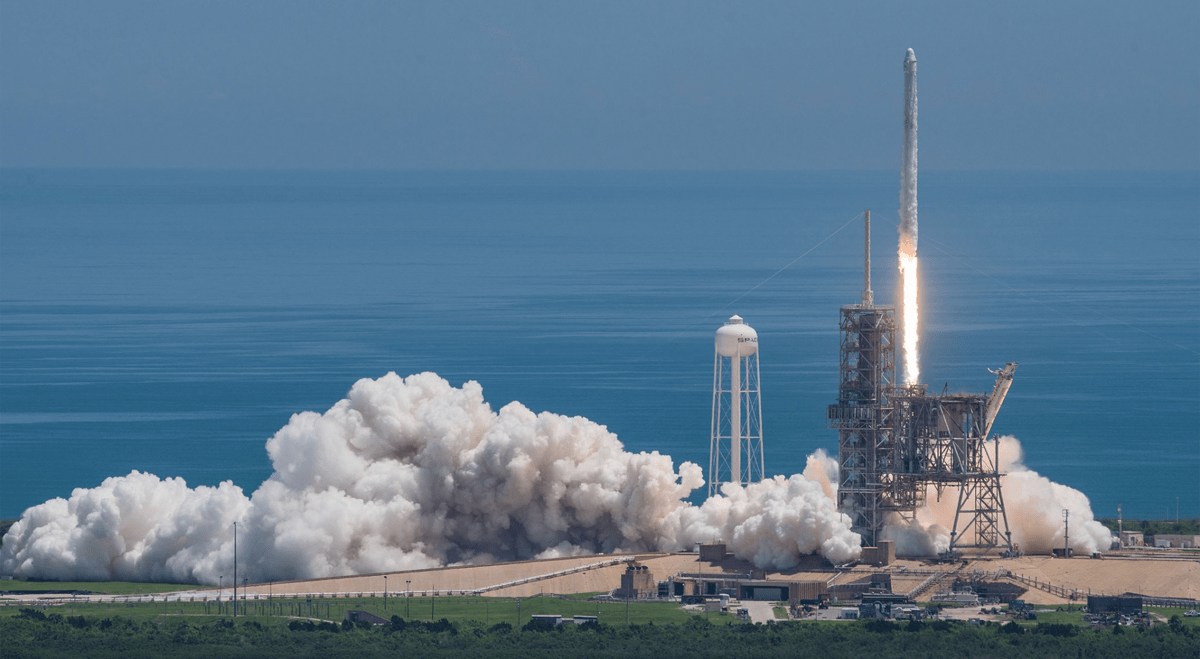
The U.S. Federal Aviation Administration has directed SpaceX to investigate the failure of its Starship Super Heavy booster, which crashed into the Gulf of Mexico during a test mission last week, the agency confirmed on Wednesday.
According to the FAA, the May 22 launch of SpaceX’s Starship Flight 12 resulted in a mishap involving the Super Heavy booster after the vehicle separated from the spacecraft and attempted its return toward the Gulf of Mexico.
SpaceX did not immediately respond to requests for comment regarding the incident.
The FAA said there were no reports of injuries or damage to public property linked to the event. The regulator added that it will supervise the investigation led by SpaceX, participate throughout the review process, and approve the company’s final findings as well as any required corrective measures.
Flight 12 marked SpaceX’s 12th Starship prototype test since 2023 and the first mission using the company’s V3 configuration. While much of the mission proceeded successfully, including the deployment of simulated satellites and a controlled splashdown of the spacecraft in the Indian Ocean, the company was unable to complete a controlled landing of the Super Heavy booster, which ultimately lost stability and fell into the Gulf.
The FAA said the investigation is intended to improve public safety, identify the cause of the failure, and determine what steps are necessary to avoid similar incidents in future launches.
Before the Starship-Super Heavy system can return to flight, the FAA said it must verify that any issues tied to the mishap no longer pose a risk to public safety.
Starship remains central to SpaceX’s long-term strategy to reduce launch expenses, expand its Starlink satellite network business, and support future projects including orbital computing infrastructure, AI-focused satellite deployments, and eventual crewed missions to the moon and Mars.
SpaceX has invested more than $15 billion into developing Starship, which the company hopes will become a fully reusable launch vehicle capable of transporting payloads significantly larger than those supported by existing rocket systems.