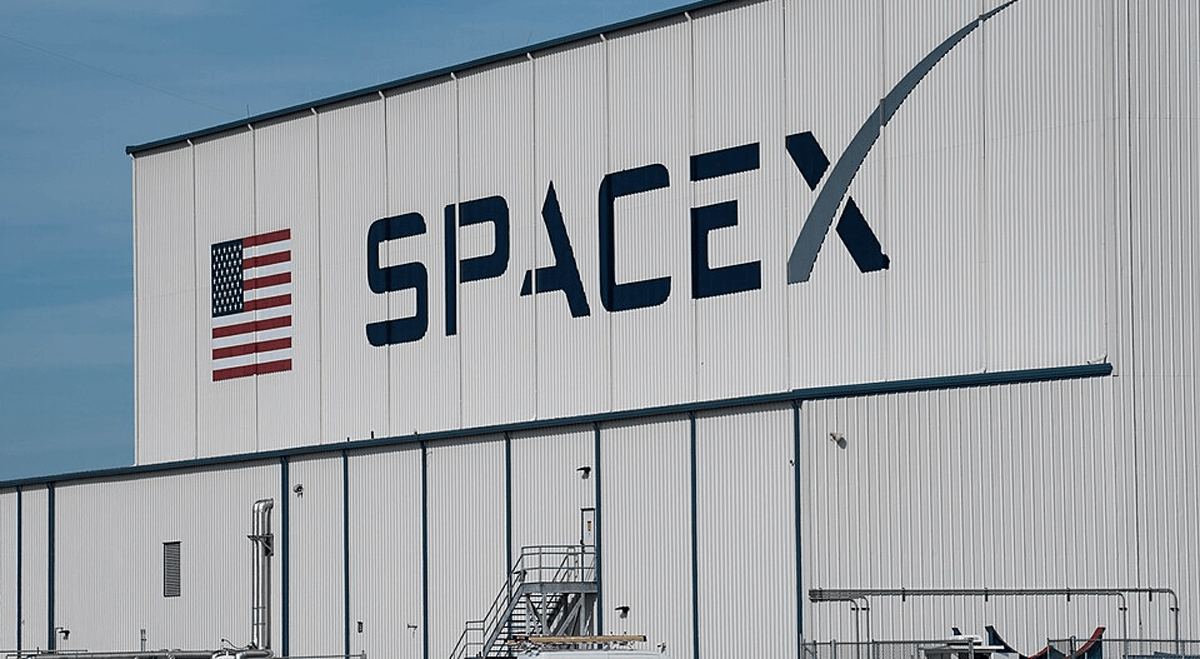
Wall Street has witnessed blockbuster IPOs before, but the lineup forming for the second half of 2026 is on an entirely different scale.
Within a matter of hours this week, two of the most influential companies of the current technology cycle took major steps toward becoming publicly traded businesses. SpaceX (NASDAQ:SPCX) formally filed for what could become the largest initial public offering ever attempted, while OpenAI signalled that preparations for its own market debut are accelerating.
Adding to the momentum, Anthropic is reportedly evaluating a public listing that could arrive as early as October. Collectively, these companies could introduce close to $3 trillion in market value to public investors over a remarkably short period.
The implications extend well beyond a busy IPO calendar. This wave will test investor appetite for massive growth stories, challenge valuation assumptions, and potentially reshape capital flows throughout the technology sector.
SpaceX Approaches Liftoff
Unlike earlier speculation, SpaceX’s IPO plans are now firmly established.
The company has publicly filed documentation and outlined a timeline that points to investor roadshows beginning around June 4, pricing on June 11, and trading commencing as early as June 12 under the ticker SPCX.
The scale of the transaction is extraordinary. Reports suggest SpaceX could seek between $75 billion and $80 billion in fresh capital while targeting a valuation near $1.75 trillion, with some estimates stretching toward $2 trillion or beyond.
For comparison, Saudi Aramco’s historic 2019 listing raised roughly $25 billion to $35 billion. SpaceX is contemplating a transaction more than twice that size while seeking a valuation that would place it among the world’s most valuable corporations.
A Business Backed by Real Revenue
What separates SpaceX from many high-profile growth stories is the strength of the business beneath the headline valuation.
Starlink has evolved into a formidable competitive advantage, attracting roughly 10 million subscribers and becoming the primary contributor to company revenue. The satellite broadband operation has already begun generating meaningful profitability, while SpaceX continues to dominate commercial launch services through its reusable rocket technology and extensive government relationships.
Revenue reportedly reached approximately $18.7 billion in 2025, nearly double the level generated two years earlier.
Our view is that SpaceX represents a genuine technological leader with clear competitive strengths in satellite connectivity and space infrastructure. However, the valuation leaves little room for error. Investors are effectively pricing in years of flawless execution across Starlink expansion, artificial intelligence initiatives, and long-term ambitions that remain largely aspirational. Retail enthusiasm is likely to be intense, but volatility could become equally significant once post-IPO trading begins and lock-up periods eventually expire.
The Valuation Debate Cannot Be Ignored
At a valuation of approximately $1.75 trillion, SpaceX would trade at roughly 110 times trailing revenue based on 2025 figures.
That multiple exceeds many of the market’s most aggressively valued technology companies and places enormous pressure on management to sustain exceptional growth.
The bullish thesis depends not only on Starlink’s continued expansion but also on successful monetisation of broader AI initiatives and continued leadership in launch services. Investors would effectively be paying today for achievements that may still be many years away.
Governance concerns also remain relevant. The proposed structure reportedly gives Elon Musk approximately 85% voting control through a dual-class share arrangement, limiting the influence of public shareholders. Combined with a relatively small public float and potential fast-track index inclusion, this could amplify share-price volatility following the listing.
OpenAI Prepares for Public Markets
OpenAI remains earlier in the process, but preparations are clearly underway.
The company is expected to file confidentially, with reports suggesting chief executive Sam Altman would like to pursue a listing as early as September 2026. Some insiders have pointed to a later timeline extending into 2027, but momentum toward a public offering appears increasingly evident.
Investment banks Goldman Sachs and Morgan Stanley are reportedly involved, while valuation discussions have centred on figures exceeding $1 trillion. The company was most recently valued privately at roughly $850 billion.
The timing follows OpenAI’s successful resolution of legal challenges surrounding its corporate structure, removing a key obstacle that had previously complicated any path toward a public listing.
Extraordinary Growth Comes With Extraordinary Costs
OpenAI’s commercial expansion has been remarkable.
ChatGPT and the company’s enterprise offerings have generated one of the fastest revenue growth trajectories ever seen in the software industry, with annualised revenue now measured in the tens of billions of dollars.
However, the company remains deeply unprofitable.
OpenAI is expected to incur multi-billion-dollar losses for years to come as it invests heavily in computing infrastructure, model development and data-centre capacity. Many industry observers believe meaningful profitability remains a story for the latter part of the decade rather than the next few years.
Our view is that OpenAI has become the defining company of the generative AI era, but it is also one of the clearest examples of a “growth at all costs” strategy. The current valuation assumes transformative productivity gains across the global economy, outcomes that have yet to be fully demonstrated. Costs, competition, access to chips, energy supply and data-centre expansion all remain critical variables. This is a narrative whose valuation already reflects success before success has been fully delivered.
A Market-Wide Test of Investor Conviction
The broader significance of these IPOs lies not in the companies individually, but in their collective arrival.
Together with a potential Anthropic listing, they could introduce more than $3 trillion of market capitalisation into public markets during a period when technology valuations are already elevated and market leadership remains highly concentrated.
This creates several potential challenges for investors and capital markets.
Liquidity and Capital Rotation
One concern is whether these massive offerings absorb capital that might otherwise flow into existing technology stocks or smaller IPOs.
The impact on large-cap equities may ultimately prove limited, but smaller growth companies seeking public-market financing could face increased competition for investor attention and capital.
Low public floats combined with intense media coverage may also create unusually volatile trading conditions, potentially attracting speculative activity at the expense of more established technology names.
Bubble Indicator or Bubble Accelerator?
Both SpaceX and OpenAI are seeking valuations that imply enormous future growth despite current profitability challenges.
If investors enthusiastically embrace these offerings, valuations throughout the AI and space sectors could move even higher, encouraging further capital spending and investment.
Conversely, disappointing aftermarket performance could have the opposite effect, forcing investors to reassess assumptions around growth, profitability and valuation across the broader technology landscape.
Comparisons to previous speculative cycles are inevitable, particularly as private-market enthusiasm transitions into public-market scrutiny.
Passive Flows and Index Implications
Perhaps the most overlooked issue involves index inclusion.
Should these companies quickly enter major benchmark indices, passive investment funds, pension plans and retirement accounts would automatically gain exposure regardless of individual investor preferences.
This would distribute the volatility of highly valued, low-float companies across a much broader investor base and raise important questions about market structure and governance.
Innovation Still Needs Capital
There is, however, a strong argument in favour of these listings.
Both SpaceX and OpenAI require enormous amounts of capital to pursue their ambitions. Whether funding satellite infrastructure or building next-generation AI systems, the scale of investment increasingly exceeds what private markets alone can provide.
Public listings also introduce greater transparency and accountability than private-market structures typically offer. For long-term investors, that increased visibility may prove valuable.
A Referendum on the AI Era
These IPOs are unlikely to single-handedly trigger a broader technology correction.
The underlying themes driving interest—artificial intelligence adoption, growing demand for computing power and expanding satellite connectivity—are supported by genuine commercial momentum.
However, these offerings will serve as an important test of investor appetite for trillion-dollar growth stories that remain heavily dependent on future execution.
If they price aggressively and perform well, they may extend the current bull market narrative. If they disappoint, they could accelerate a rotation away from some of the market’s most speculative segments.
Execution, valuation discipline and macroeconomic conditions will matter more than ever. The opportunity is significant, but so is the risk.
Key Signals Investors Should Monitor
The next several quarters will provide a number of important indicators:
- How SpaceX trades relative to its most recent private-market valuation.
- Whether OpenAI’s expected timetable remains on track.
- The behaviour of shares once insider lock-up restrictions expire.
- The health of the broader IPO market, particularly among smaller growth companies.
- The direction of interest rates and recession expectations, which remain crucial for high-growth, loss-making businesses.
Ultimately, SpaceX, OpenAI and Anthropic may not determine the future of the market on their own. But arriving simultaneously at a time of elevated valuations and concentrated leadership, they are likely to become a powerful referendum on the sustainability of the current technology boom.
The coming months may reveal whether investors are witnessing the next phase of a long-term transformation—or the moment when expectations finally become too ambitious.
Want to stay up-to-date on the SpaceX IPO? Find the top asked questions from investors and follow their every move here: https://invest.investorshub.com/spacex-ipo-watch/