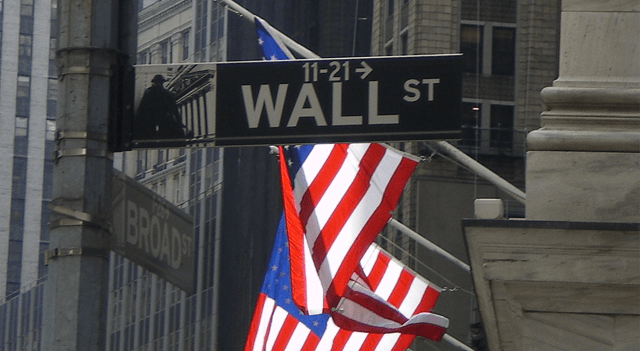
Wall Street delivered a split verdict on Monday, June 8, as a sharp rebound in semiconductor stocks powered the Nasdaq and S&P 500 higher while lingering concern over Middle East tensions kept the Dow in the red. Investors spent the session weighing a remarkable piece of chip-industry news against a still-fragile geopolitical backdrop, ultimately deciding that the technology trade was too compelling to abandon.
What Moved Markets
The Nasdaq Composite led the way, adding 220.23 points, or 0.86%, to close at 25,929.66 – recovering a healthy chunk of Friday’s sharp chip-driven selloff. The S&P 500 gained 21.99 points, or 0.30%, to finish at 7,405.73. The Dow Jones Industrial Average was the lone holdout, slipping 80.77 points, or 0.16%, to 50,786.01, weighed down by weakness in several of its non-tech components.
The session’s defining catalyst arrived before the open: a report from The Information that Alphabet’s Google has placed an order with Intel to manufacture more than three million tensor processing units – the AI chips Google uses in its data centers – for delivery in 2028. The news landed like a thunderclap. It signaled that Intel’s long-troubled foundry business is earning real confidence from one of the most demanding AI customers in the world, while also highlighting growing pressure on Taiwan Semiconductor Manufacturing to meet surging demand. That single headline sent ripples through the entire chip complex, giving traders a reason to step back in after Friday’s punishing losses.
Geopolitics provided a counter-weight. Reports that Iran and Israel had exchanged strikes over the weekend, putting a fragile ceasefire under renewed stress, rattled Asian markets early in the day and sent oil prices surging. Brent crude jumped more than 3% toward $96 a barrel. The tension kept defensive-minded investors cautious, blunting what might otherwise have been a stronger broad market advance.
Notable Movers
Intel (INTC) was the undisputed headline stock of the day, surging roughly 10% to close around $109. The Google foundry order gave investors a tangible proof point that Intel’s manufacturing turnaround is gaining traction – and that AI infrastructure buildout may open a second front of demand beyond Nvidia’s graphics chips.
Marvell Technology (MRVL) jumped more than 9% after S&P Dow Jones Indices announced that the chipmaker will join the S&P 500 on June 22, replacing Campbell’s. The inclusion is a milestone for Marvell: the company only recently met the index’s profitability requirement, after riding the AI custom-chip boom to consistent GAAP profits. Marvell’s shares have now gained roughly 59% since late May.
Nvidia (NVDA) added about 1.9%, continuing its role as the bellwether for AI investor sentiment. Reports that Nvidia is also evaluating Intel’s manufacturing technology for a next-generation multi-chip processor added a second layer of interest to the foundry story and kept NVDA well-bid throughout the session.
Microsoft (MSFT) fell roughly 1.2%, standing out as a notable laggard in an otherwise tech-friendly tape. No specific news drove the decline, but the stock has faced persistent selling pressure recently and traders appear to be rotating within the tech sector rather than adding broad exposure.
Energy stocks were among the day’s quiet winners as oil’s surge lifted producers. Chevron (CVX) gained about 1.3% in the Dow, benefiting from Brent’s push toward $96. The move served as a reminder that geopolitical risk, while unsettling for the broader market, can create pockets of opportunity.
Looking Ahead
The week’s most important data point arrives Wednesday morning, when the Bureau of Labor Statistics releases the Consumer Price Index for May. Analysts will be watching closely after April CPI came in at 3.8% year-over-year – still well above the Fed’s 2% target. A hotter-than-expected print could revive concerns about the pace of rate cuts and test the market’s recent resilience. Investors will also be monitoring any further developments out of the Middle East, where the ceasefire situation remains fluid and oil prices could move sharply in either direction. With the FOMC meeting coming on June 16-17, this week’s inflation data may well set the tone for how markets approach the Fed’s next decision.