Wolfe Research has initiated coverage of SpaceX (NASDAQ:SPCX) with an Outperform rating and a $175 price target, ahead of the company’s highly anticipated Nasdaq debut following the largest initial public offering in U.S. history.
The brokerage’s valuation suggests approximately 30% upside from the IPO price of $135 per share, which helped the Elon Musk-led space, satellite and artificial intelligence company raise a record $75 billion and achieve a market valuation of roughly $1.77 trillion.
Analysts See Significant Long-Term Growth Potential
Wolfe analysts Myles Walton and Peter Supino based their valuation on 16 times projected 2028 revenue and 54 times estimated 2028 EBITDA.
The analysts expect SpaceX to deliver around 70% revenue growth while nearly doubling EBITDA margins by the end of the decade.
According to their analysis, the company’s technological leadership in launch services gives it a competitive advantage that rivals will struggle to replicate.
“SpaceX turned a competitive moat into an ocean of opportunity that we don’t see others crossing,” they wrote.
Starship Seen as the Key Driver of Future Economics
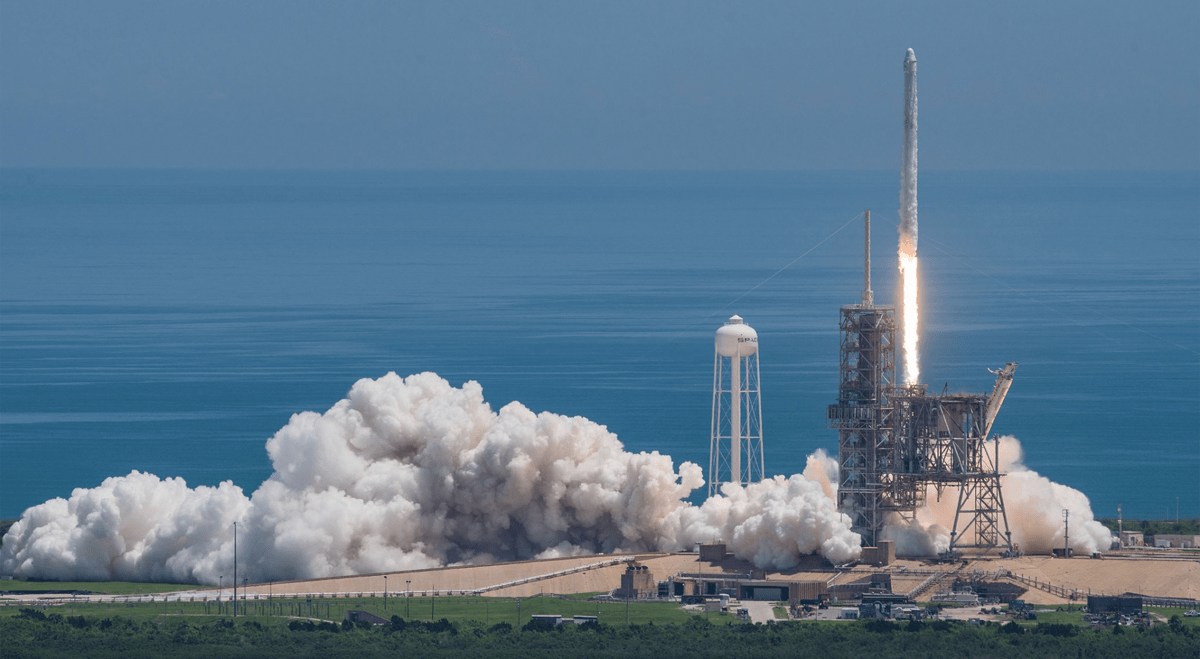
A central element of Wolfe’s bullish outlook is Starship, SpaceX’s next-generation fully reusable rocket system, which remains in the testing phase.
The firm believes successful deployment of Starship could dramatically reduce launch costs.
Wolfe estimates that incremental launch expenses could fall from roughly $14 million per Falcon 9 mission to less than $5 million per Starship launch, with fuel costs potentially approaching just $1 million per flight.
The analysts noted that failure to achieve full Starship reusability would materially affect their forecasts, reducing projected financial targets for 2030 and 2035 by approximately 35% and 50%, respectively.
AI Ambitions Extend Beyond Rocket Technology
Wolfe also highlighted SpaceX’s growing ambitions in artificial intelligence following its acquisition of xAI and a pending transaction involving coding platform Cursor.
The brokerage believes SpaceX’s strategy differs from AI model developers by focusing on infrastructure and computing capacity rather than competing directly in foundation model development.
“We don’t expect SpaceX to out-innovate Anthropic or OpenAI on the model side, but we expect SpaceX to build a cost advantage into the compute end game through verticalization and space access; but that will be moot if we are all in an AI bubble,” the analysts wrote.
Starlink Expected to Drive Near-Term Earnings Growth
While AI represents a major future opportunity, Wolfe views Starlink as the company’s most dependable near-term earnings contributor.
The analysts noted that SpaceX’s Connectivity division crossed a significant milestone in 2024 when EBITDA less capital expenditure turned positive.
Looking ahead, Wolfe forecasts Connectivity EBITDA exceeding $90 billion by 2030 as next-generation satellite deployments expand broadband coverage and mobile connectivity services.
The firm expects Starlink’s network capacity to increase twelvefold over the same period.
Compute Contracts Strengthen AI Business
Wolfe described the AI segment as the fastest-growing area of the company, supported by major compute agreements with Anthropic and Google.
The brokerage estimates these contracts generate annual revenue commitments worth approximately $26.4 billion.
Combined with SpaceX’s expanding infrastructure footprint, the analysts believe these agreements position the company to play a significant role in the future AI ecosystem.
Long-Term Vision Extends Across Multiple Industries
Beyond individual business segments, Wolfe argues that SpaceX is pursuing a much broader strategic objective.
The analysts see the company attempting to build an integrated ecosystem spanning transportation, communications, energy and computing infrastructure.
Given SpaceX’s current lead across several of these markets, Wolfe sees limited evidence that competitors are close to matching its capabilities.
Execution Risks Remain
Despite the optimistic outlook, the brokerage cautioned that substantial risks remain.
Starship has yet to complete a successful orbital mission, and many of the company’s long-term ambitions depend on technologies that are still under development.
The analysts also pointed to Elon Musk’s history of setting aggressive timelines as a reason for investors to remain cautious.
“Investors should be eyes-wide-open as to the lack of realism in many of the targets,” the analysts said.
While Wolfe believes SpaceX offers one of the most compelling long-term growth stories in the market, the firm acknowledged that execution on its ambitious plans will be critical to justifying its record-breaking valuation.
Want to stay up-to-date on the SpaceX IPO? Find the top asked questions from investors and follow their every move here: https://invest.investorshub.com/spacex-ipo-watch/