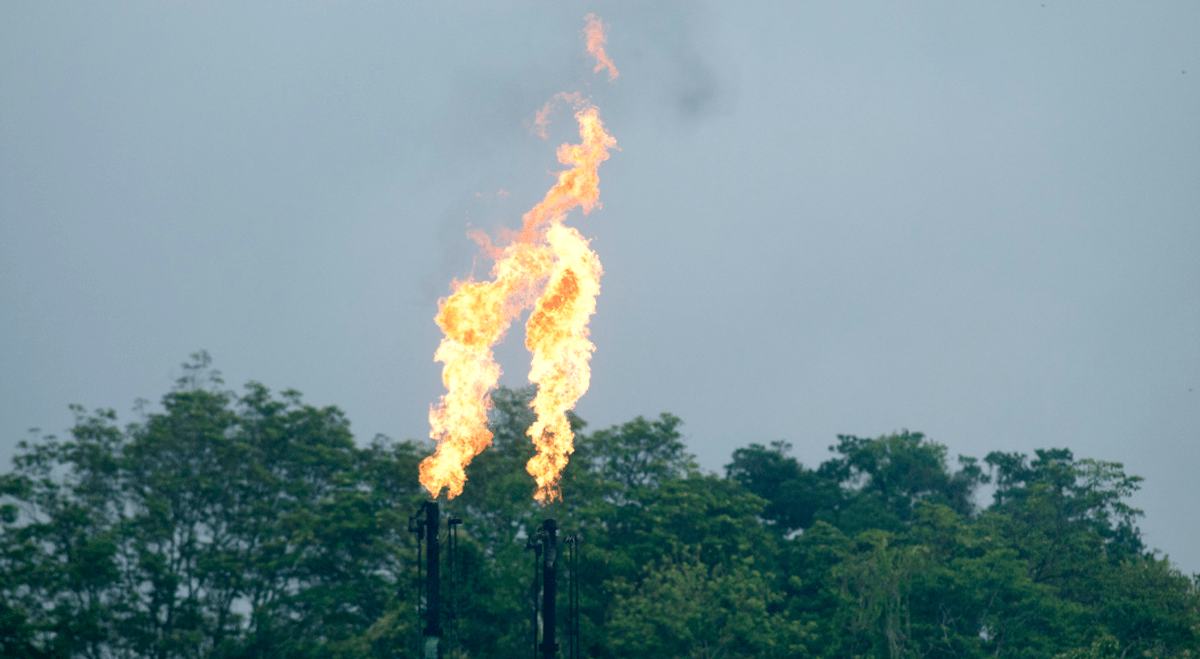
Oil prices dropped to their lowest levels in three months on Monday after officials from the United States and Iran indicated that an initial agreement had been reached to end the conflict and restore shipping through the Strait of Hormuz.
The prospect of renewed energy flows through one of the world’s most important maritime trade routes triggered another sharp decline in crude prices, extending losses recorded at the end of last week.
Crude Extends Decline
By 06:30 GMT, Brent crude futures had fallen $3.65, or 4.2%, to $83.68 per barrel, while U.S. West Texas Intermediate crude slipped $4.13, or 4.9%, to $80.75 per barrel.
Both benchmarks touched their lowest levels since 10 March after already losing more than 3% on Friday.
The sell-off reflected growing confidence that a resolution to the conflict could ease supply constraints that have disrupted global energy markets for months.
Agreement Expected to Be Signed in Switzerland
According to Pakistan’s prime minister, whose country has played a mediating role throughout the conflict, the United States and Iran are expected to sign a memorandum of understanding in Switzerland on Friday.
President Donald Trump stated on Sunday that the Strait of Hormuz would reopen on a “toll free” basis and that the U.S. naval blockade of Iranian ports would also be lifted.
Iran’s semi-official Mehr news agency reported that the draft agreement envisages the reopening of the strategic waterway within 30 days under arrangements overseen by Iran.
Risk Premium Begins to Fade
Market participants have begun to unwind the geopolitical risk premium that had supported oil prices during the conflict.
“The geopolitical risk premium that had been built into crude is now being unwound quite aggressively as traders price in the prospect of restored oil flows,” said Tim Waterer, chief market analyst at KCM Trade.
The closure of the Strait of Hormuz for more than three months removed millions of barrels of oil and gas supply from global markets. Before the conflict, the route handled around one-fifth of worldwide oil and liquefied natural gas shipments.
Recovery Path Remains Uncertain
Despite the market’s positive reaction, investors remain focused on how quickly production and exports can recover and whether shipping activity will return to normal levels.
Questions also remain over the extent of any damage to energy infrastructure and the willingness of shipping operators to return to the region immediately.
According to Vivek Dhar, commodities strategist at Commonwealth Bank of Australia, “While these uncertainties suggest upside risks to our forecast for Brent oil futures to reach $80/bbl by the end of the year, it’s worth noting that oil flows through the Strait of Hormuz just needs to reach 60-70% of pre-war levels to return oil markets to pre-war oversupply expectations.”
Attention Turns to Long-Term Implementation
Iranian Deputy Foreign Minister Kazem Gharibabadi said a broader agreement would be negotiated during a 60-day ceasefire period, suggesting further discussions remain ahead.
Meanwhile, the E4 nations — the United Kingdom, France, Germany and Italy — indicated on Sunday that they are prepared to lift sanctions on Iran in exchange for progress on its nuclear programme.
Analysts cautioned that the immediate decline in oil prices represents only the first stage of the market’s response.
“Beyond the immediate price reaction, attention will now shift toward the pace of actual supply normalization and compliance with the agreement,” said Priyanka Sachdeva, senior market analyst at Phillip Nova.
She added: “While the conflict may have come to an end and oil flows through the Strait of Hormuz may gradually return to normal, the damage already done cannot be reversed overnight. This includes not only any physical damage to oil infrastructure but also the economic strain endured by oil importing economies that have faced elevated energy costs for months.”