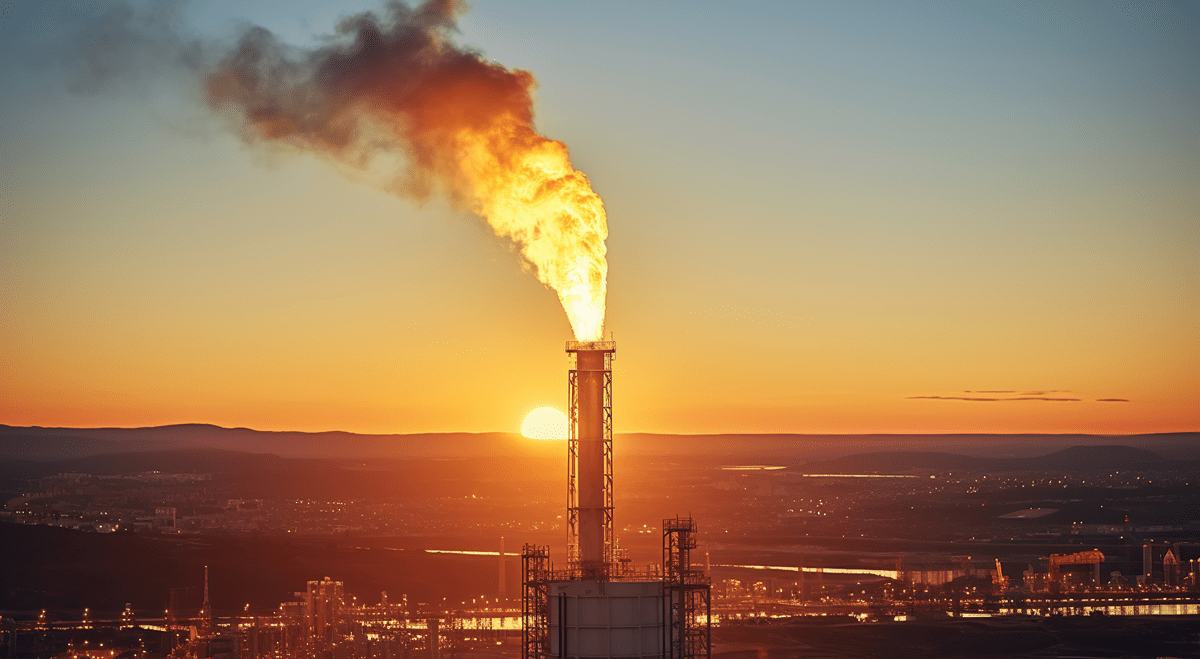
Oil prices fell sharply after the United States and Iran unveiled a framework agreement aimed at ending their conflict and reopening the Strait of Hormuz, with markets quickly pricing in the prospect of renewed energy flows.
However, industry experts caution that restoring Middle East oil and gas production, refining operations and export infrastructure to pre-war levels will be a lengthy process that could stretch from months to years.
Immediate Impact of the Agreement
U.S. President Donald Trump said the Strait of Hormuz, a critical route for global oil and gas shipments that has been effectively closed by Iran for months, is expected to reopen on Friday. He also announced that the United States would end its blockade of Iranian ports.
Meanwhile, Iranian Deputy Foreign Minister Kazem Gharibabadi said broader negotiations covering the wider conflict, including sanctions relief, would take place during a 60-day ceasefire period.
Oil Production Recovery Will Take Time
Several major Gulf producers, including Saudi Arabia, Iraq, Kuwait and the United Arab Emirates, were forced to curtail millions of barrels per day of oil output because of disruptions linked to the closure of Hormuz.
According to the International Energy Agency, more than 14 million barrels per day of production remains offline, representing roughly 14% of global oil demand.
While some Iraqi production could return within days of a restart decision, other facilities face a much longer recovery path.
“Assuming operators choose a measured and controlled ramp-up, our analysis suggests the fields affected by the Strait’s closure could get back to 70% of prior production within three months and to 90% within six months. The last 1 million bpd or so will take considerably longer,” analysts at Wood Mackenzie said.
Refining Capacity Presents Another Challenge
The conflict also severely disrupted refining activity across the region.
Industry monitor IIR estimated that as much as 3.52 million barrels per day of refining capacity had been shut down by early May, equivalent to around 3.5% of global capacity.
Facilities that were closed as a precaution may be restarted within weeks, but damaged sites are expected to require extensive repair work.
Earlier this month, Vitol Bahrain’s head of research, Bader Nooruddin, said Gulf refineries could return to between 90% and 95% of capacity within 40 to 60 days.
Research firm Rystad Energy estimates total repair costs across the Middle East could average approximately $46 billion, with refining and petrochemical assets accounting for the largest share of expenditures.
LNG Sector Also Faces Long Recovery
Natural gas production has encountered similar challenges.
Several major LNG export facilities, including plants in Qatar, reduced or halted operations during the conflict following attacks on regional infrastructure.
Industry specialists estimate that once restart approvals are granted, LNG facilities will need approximately two weeks to return to full production.
The liquefaction process requires gradual cooling to around minus 162 degrees Celsius, making rapid restarts impossible and requiring production trains to be restarted in sequence.
QatarEnergy maintained operations at three LNG trains during the conflict to continue supplying Kuwait and Bahrain.
Nevertheless, the company’s chief executive has warned that Iranian attacks removed roughly 17% of Qatar’s LNG capacity and that a complete recovery could take as long as five years.
Rebuilding Global Oil Inventories Could Take Years
Beyond restoring production, the energy sector faces the challenge of replenishing depleted stockpiles.
The loss of Gulf supplies has accelerated inventory drawdowns across major consuming nations, pushing reserves toward their lowest levels in more than two decades, according to U.S. government data.
“It will take several months to fully normalise flows, and we estimate that global oil inventories have shrunk by more than 1 billion barrels since the start of the conflict,” said Paul Gooden, head of natural resources at investment manager Ninety One.
“Oil markets will therefore likely suffer a ‘hangover’ for several years as governments seek to rebuild inventories and to insulate themselves from further geopolitical shocks.”
Analysts say that while the peace agreement has reduced immediate supply concerns, the global energy system is likely to continue feeling the effects of the conflict long after exports resume.