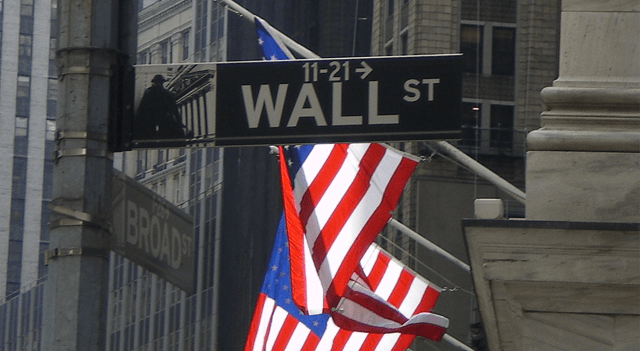
Monday’s session ended on a split note for Wall Street, with the Dow Jones Industrial Average edging into positive territory while the S&P 500 and Nasdaq slipped under the weight of a high-profile index rebalancing and renewed pressure on mega-cap tech. The primary story of the day was the Nasdaq-100’s quarterly reshuffle, which forced massive rebalancing flows across the market and created sharp swings in individual names. Lingering optimism around the US-Iran ceasefire framework — which reopened the Strait of Hormuz and pulled oil back toward $77-80 a barrel — gave the Dow a lift and kept broader selling in check.
What Moved Markets
The Dow Jones Industrial Average closed up roughly 148 points, or 0.44%, finishing near 51,713. The S&P 500 slipped 0.35% to close around 7,482, while the Nasdaq Composite edged down 0.27%. The divergence tells an important story: the Dow’s gains were driven by energy and industrial names benefiting from easing Middle East tensions, while the Nasdaq faced headwinds from both the index rebalancing and weakness in large-cap tech.
The Nasdaq-100 officially added five new members effective today — CoreWeave (CRWV), Astera Labs (ALAB), Nebius Group (NBIS), Rocket Lab (RKLB), and Teradyne (TER) — while dropping Charter Communications, Cognizant, Zscaler, Insmed, and Verisk Analytics. With more than $800 billion in assets tracking the Nasdaq-100, the reshuffle created enormous buying pressure in the new entrants and selling pressure in the removed names. The additions signal that the index — and by extension the massive pool of passive capital that tracks it — is doubling down on AI infrastructure and defense-adjacent technology as the defining themes of the current market cycle.
Notable Movers
Alphabet (GOOGL) was the biggest drag among large-caps, falling roughly 7%. The stock was hit by a California court ruling in which a judge denied a retrial in a case finding Google and YouTube’s platforms addictive for minors. That legal setback landed on top of ongoing anxiety about Alphabet’s AI spending — the company executed a massive equity offering earlier this month to fund AI infrastructure — leaving investors questioning whether returns will justify the cost.
Moderna (MRNA) dropped about 9.5%, making it one of the worst performers in the S&P 500 on the day. The biotech has been dealing with executive instability, including the departure of its chief medical officer, and investors remain skeptical about near-term revenue despite some positive pipeline news on its mRNA flu vaccine candidate.
Super Micro Computer (SMCI) surged nearly 15%, powered by two catalysts hitting at once. GF Securities upgraded the stock from hold to buy with a $48 price target — implying further upside even after the jump. Simultaneously, Supermicro unveiled a new data center blueprint built around NVIDIA’s Vera Rubin NVL4 platform at the ISC 2026 conference in Hamburg, scaling up to 1,152 Rubin GPUs in liquid-cooled racks — exactly the kind of leading-edge AI infrastructure product the market wants to see from server makers right now.
Astera Labs (ALAB) gained about 11% and Rocket Lab (RKLB) rallied roughly 9% as index fund managers rushed to establish positions ahead of the official Nasdaq-100 inclusion. Both stocks had already run up sharply since the rebalancing was announced earlier this month, but the actual effective date brought another wave of forced buying from funds that had delayed building their positions.
Looking Ahead
With the Nasdaq-100 rebalancing now complete, index-related volatility should ease in the near term. Investors will shift attention to Thursday’s release of the May PCE inflation data — the Federal Reserve’s preferred inflation gauge — which economists at Wells Fargo expect to show a 0.5% month-over-month rise, pushing the annual rate to 4.1%. A hotter-than-expected print could revive fears that the Fed is behind the curve and delay any hope of rate cuts, while a softer read might give markets room to recover. The US-Iran peace framework remains a wildcard as well: implementation risks are real, and any signs of breakdown in the 60-day follow-on talks could send oil back above $100 and reignite inflationary pressure. With earnings season largely behind us, macro data and geopolitics will be doing the heavy lifting for markets this week.