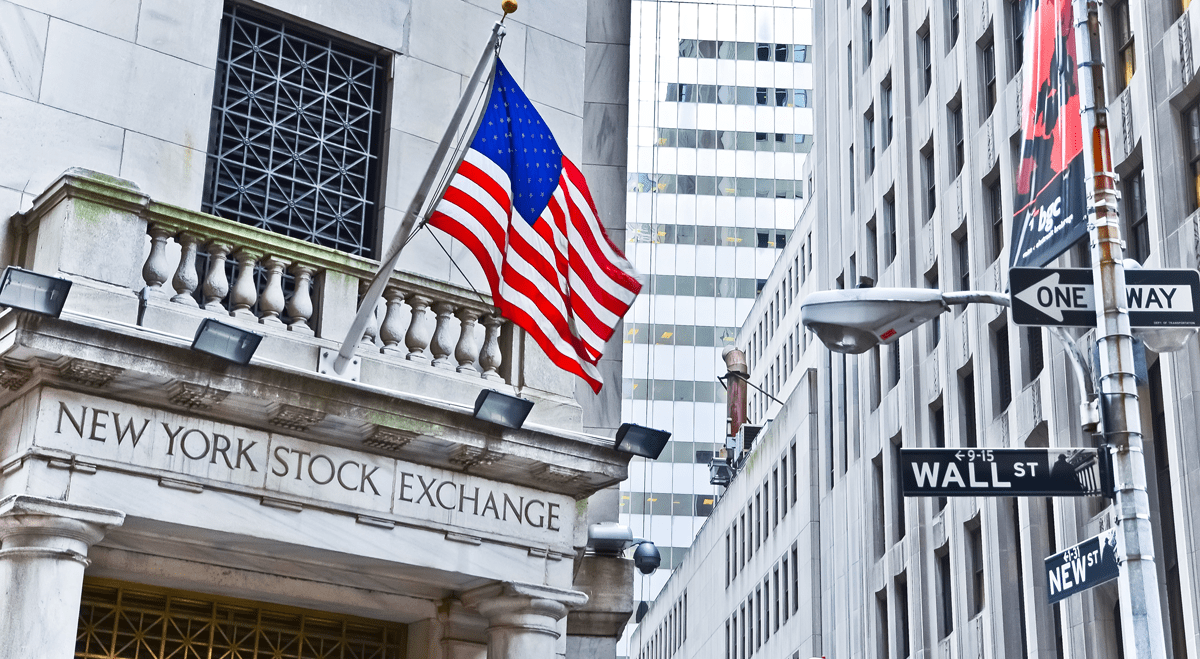
U.S. stock index futures traded modestly higher on Tuesday as investors prepared for the final trading session of both the first half of the year and the second quarter. Market participants are also monitoring reports of possible talks between the United States and Iran in Qatar, while a series of economic indicators and Nike’s quarterly results are set to dominate the day’s agenda.
Futures rise ahead of a busy session
By 03:10 ET (07:10 GMT), futures linked to the Dow Jones Industrial Average had gained 39 points, or 0.1%, while S&P 500 futures rose 7 points, or 0.1%. Nasdaq 100 futures added 67 points, or 0.2%.
Wall Street ended Monday’s session higher, led by a rebound in technology shares after concerns over the sustainability of artificial intelligence infrastructure spending weighed on the sector last week. A semiconductor index advanced around 3.8%, recovering from its weakest weekly performance since April of last year.
The gains helped the S&P 500 end a five-session losing streak and left the benchmark on course for its strongest quarterly performance since the post-pandemic recovery.
Investor sentiment also improved after the U.S. Supreme Court ruled that Federal Reserve Governor Lisa Cook could remain in office while legal proceedings continue over efforts by the Trump administration to remove her. The decision eased, although did not eliminate, concerns over the independence of the Federal Reserve.
Focus shifts to potential U.S.-Iran negotiations
Attention is also centred on Qatar after President Donald Trump said U.S. officials would meet Iranian representatives there on Tuesday.
According to CNN, special envoy Steve Witkoff is travelling to Qatar, although Iranian officials have stated that no negotiations are currently scheduled in the coming days.
Axios reported that Witkoff and Jared Kushner will meet with Qatari officials, while separate technical discussions involving U.S. and Iranian delegations are expected to take place with mediation from Qatar and Pakistan. An Iranian technical delegation is also reportedly due to arrive in Doha later this week.
The diplomatic activity follows reports that Washington and Tehran have agreed to halt attacks in the Strait of Hormuz after tensions escalated last week. Brent crude remained close to US$73.38 per barrel after retreating to levels seen before the conflict.
Labour market data in focus
Markets are also preparing for a busy week of US economic releases.
Tuesday’s key report will be the Job Openings and Labor Turnover Survey (JOLTS) for May. Economists expect job openings to decline to 7.28 million from 7.618 million in April.
The Conference Board’s consumer confidence index is also due later in the day.
Together, the reports are expected to provide further insight ahead of Friday’s closely watched non-farm payrolls report, which could influence the Federal Reserve’s interest rate decisions during the remainder of 2026.
Nike results under the spotlight
Corporate attention will focus on Nike (NYSE:NKE), which is scheduled to publish quarterly earnings after the close of trading.
Investors will be looking for further evidence that Chief Executive Elliott Hill’s turnaround strategy is gaining traction. In March, Nike warned that quarterly sales would decline by between 2% and 4%, reflecting softer demand in China, Europe, the Middle East and Africa.
Earlier this month, the company appointed David Denton as its new Chief Financial Officer. Hill described the former Pfizer executive as a “proven public-company CFO who knows how to help great consumer brands operate with discipline and invest to win.”
Chinese manufacturing shows modest improvement
Official data released on Tuesday showed China’s manufacturing sector expanded slightly faster than expected in June.
The official manufacturing Purchasing Managers’ Index rose to 50.3 from 50.0 in May, exceeding economists’ expectations of 50.2.
Export demand continued to support factory activity as overseas buyers accelerated purchases amid uncertainty surrounding Middle East tensions and oil prices. However, analysts warned that this boost could fade as geopolitical risks ease and energy markets stabilise.