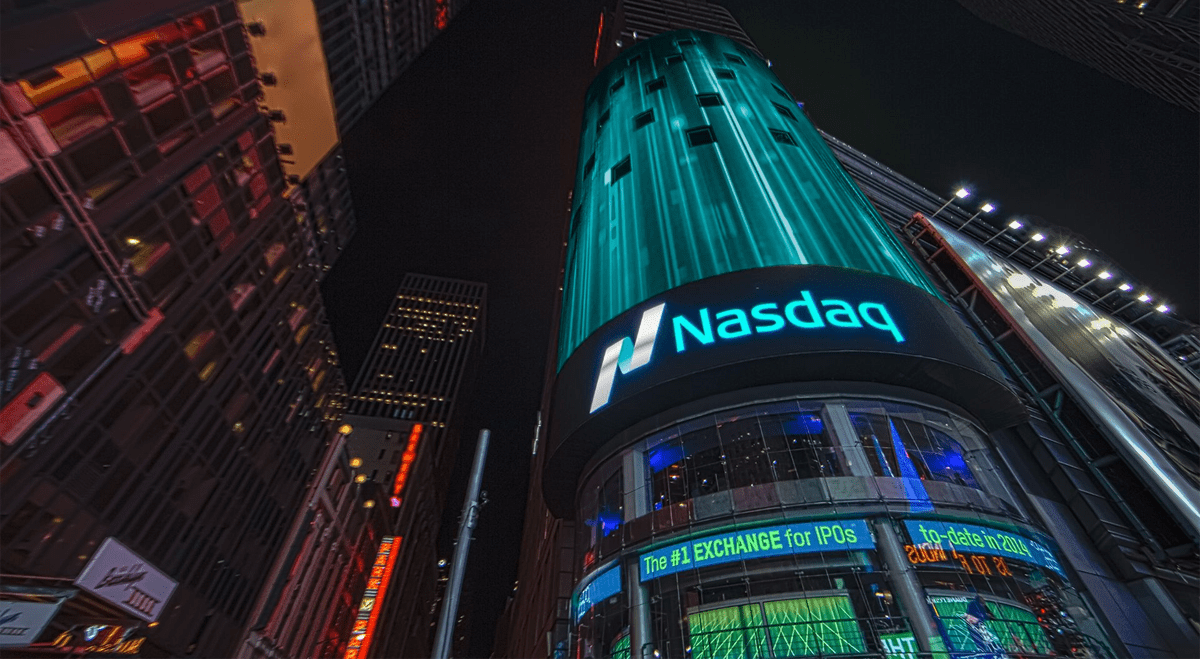
U.S. stock futures traded lower on Thursday as investors digested quarterly results from Alphabet, Tesla and IBM while awaiting the European Central Bank’s latest interest rate decision. Ongoing tensions in the Middle East and rising oil prices also remained key drivers of market sentiment.
Futures decline as geopolitical risks weigh on markets
Wall Street futures moved lower ahead of the opening bell.
Dow Jones futures fell 0.4%, while S&P 500 and Nasdaq 100 futures also declined by around 0.4%, reflecting cautious investor sentiment following a busy earnings session and renewed concerns over inflation.
The previous trading session ended lower after investors reacted to escalating conflict between the United States and Iran, which has raised concerns over potential disruptions to oil shipments through the Strait of Hormuz. Additional threats to shipping in the Red Sea have further increased worries about global energy supplies.
Higher crude oil prices have revived fears that inflation could remain elevated, potentially delaying interest rate cuts or prompting central banks to maintain tighter monetary policy.
Alphabet increases AI investment despite negative free cash flow
Alphabet (NASDAQ:GOOG) announced another increase in planned artificial intelligence investment, raising its annual capital expenditure forecast to approximately $205 billion from a previous estimate of $190 billion.
The company reported negative free cash flow of $5.9 billion as higher infrastructure spending accelerated, with second-quarter capital expenditure rising to approximately $45 billion from $36 billion in the previous quarter.
Although Alphabet shares declined in after-hours trading, the stock has continued to post solid gains since the start of the year.
Market analysts said the latest results highlight a growing investor focus on whether large AI investments can generate sustainable financial returns rather than simply driving future growth.
Tesla expands spending while IBM cuts revenue outlook
Tesla (NASDAQ:TSLA) also reported negative free cash flow after increasing investment in artificial intelligence and robotics.
Second-quarter capital expenditure reached $5.8 billion, resulting in free cash flow of negative $1.1 billion. Chief Executive Elon Musk described 2026 as “a massive capex year,” arguing that the investment should ultimately produce significant long-term returns.
Tesla shares fell more than 4% in after-hours trading following the results.
IBM (NYSE:IBM) also disappointed investors after lowering its full-year revenue growth forecast to between 4% and 5%, compared with its previous expectation of 5%.
The technology company confirmed weaker second-quarter infrastructure revenue, including a sharp decline in sales of data centre mainframe systems. Despite the softer outlook, Chief Executive Arvind Krishna said IBM remains well positioned to benefit from continued enterprise adoption of artificial intelligence.
ECB expected to hold rates steady
Attention now turns to the European Central Bank, which is widely expected to leave its benchmark interest rate unchanged at 2.25%.
Investors will focus on comments from ECB President Christine Lagarde for clues about the future direction of monetary policy, particularly as inflation remains above the central bank’s 2% target following higher energy prices linked to the conflict in the Middle East.
The ECB currently forecasts headline inflation to average 3% in 2026 before gradually easing to 2.3% in 2027 and returning to its 2% target in 2028.