U.S. stock futures pointed to a firmer open on Friday as investors looked to recover from the previous session’s broad sell-off, with stronger-than-expected results from Intel and a sharp decline in oil prices helping improve market sentiment.
The positive mood followed a difficult trading day in which technology stocks led the market lower amid renewed concerns over artificial intelligence spending and rising energy prices.
Intel results boost technology sentiment
Intel (NASDAQ:INTC) shares climbed around 3% in premarket trading after the chipmaker reported second-quarter earnings that exceeded expectations, supported by its strongest revenue growth in 15 years.
The company also issued optimistic guidance for the third quarter, providing a welcome boost for semiconductor stocks following a challenging session for the broader technology sector.
Falling oil prices support risk appetite
Investor confidence also improved as U.S. crude oil futures fell by more than 3%, reversing part of Thursday’s surge of over 6%.
The decline came after Brent and WTI prices spiked on concerns over supply disruptions linked to attacks on oil tankers in the Red Sea.
Despite the retreat in energy prices, geopolitical tensions remained elevated as military exchanges between the United States and Iran continued.
Following a 13th consecutive night of U.S. strikes on Iranian targets, Tehran responded with missile attacks aimed at neighbouring countries hosting American military bases.
Tariff concerns remain in focus
While lower oil prices provided some relief, investors continued to monitor trade policy developments.
The Trump administration announced new tariffs on imports from 60 economies that it said had failed to enforce restrictions on goods produced using forced labour.
The measures, ranging from 10% to 12.5%, affect several major trading partners, including the European Union, the United Kingdom, China, India, Japan and Canada, replacing the temporary 10% global tariff that expired on Friday.
Wall Street suffered broad losses on Thursday
U.S. markets ended Thursday sharply lower, with technology stocks leading the decline.
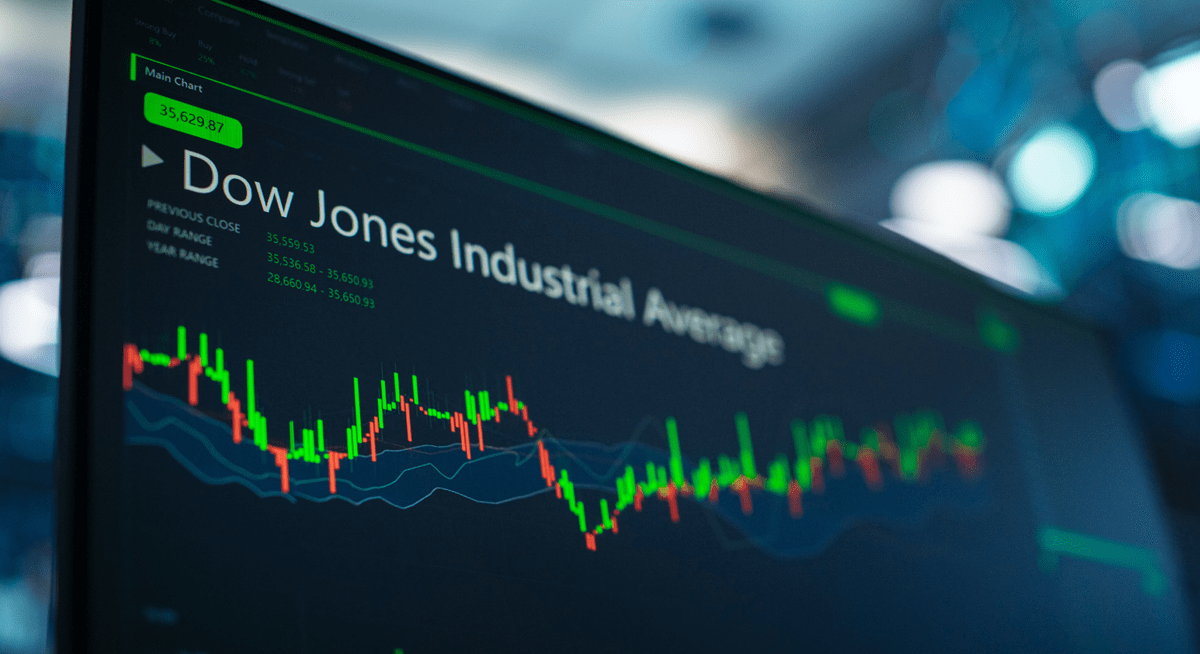
The Nasdaq fell 553.21 points, or 2.2%, to close at 25,137.69, while the S&P 500 dropped 90.66 points, or 1.2%, to 7,408.30. The Dow Jones Industrial Average declined 506.93 points, or 1.0%, ending the session at 51,711.65.
Tesla (NASDAQ:TSLA) sank 14.5% after reporting weaker-than-expected second-quarter earnings alongside significantly higher capital expenditure.
Alphabet (NASDAQ:GOOGL) also came under pressure, falling 7.1% despite reporting earnings ahead of expectations after raising its capital spending forecast.
Oil surge fuels inflation concerns
Thursday’s market weakness was also linked to the sharp rise in oil prices after Yemen’s Houthi movement claimed responsibility for attacks on two Saudi oil tankers in the Red Sea.
President Donald Trump said on Truth Social that the United States would hold Iran responsible if the attacks continued.
The surge in crude prices reignited concerns that higher energy costs could slow the decline in inflation and delay future interest rate cuts.
Danni Hewson, Head of Financial Analysis at AJ Bell, said: “With nerves about the potential inflationary impact of the escalating conflict in the Middle East colliding with worries about soaring tech capex it’s been tough to find the optimism.”
“It’s worth remembering that at the start of the month the price was hovering around $70 a barrel and markets had dared to hope that central bankers might be able to seamlessly shift from a pause to further cuts,” she added.
Jobless claims surprise to the downside
Fresh economic data also painted a positive picture of the U.S. labour market.
Initial jobless claims fell by 22,000 to 187,000 during the week ended July 18, well below economists’ expectations of 212,000.
The reading marked the lowest level for first-time unemployment claims since September 1969.
Airlines and retailers lead Thursday’s declines
Airline stocks recorded some of the market’s steepest losses, with the NYSE Arca Airline Index dropping 3.3%.
American Airlines (NASDAQ:AAL) fell 8.4% after cutting its full-year profit forecast despite reporting better-than-expected quarterly earnings.
Retail shares also came under pressure, with the Dow Jones U.S. Retail Index falling 2.6% to a three-month low.
Software, telecommunications and gold-related shares also declined, while biotechnology, pharmaceutical and healthcare companies outperformed the broader market.