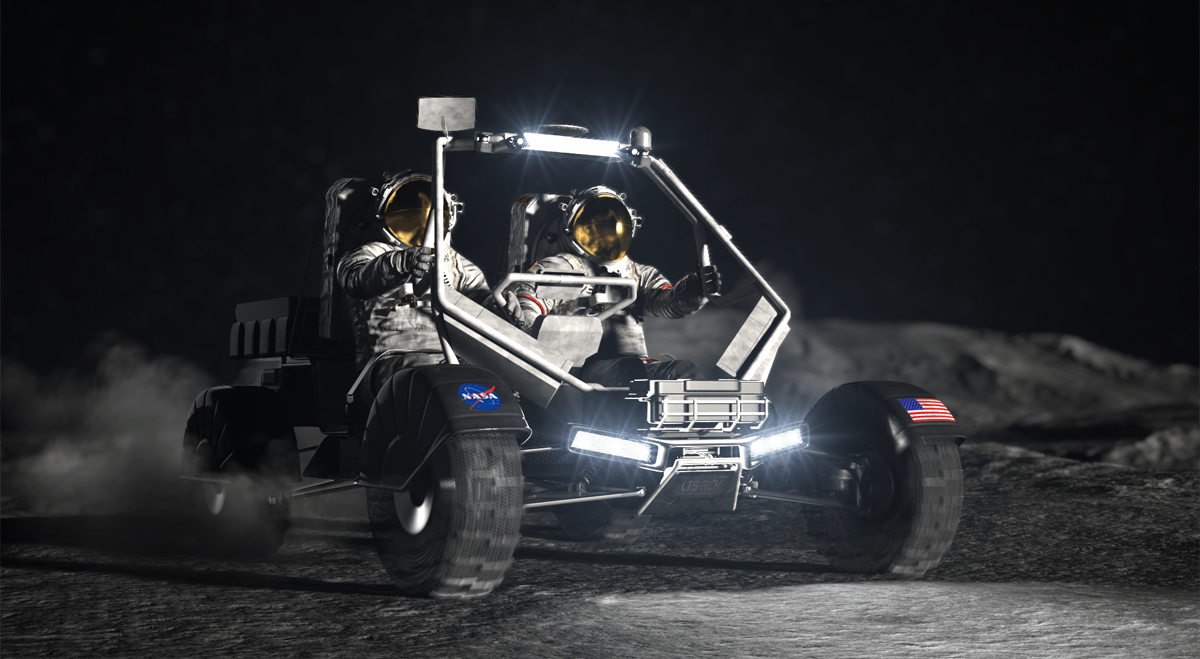
The multi-million-dollar contract brings AEye into the space mobility market, expanding Apollo lidar beyond automotive, defense and industrial applications into lunar navigation.
Key Investor Takeaways
- AEye (NASDAQ:LIDR) has secured a multi-million-dollar contract for its Apollo lidar to be integrated into Lunar Outpost’s Pegasus Lunar Terrain Vehicle.
- Apollo will support terrain perception, obstacle detection and autonomous navigation as Pegasus is developed to transport Artemis astronauts on the lunar surface.
- The selection opens a new space mobility market for AEye, diversifying the company beyond its established automotive, defense and industrial applications.
- Lunar Outpost selected Apollo for characteristics including its solid-state design, software-defined architecture and compact form factor, providing a demanding validation case for the technology.
- The commercial significance extends beyond a single application if lunar infrastructure activity expands, although the release provides no additional contract value, delivery schedule or future order commitments.
Why LIDR Stock Is in Focus
AEye has entered the space mobility market after Lunar Outpost selected its Apollo long-range lidar for integration into the Pegasus Lunar Terrain Vehicle.
The multi-million-dollar commercial engagement will put Apollo into a vehicle being developed to transport Artemis astronauts across the lunar surface. Lunar Outpost plans to use the lidar for terrain perception, obstacle detection and autonomous navigation.
The lunar environment creates demanding requirements for sensing hardware. According to AEye, Apollo’s solid-state design is suited to conditions involving vacuum, thermal extremes and persistent vibration, where field repairs are not possible.
Its software-defined architecture also allows scan patterns and sensor performance to be adjusted through software for specific mission requirements rather than relying on a fixed configuration.
AEye says Apollo can detect objects at distances of up to one kilometer, while its compact design helps address the tight mass and volume constraints associated with lunar vehicles.
Why This Matters for Investors
The contract gives AEye a commercial entry point into a market outside its existing automotive, defense and industrial focus.
That diversification matters because Apollo is being applied to another use case where long-range perception, durability and configurable sensing are critical. Successful deployment on Pegasus may provide additional evidence of the platform’s adaptability across very different operating environments.
The selection is also strategically relevant because Lunar Outpost describes Pegasus as part of its work toward establishing a sustained human presence at the Moon’s South Pole. AEye therefore gains exposure to a space mobility program connected with broader lunar infrastructure development.
For investors, however, the immediate financial impact should be kept in perspective. AEye describes the award only as a multi-million-dollar contract and does not disclose its precise value, expected revenue recognition schedule or potential follow-on orders.
The key development today is therefore the creation of a new commercial category for Apollo and the selection of AEye’s technology for a high-demand autonomous mobility application.
What to Watch Next
Investors may watch for integration and deployment milestones for Apollo on the Pegasus Lunar Terrain Vehicle, as well as further details about the timing and financial contribution of the contract.
Additional space mobility contracts would also provide evidence of whether this initial engagement can develop into a broader market for AEye rather than remaining a single-program opportunity.