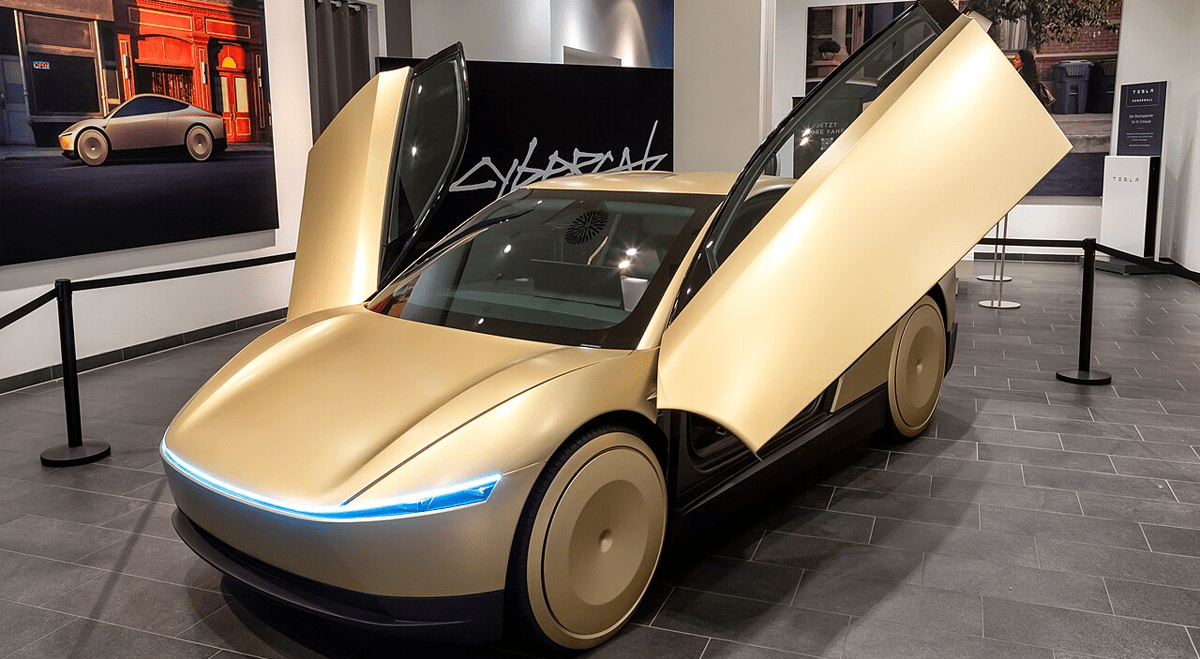
Tesla (NASDAQ:TSLA) said it has begun offering rides in its two-seat Cybercab in limited areas of Austin, Texas, as the U.S. National Highway Traffic Safety Administration said it was evaluating the company’s latest driverless vehicle activity.
The Cybercab does not have a steering wheel or pedals and is intended to become a central part of Tesla’s planned robotaxi network. The company promoted an exclusive Cybercab launch event in Austin on Thursday, where attendees were able to experience the vehicles.
CEO Elon Musk did not attend the event, according to attendees. Presentations from Tesla executives covering pricing, manufacturing and technology lasted approximately 15 minutes, based on videos posted following the event.
Tesla already operates a limited robotaxi ride-hailing service using autonomous Model Y vehicles, some of which have human safety monitors. The company intends to increase the use of Cybercabs within its network over time.
NHTSA Says It Is Evaluating Tesla Cybercab Activity
Federal vehicle safety standards generally require conventional human controls, bringing Tesla’s Cybercab deployment to the attention of the National Highway Traffic Safety Administration.
“NHTSA is in contact with Tesla and is evaluating the situation,” an agency spokesperson said.
Tesla updated its robotaxi website to state that Cybercab rides were available in certain parts of Austin. The company did not provide a date for when passengers would begin paying fares.
Executives at the launch discussed plans for dynamic pricing based on demand while describing the intended service as “a first-class experience at coach price”.
Tesla AI Chief Ashok Elluswamy said access was not restricted to selected participants. “It’s open to the entire public,” he said.
Musk separately described the Cybercab in a Thursday video as “the first car that is specifically built for unsupervised full self-driving.”
Tesla Continues Expansion of Robotaxi Network
Tesla began its Austin robotaxi pilot in June 2025 and has subsequently expanded the service to several other cities in Texas and Florida.
The company started Cybercab production in April 2026. At the time, Musk cautioned that initial production “will be very slow.”
Musk has said the Cybercab could eventually become Tesla’s highest-volume vehicle and form part of a global robotaxi network. The company’s plans also envision individual owners being able to add their vehicles to a Tesla-managed autonomous ride-hailing fleet when they are not using them.
Tesla’s robotaxi plans have attracted attention from investors as its core electric-vehicle operations face competition from other manufacturers, including Chinese EV companies.
Regulatory Requirements Affect Cybercab Deployment
The timing of a broader Cybercab rollout remains uncertain because of regulatory requirements applying to vehicles without steering wheels and pedals.
Federal regulations limit the number of vehicles without conventional controls that a manufacturer can sell, although established manufacturers can use an unlimited number for testing.
In California, Tesla does not currently have permits to operate a robotaxi service or test driverless vehicles without a safety driver capable of taking control from the front seat.
In July 2025, Musk said Tesla’s robotaxi network would expand at a “hyper-exponential rate” and reach half of the U.S. population by the end of that year. The network did not reach that level within the stated timeframe.
Tesla executives have more recently described a cautious approach to expansion, citing the need to avoid injuries or fatalities.
Tesla Has 420 Autonomous Vehicles Registered in Texas
Testing by Reuters following Tesla events in Dallas and Houston earlier this year identified periods of long waiting times and occasions when vehicles were unavailable.
During three rides in Dallas, a Reuters reporter was not dropped at the requested downtown destination despite it being within Tesla’s advertised service area. The drop-off locations were approximately a 15-minute walk from the destination. Tesla did not respond to Reuters’ requests for comment regarding those service issues.
Texas state records showed Tesla had 420 autonomous vehicles registered in the state as of Wednesday evening, including 45 Cybercabs. Earlier on Wednesday, the records had shown 314 registered Tesla vehicles.
Alphabet’s Waymo had 988 autonomous vehicles registered in Texas, according to the same state records.