American Fusion says its latest pulsed magnetic-field experiments produced hotter and denser plasma while maintaining toroidal stability, but quantitative measurements and independent validation remain future steps.
Key Investor Takeaways
- American Fusion (USOTC:AMFN) reported Texatron testing results showing hotter and denser toroidal plasmas than in its earlier high-current experiments.
- The company said the plasma structures remained stable against significant magnetohydrodynamic instabilities during the experimental pulse, supporting a central element of its fusion approach.
- The results remain developmental: American Fusion did not report quantitative temperature, density, confinement or fusion-output measurements.
- An observer reviewed the testing and data, but the company explicitly said this does not constitute third-party laboratory certification, peer review or independent validation of commercial fusion performance.
- Upcoming work will emphasize quantitative measurement, repeatability and progress toward deuterium-helium-3 fusion-relevant operating conditions.
Why AMFN Stock Is in Focus
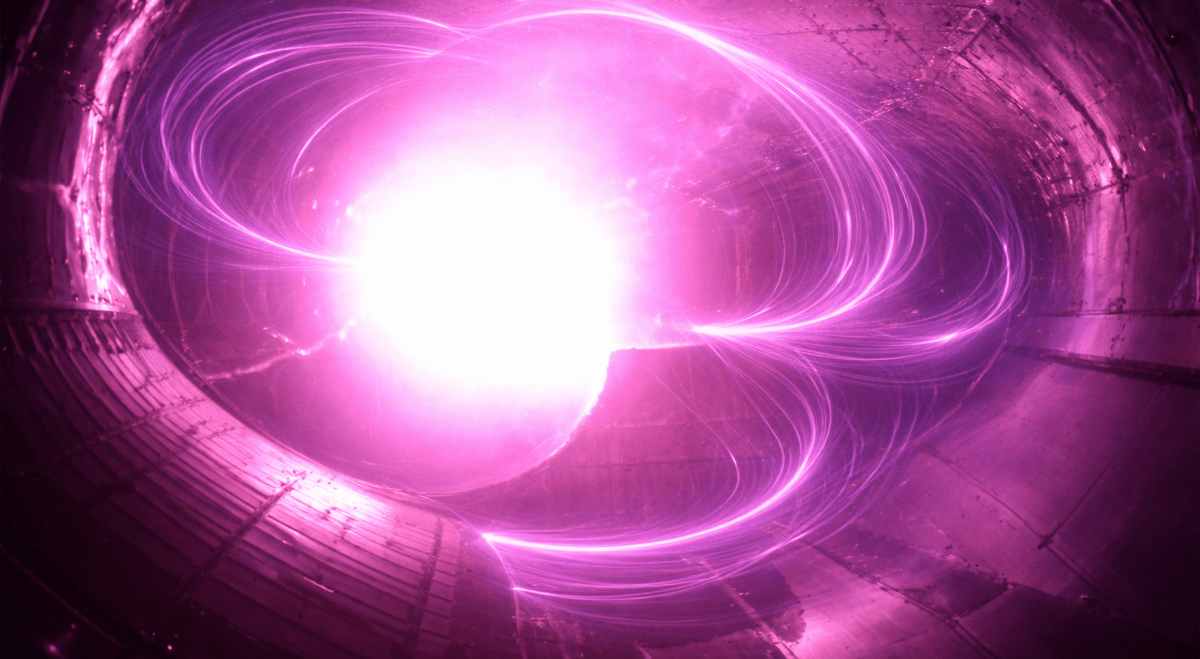
American Fusion reported new Texatron testing results from experiments using high-voltage capacitor banks to generate short, high-intensity magnetic-field pulses that rapidly compress toroidal plasma.
According to the company, the new configuration generated plasma that was hotter and denser than in previous high-current experiments. American Fusion also said the toroidal structures remained organized without significant MHD instabilities during the experimental pulse.
Those observations are relevant to the Texatron design because the system relies on rapid magnetic compression and shock heating rather than maintaining plasma continuously for extended periods.
Chief Technology Officer John E. Brandenburg said the tests repeatedly showed the behaviour the development team was seeking, including magnetic compression, increased plasma temperature and density, and a robust toroidal structure.
Fabrice David, who attended the test sessions, said he observed the experiments and reviewed the resulting data. American Fusion cautioned, however, that his observations should not be considered independent laboratory certification or validation of commercial fusion performance.
Why This Matters for Investors
The latest Texatron testing results provide American Fusion with experimental observations supporting some of the physical principles underlying its proposed fusion architecture. In particular, maintaining plasma stability during rapid compression is relevant because the company’s concept ultimately requires temperature, density and confinement conditions to work together.
The distinction between qualitative progress and quantitative validation remains important. The release does not provide measured plasma temperatures, densities, confinement times or fusion-energy output, meaning investors cannot yet assess from these results whether the system has reached fusion-relevant performance thresholds.
American Fusion is also developing a direct magnetic-to-electric conversion concept based on deuterium and helium-3 fusion. Under the proposed architecture, an energized plasma would expand against a magnetic field after a fusion pulse, inducing electrical current in surrounding conductors.
That system has not been demonstrated as a commercial power-generation technology. As a result, the latest experiments may advance the company’s development narrative, but significant testing remains before the broader Texatron concept can be evaluated on quantitative performance and electricity generation.
What to Watch Next
The next phase could provide more measurable evidence about Texatron’s development. American Fusion plans to characterize plasma temperature, density, magnetic-field strength, compression behaviour, confinement time and stability while working toward D–³He fusion-relevant conditions.
Repeatability will also be important as the experimental program advances. Investors can additionally watch for progress in testing the magnetic-armature energy-recovery concept and any future independent verification under a formal testing protocol.
The company also appointed Travis Yakimishyn as Senior Electrical Engineer, with a more direct role in the design, development and testing of electrical and technical systems supporting Texatron.