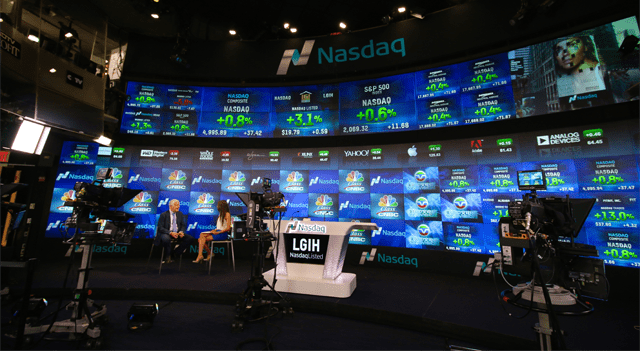
US stock futures pointed to a higher opening on Monday as a sharp decline in oil prices and renewed optimism surrounding artificial intelligence supported investor sentiment.
The positive indications followed a mixed finish on Wall Street on Friday, when gains in technology and semiconductor stocks helped lift the Nasdaq and S&P 500, while the Dow Jones Industrial Average ended lower.
Dow futures advanced 0.87%, S&P 500 futures gained 0.71% and Nasdaq futures climbed 1.1%.
Investors continued to monitor developments in the Middle East, with diplomatic discussions expected during this week’s United Nations General Assembly.
Middle East Diplomacy and Oil Prices Remain in Focus
Oil prices declined sharply amid hopes that diplomatic efforts could reduce tensions in the Middle East.
US crude futures fell below $100 a barrel, providing some relief from concerns about energy costs and their potential impact on inflation.
Ahead of a meeting with Gulf-state leaders on the sidelines of the UN General Assembly, US President Donald Trump warned Iran of severe economic consequences if it failed to reach an agreement. He also raised the possibility of military action against the country’s leadership.
Trump indicated that he could meet Iranian President Masoud Pezeshkian in New York and suggested that significant developments might occur soon.
Describing himself as being in a “deciding mode”, Trump said he was considering military action, continued economic pressure or a negotiated agreement.
Despite hopes for diplomatic progress, uncertainty surrounding the conflict remained a factor for financial markets.
Nasdaq and S&P 500 Gain on Friday as Dow Declines
US equities fluctuated throughout Friday’s session before the major indices finished with mixed results.
The Nasdaq Composite rose 104.25 points, or 0.4%, to 26,522.55, while the S&P 500 gained 12.74 points, or 0.2%, to close at 7,650.50.
The Dow Jones Industrial Average declined 95.40 points, or 0.2%, to 51,682.64.
For the week, the Nasdaq advanced 0.7%, the S&P 500 slipped 0.1% and the Dow fell 1.7%.
Semiconductor shares supported the technology-heavy Nasdaq, with the Philadelphia Semiconductor Index climbing 2.8%.
Brokerage stocks also recorded gains, lifting the NYSE Arca Broker/Dealer Index by 1.1%.
In contrast, interest rate-sensitive sectors, including utilities, telecommunications and housing, moved lower.
Treasury Yields Rise Despite Lower Crude Prices
Friday’s uneven trading reflected differing movements in oil prices and US Treasury yields, both of which have influenced markets in recent sessions.
While crude futures declined sharply, Treasury yields moved higher amid concerns about the outlook for interest rates.
Higher bond yields can put pressure on interest rate-sensitive equities by increasing financing costs and making fixed-income investments relatively more attractive.
Trading activity remained relatively subdued as investors assessed market conditions following recent volatility.
US Industrial Production Stalls in August
On the economic calendar, Federal Reserve data showed that US industrial production was unchanged in August, falling short of expectations for a 0.3% increase.
The flat reading followed an unrevised 0.2% rise in July.
An increase in utilities output offset a decline in manufacturing production, leaving overall industrial activity unchanged for the month.
The figures provided another indication of conditions in the US economy as investors evaluated the outlook for growth, inflation and Federal Reserve interest rate policy.