Why should investors take a closer look at Leading Edge Materials?
As governments and industries race to secure critical mineral supply chains, attention is increasingly shifting beyond conventional rare earth projects.
People in the know are looking at deposits capable of supplying the heavy rare earth elements that are vital to advanced manufacturing, clean energy and defence technologies.
This article is disseminated in partnership with Leading Edge Materials Corp. It is intended to inform investors and should not be taken as a recommendation or financial advice.
For savvy investors knee-deep in due diligence in the critical minerals sector, Leading Edge Materials (USOTC:KEMIF) (TSXV:LEM) has emerged as a company that warrants closer examination.
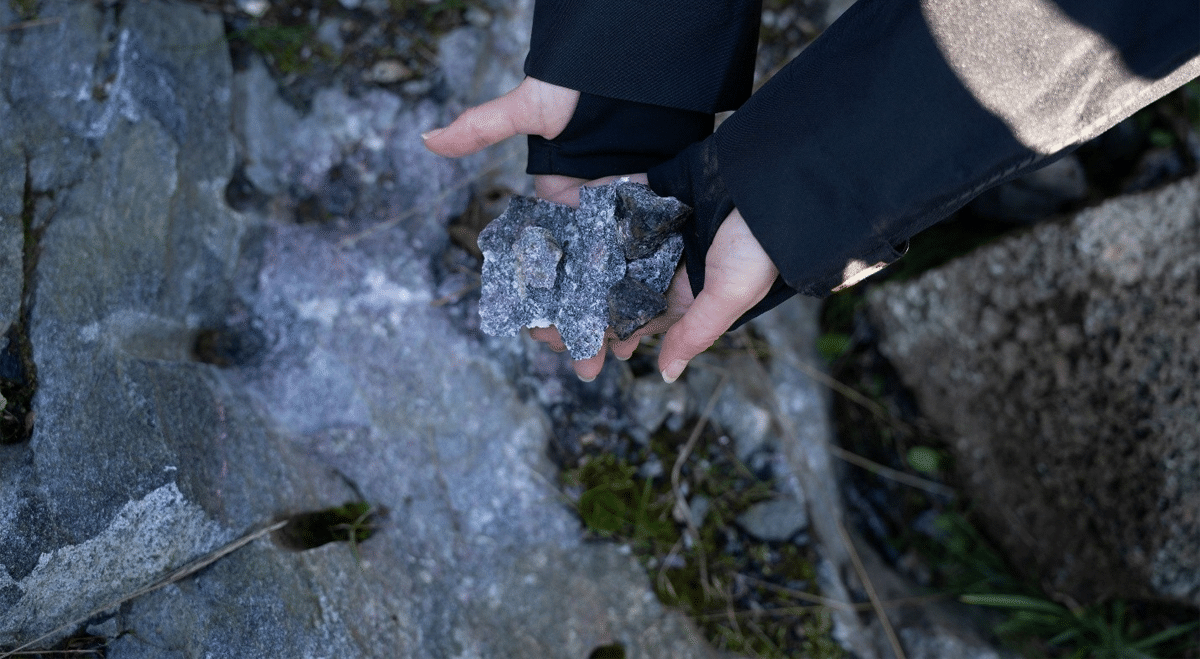
At the centre of the story is the company’s Norra Kärr project in Sweden, one of the most strategically significant deposits in Europe, rich in heavy rare earths such as dysprosium and terbium. Importantly, the word “heavy” is not merely a technical classification. It is arguably the defining factor that makes Norra Kärr strategically relevant.
Why “heavy” rare earths matter
While rare earth elements are often discussed as a single group, not all rare earths carry the same strategic importance. Heavy rare earth elements such as dysprosium, terbium and yttrium are considerably rarer and more difficult to secure than their light rare earth counterparts.
These materials play a critical role in producing high-performance permanent magnets used in:
- Electric vehicles
- Wind turbines
- Military and aerospace systems
- Advanced electronics
- Industrial automation equipment
Dysprosium and terbium are particularly important because they allow permanent magnets to maintain performance under high temperatures and demanding operating conditions. As global electrification accelerates and defence spending rises across Europe and North America, reliable sources of these heavy rare earths are becoming increasingly valuable.
The challenge is that global supply remains highly concentrated, creating concerns about long-term availability and geopolitical risk. As recent export restrictions and supply chain disruptions have demonstrated, access to heavy rare earth elements cannot be taken for granted.
What China has not let go of
On 9 November, China extended its pause on the wider rare earth export controls it announced in October 2025 until 10 January 2027. Many headlines read this as relief. However, the pause has never covered the licensing regime China introduced in April 2025 on seven medium and heavy rare earths, including dysprosium, terbium and yttrium. Every export of those still requires a licence from Beijing.
The effect shows up in prices. Western buyers are paying many times the Chinese domestic price for dysprosium and terbium, and in some cases cannot secure material at all. In October, Fastmarkets reported that terbium oxide prices outside China rose 41% in a single week, to US$5,000-8,000/kg.
Norra Kärr’s smart position in Europe
Leading Edge Materials believes Norra Kärr can become a cornerstone of Europe’s domestic heavy rare earth supply chain.
That view is not the company’s alone. The Geological Survey of Sweden designated Norra Kärr an area of national interest for its rare earths in 2011. When granting the mining lease in June, Sweden’s Energy and Industry Minister Ebba Busch said Norra Kärr could meet a large part of Sweden’s and Europe’s supply needs.
The project has several characteristics that distinguish it from many rare earth development stories:
- A 25-year mining lease granted by the Swedish Government
- Heavy rare earths account for about 52% of its rare earth content, including dysprosium, terbium and yttrium
- Strategic location within Europe
- Targeted production timeline of approximately four years
- Potential to become Europe’s first heavy rare earth mine
- A 2021 Preliminary Economic Assessment outlining average annual production of 248 tonnes of dysprosium oxide and 36 tonnes of terbium oxide over a 26-year mine life
For Europe, which continues seeking greater resource independence across critical minerals, projects capable of supplying heavy rare earth elements at scale are attracting growing interest from policymakers and industry participants alike.
To put the scale in context, Edison Investment Research estimates current European demand for dysprosium oxide at 180-200 tonnes a year.
The project’s value proposition extends beyond simply supplying rare earth materials. It addresses a strategic vulnerability that has become increasingly evident as nations seek secure sources of inputs required for electrification, renewable energy deployment and defence modernization.
Advancing toward production
A key development for the company came in June 2026 when the Swedish Government granted a 25-year Exploitation Concession, effectively providing the mining lease required to advance the project.
The concession confirms the company’s right to extract the mineral resource and establishes the site’s suitability for mining. With this milestone now achieved, management has moved into the next major phase of development.
In late October, Leading Edge Materials announced the commencement of the Environmental Impact Assessment (EIA) process for Norra Kärr, an important step toward securing the environmental permit required under Swedish law.
The EIA will serve as the foundation for the company’s planned environmental permit application in 2027 and will involve detailed environmental studies, stakeholder consultation and engagement with local communities and regulatory authorities.
To support this work, the company appointed Ecogain, a respected Swedish environmental consultancy recognized for its expertise in biodiversity and environmental permitting.
Alongside permitting, the company is updating its pre-feasibility study, funded by a C$6 million private placement that closed in September 2026.
For investors, the start of the EIA process represents more than a regulatory exercise. It signals continued progress along the pathway from development-stage project to potential commercial operation.
Additional value through industrial mineral co-products
While Norra Kärr is primarily known for its heavy rare earth potential, the company recently highlighted another dimension of the project’s value proposition.
Recently, Leading Edge Materials announced that its Swedish subsidiary, GREENNA Mineral AB, signed a Memorandum of Understanding with TRILLIUM Resources Pte. Ltd. to explore long-term cooperation involving industrial mineral co-products from Norra Kärr.
The proposed arrangement focuses on two minerals that occur alongside the project’s heavy rare earth resource:
Nepheline syenite
Nepheline syenite is widely used in:
- Glass manufacturing
- Ceramics production
- Paints and coatings
- Industrial fillers
- Plastics applications
The material is valued because it contributes alumina and alkalis while helping reduce energy consumption during glass production.
Global commercial supply comes from a relatively small number of operations, creating an opportunity for an additional European source.
Aegirine
Aegirine is being evaluated for several industrial applications, including:
- Refractory products
- Mineral wool
- Fiberglass manufacturing
- Weather-resistant pigments
- Specialty glass products
- Ceramic applications
Although its commercial markets remain less mature than those for nepheline syenite, ongoing technical evaluations could help identify attractive end-market opportunities.
Is the Trilliun agreement a gamechanger?
The memorandum outlines a framework under which Trilliun and Leading Edge Materials will conduct technical studies, exchange data and establish a joint technical committee to evaluate processing pathways for both products.
A definitive sales and purchase agreement may eventually follow, though no binding commercial arrangement has yet been finalized.
From an investment perspective, the significance of the agreement is twofold.
First, it creates a potential route to market for industrial mineral co-products that might otherwise be treated as waste.
Second, it has the potential to improve project economics while simultaneously reducing the volume of material requiring on-site management.
This approach aligns with an increasingly important theme among mining projects: maximizing resource utilization while minimizing environmental impact.
Beyond Norra Kärr: graphite and battery metals
Leading Edge Materials also owns Woxna in central Sweden, one of the few fully built and permitted natural flake graphite mines in Europe. The mine is on care and maintenance while the company studies a possible restart. Testwork published in June produced a 94% carbon flotation concentrate and reached 99.96% purity using a two-stage alkaline process. A near-mine drilling programme started in September is testing whether three known graphite occurrences form part of a larger system.
Graphite carries a similar supply risk to rare earths. China dominates graphite mining, spherical graphite processing and anode manufacturing, and its controls on graphite anode materials are paused only until 10 January 2027.
Heavy rare earths and Europe’s supply chain future – Summary
The broader investment thesis surrounding Leading Edge Materials ultimately comes back to heavy rare earth elements.
As Europe seeks secure domestic sources of critical minerals, projects capable of supplying dysprosium, terbium and yttrium are becoming increasingly scarce and strategically important.
The combination of:
- A granted 25-year mining lease
- Progress toward environmental permitting
- Exposure to critical heavy rare earth markets
- Potential industrial mineral co-product revenues
- A location within Europe’s industrial ecosystem
- Optional upside from Woxna, a fully built and permitted graphite mine in Sweden
could make Norra Kärr a project that investors may wish to study in greater detail.
While development-stage mining projects inherently involve permitting, financing, execution and market risks, recent milestones suggest that Leading Edge Materials continues advancing key components necessary to move Norra Kärr toward potential production.
Investor’s corner
Leading Edge Materials is positioning Norra Kärr as a potential solution to one of Europe’s most pressing critical mineral challenges: securing a domestic source of heavy rare earth elements.
With dysprosium, terbium and yttrium expected to remain essential to electric vehicles, wind energy infrastructure and defence technologies, the strategic significance of the project’s heavy rare earth resource cannot be overlooked.
Recent advances, including the award of a 25-year mining lease, the commencement of environmental permitting work and the signing of a memorandum with Trilliun for industrial mineral co-products, provide investors with several developments worthy of further investigation.
For investors interested in critical minerals, European supply chain security and the future of heavy rare earths, now may be an opportune time to conduct deeper due diligence on Leading Edge Materials Corp. and the Norra Kärr project.
To learn more about the company, its strategy and the Norra Kärr Heavy Rare Earth Elements Project, investors should review Leading Edge Materials’ latest investor presentation and corporate materials.
Sponsored Article: InvestorsHub.com Inc. dba The Market Link has been compensated SECURITIES: valued at $1,050 by Leading Edge Materials Corp. (USOTC:LEMIF) for the publication and distribution of this content. This is not independent editorial content. For full compensation disclosure visit investorshub.advfn.com/boards/disclaimer.aspx