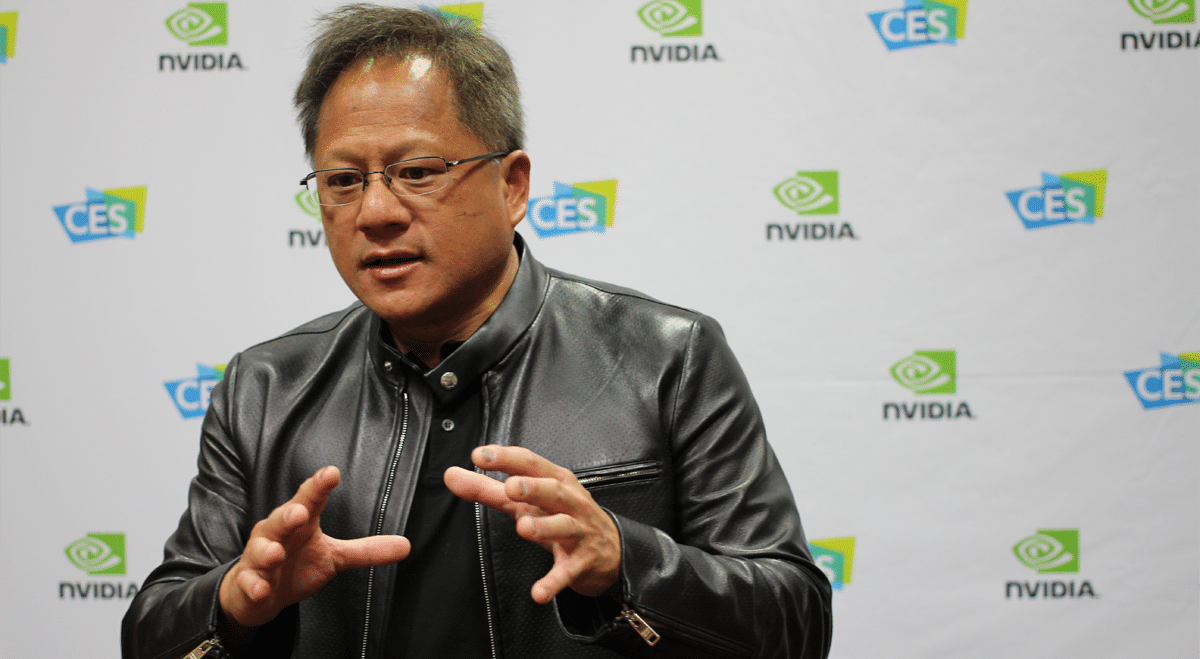
The possibility of Jensen Huang returning to Nvidia (NASDAQ:NVDA) has prompted renewed discussion about the semiconductor company’s leadership following reports that prominent Silicon Valley executives are seeking to support his reinstatement. However, Lynx Equity Strategies believes a return is highly unlikely, citing the circumstances surrounding his departure and the challenges facing Nvidia’s board.
In a research note published Monday, Lynx analyst KC Rajkumar assessed the likelihood of Huang returning as “next to nil,” arguing that investors should focus instead on the company’s leadership transition, financial arrangements and future earnings outlook.
The assessment follows a Financial Times report suggesting that Huang was considering a possible return and that technology industry executives were organising efforts to influence Nvidia’s board and the White House.
Neither the reported campaign nor Huang’s potential reinstatement has been confirmed as an agreed course of action.
Silicon Valley Executives Reportedly Support Huang’s Return
According to the Financial Times, a group of influential technology executives and investors has been discussing a campaign intended to facilitate Huang’s return to Nvidia.
The reported initiative involves lobbying Nvidia’s board and the White House, with support said to include prominent figures from Silicon Valley.
The report also indicated that Huang was considering the possibility of resuming a leadership role at the company.
These developments follow Nvidia’s reported management transition, during which Chief Financial Officer Colette Kress assumed the interim chief executive position and Harvey Jones became chairman.
The company’s board has also reportedly considered external candidates for the permanent chief executive role, including Arm CEO Rene Haas.
The reported succession discussions suggest that Nvidia’s board has been evaluating leadership options independently of the campaign supporting Huang.
Lynx Analyst Questions Prospects for Reinstatement
Rajkumar’s assessment centres on his interpretation of the circumstances that led to Huang’s departure.
The analyst suggested that the resignation may have resulted from increasing pressure within Nvidia’s board rather than a decision that directors would readily reconsider.
Under that interpretation, external support from technology executives and investors would be unlikely to change the board’s position.
Lynx therefore considers the possibility of Huang returning to his former role remote, despite the reported efforts to secure his reinstatement.
The firm’s conclusions represent its own assessment of events rather than independently established findings about the reasons for Huang’s departure.
Financial Arrangements Identified as Potential Priority for Interim CEO
Lynx also examined the potential direction of Nvidia under interim CEO Colette Kress.
The research firm suggested that Kress’s appointment could involve more extensive operational and financial changes than a conventional temporary leadership transition.
In particular, Rajkumar identified what Lynx describes as Nvidia’s “circular” financing arrangements involving customers and financial institutions as an area that may require review.
Such arrangements can involve interconnected financing, investment and commercial relationships between technology suppliers and their customers.
According to Lynx, some of Nvidia’s reported arrangements had already begun to encounter difficulties.
The analyst suggested that resolving or restructuring these relationships could become a priority for Kress.
Lynx also raised the possibility that complications associated with these arrangements contributed to Huang’s departure, although that interpretation has not been independently established.
Governance and Regulatory Considerations Remain Under Discussion
The research note also addressed potential governance and regulatory issues associated with a return by Huang.
Lynx referred to reported concerns involving Huang’s personal conduct, including matters it attributed to characterisations by US Treasury officials.
The firm argued that Nvidia’s board would have limited incentive to revisit potential reputational or regulatory exposure associated with its previous leadership arrangements.
These assertions reflect the analyst’s interpretation of reported developments and do not establish the underlying allegations as fact.
The broader issue, according to Lynx, is whether the company’s board would consider reinstatement compatible with its ongoing governance and succession decisions.
Lynx Cautions Against Buying Nvidia Shares Following Selloff
Rajkumar also discussed the implications of the leadership uncertainty for Nvidia’s valuation and earnings expectations.
Although Lynx described Nvidia shares as trading at a substantially reduced valuation following the recent decline, the firm advised caution about interpreting the lower share price as an investment opportunity.
The analyst argued that existing earnings forecasts may not yet adequately reflect the potential changes to Nvidia’s business model, financial relationships and management structure.
“Until then, we expect there is further downside to NVDA stock,” Rajkumar wrote.
The statement reflects Lynx’s market outlook rather than a forecast that can be independently confirmed.
The firm believes investors should assess the company’s earnings assumptions before drawing conclusions about its valuation following the selloff.
Leadership Transition and Earnings Outlook Remain Central Questions
For Lynx Equity Strategies, the reported efforts to bring Huang back to Nvidia are secondary to the potential implications of the company’s leadership transition.
The firm identified the future management of customer financing relationships, governance considerations and the reliability of existing earnings estimates as issues requiring attention.
Its assessment suggests that Nvidia’s financial and operational direction under new leadership may be more relevant to the company’s valuation than speculation about Huang’s reinstatement.
The reported campaign supporting Huang remains uncertain, while the board’s longer-term succession decisions and any resulting changes to Nvidia’s financial strategy have yet to be established.