The major U.S. index futures on the Dow Jones, S&P and Nasdaq are currently pointing to a lower open on Tuesday, with stocks likely to move back to the downside after recovering from an early slump to end the previous session slightly higher.
Profit taking may contribute to initial weakness on Wall Street, as some traders look to cash in on the strong upward move seen over the past several weeks.
The major averages have climbed well off their April lows amid easing trade concerns, with the Nasdaq and the S&P 500 reaching their best levels in almost three months.
However, JPMorgan Chase (NYSE:JPM) CEO Jamie Dimon has warned stock market values may not properly represent the risks of higher inflation and even stagflation.
“My own view is people feel pretty good because you haven’t seen effective tariffs,” Dimon said during the financial giant’s annual investor day meeting on Monday. “The market came down 10%, [it’s] back up 10%. That’s an extraordinary amount of complacency.”
On the other hand, Carson Group chief market strategist Ryan Detrick told CNBC the rebound should be taken seriously even amid lingering concerns about trade and the economy.
“All these worries and concerns are real. We’re not ignoring everything that’s out there,” Detrick said. “But are we listening to what the market’s doing, right?
“The previous 27 trading days, the S&P 500 is up close to 20 percent,” he added. “That’s not a bear market rally. That’s not a short-covering rally,”
Stocks came under pressure early in the session on Monday but regained ground over the course of the trading day. The major averages climbed well off their lows of the session before ending the day modestly higher.
The Dow fell more than 300 points in early trading but ended the day up 137.33 points or 0.3 percent at 42,792.07. The S&P 500 also inched up 5.22 points or 0.1 percent to 5,963.60, while the Nasdaq crept up 4.36 points or less than a tenth of a percent to 19,215.46.
The initial weakness on Wall Street came as traders looked to cash in on last week’s rally, which lifted the major averages to their best closing levels in over two months.
Last Monday’s news of a U.S.-China trade deal temporarily slashing steep tariffs on each other’s goods generated considerable buying interest that carried over throughout much of the week.
Negative sentiment was also generated in reaction to news that Moody’s has downgraded the U.S. debt rating by a notch to Aa1 from Aaa.
Moody’s said the downgrade reflects the increase over more than a decade in government debt and interest payment ratios to levels that are significantly higher than similarly rated sovereigns.
Selling pressure waned over the course of the session, however, as traders seem to remain generally optimistic about the outlook for the markets.
On the U.S. economic front, the Conference Board released a report showing its reading on leading U.S. economic indicators slumped by more than expected in the month of April.
The report said the leading economic index tumbled by 1.0 percent in April after sliding by a downwardly revised 0.8 percent in March.
Economists had expected the leading economic index to decrease by 0.8 percent compared to the 0.7 percent drop originally reported for the previous month.
Gold stocks saw substantial strength on the day, as the price of the precious metal surged in reaction to Moody’s downgrade of the U.S. debt rating. Reflecting the strength in the sector, the NYSE Arca Gold Bugs Index jumped by 2.2 percent.
Biotechnology, healthcare and brokerage stocks also saw some strength, while energy stocks moved to the downside despite an increase by the price of crude oil.
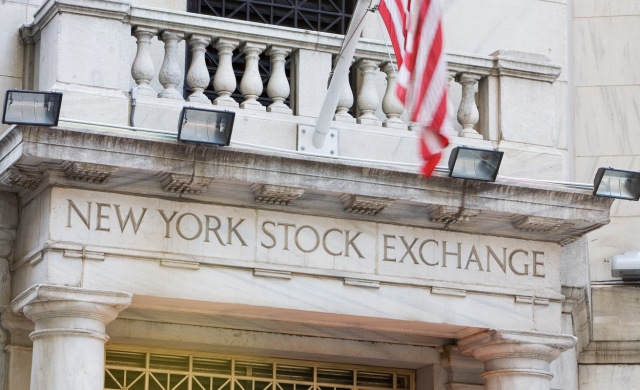
Dow Jones, S&P, Nasdaq, U.S. Stocks May Move Back To The Downside In Early Trading
by
Tags: