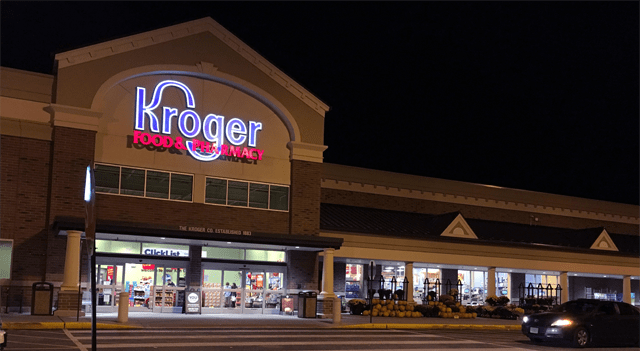
Kroger (NYSE:KR) traded 1.8% lower in premarket action Thursday after reporting third-quarter revenue that missed Wall Street expectations, weighed down by softer spending from lower-income customers and intensifying competition from major retailers.
Revenue grew to $33.9 billion but fell short of the $34.28 billion analysts had projected. The company said many shoppers continued to scale back purchases and opt for cheaper alternatives following cuts to food-stamp benefits and a temporary disruption in SNAP payments during the brief federal shutdown in November.
Meanwhile, Walmart (NYSE: WMT) and other large retail chains continued to gain momentum by leveraging aggressive pricing and strong private-label offerings.
Despite the revenue miss, Kroger posted better-than-expected profitability. Adjusted EPS came in at $1.05, topping consensus expectations of $1.03, aided by stronger gross margins and a 17% surge in eCommerce sales. The company reaffirmed that its online operations remain on track to turn profitable in 2026.
Kroger reported an operating loss of $1.54 billion, or $2.02 per share, for the quarter, largely due to $2.6 billion in previously disclosed impairment and related charges associated with its automated fulfillment network. Adjusted FIFO operating profit totaled $1.09 billion.
Gross margin improved to 22.8%, up from 22.4% a year earlier, helped by lower supply chain expenses, the divestiture of Kroger Specialty Pharmacy, and reduced shrink.
The grocer maintained a full-year EPS outlook of $4.75–$4.80 per share, which remains ahead of analyst estimates.
Kroger also noted it has completed a $5 billion accelerated share repurchase program and continues to buy back shares under its remaining $2.5 billion authorization.
If you’d like, I can also rewrite this in a shorter news-blurb style, offer a more analytical tone, or produce translations.