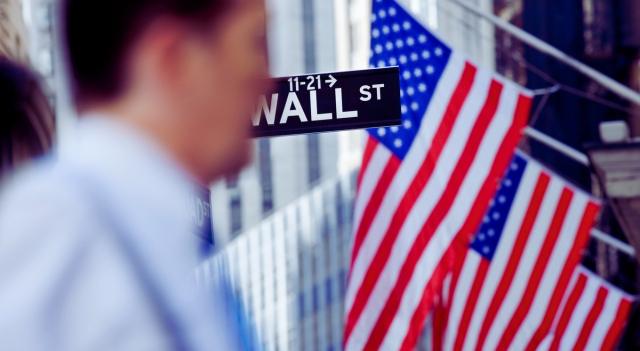
U.S. equity futures are pointing to a mostly unchanged open on Monday, suggesting a lack of clear direction after the mixed showing seen in the previous session on Friday.
Market participants appear hesitant to take strong positions ahead of the Federal Reserve’s monetary policy decision due on Wednesday. While the central bank is broadly expected to keep interest rates unchanged, attention will be firmly on the accompanying statement for any guidance on the future path of rates.
Upcoming earnings from major companies including Meta Platforms (NASDAQ:META), Microsoft (NASDAQ:MSFT), Tesla (NASDAQ:TSLA) and Apple (NASDAQ:AAPL) are also set to be key drivers of sentiment in the days ahead.
Geopolitical developments remain on investors’ radar as well. President Donald Trump has threatened to impose a 100 percent tariff on Canadian imports in response to the possibility of a trade agreement between Canada and China. Canadian Prime Minister Mark Carney pushed back, saying his government has no intention of pursuing such a deal.
Meanwhile, the risk of another U.S. government shutdown is resurfacing. Several Democratic senators have warned they will oppose a funding bill if it includes money for the Department of Homeland Security, following the fatal shooting of a U.S. citizen by federal immigration agents in Minneapolis over the weekend.
After strong gains over the prior two sessions, Wall Street delivered a split performance on Friday. The Dow Jones Industrial Average moved lower, while the tech-heavy Nasdaq continued to advance, closing higher for a third consecutive day.
By the close, the Dow fell 285.30 points, or 0.6%, to 49,098.71. The S&P 500 edged up 2.26 points, or less than 0.1%, to 6,915.61, while the Nasdaq gained 65.22 points, or 0.3%, to 23,501.24.
For the holiday-shortened week as a whole, all three major indexes finished lower. The Nasdaq slipped 0.1%, while the S&P 500 and the Dow declined by 0.4% and 0.5%, respectively.
Friday’s uneven trading reflected shifting geopolitical concerns. Earlier worries over tensions surrounding Greenland eased, only to be replaced by renewed anxiety over a potential confrontation between the United States and Iran.
After ruling out the use of force to acquire Greenland and easing tariff threats toward Europe, Trump appeared to refocus attention on Iran. Speaking to reporters aboard Air Force One on Thursday, he said a U.S. “armada” was heading toward the Middle East.
“We’re watching Iran,” Trump said. “You know we have a lot of ships going in that direction just in case. We have a big flotilla going in that direction and we’ll see what happens.”
Trump had previously stepped back from threats of military action against Iran linked to its crackdown on widespread protests.
On the economic front, data from the University of Michigan showed a stronger-than-expected improvement in consumer sentiment for January. The university revised its consumer sentiment index up to 56.4 from a preliminary reading of 54.0, compared with expectations for no revision. The revised figure also marks a notable increase from December’s reading of 52.9.
Sector-wise, software stocks were among the day’s strongest performers, pushing the Dow Jones U.S. Software Index up 2.2%. Gold miners also advanced, supported by another surge in gold prices, with the NYSE Arca Gold Bugs Index rising 1.5%.
In contrast, computer hardware stocks lagged, dragging the NYSE Arca Computer Hardware Index down 2.9%. Banking and housing stocks also weakened, as the KBW Bank Index fell 2.2% and the Philadelphia Housing Sector Index dropped 1.6%.