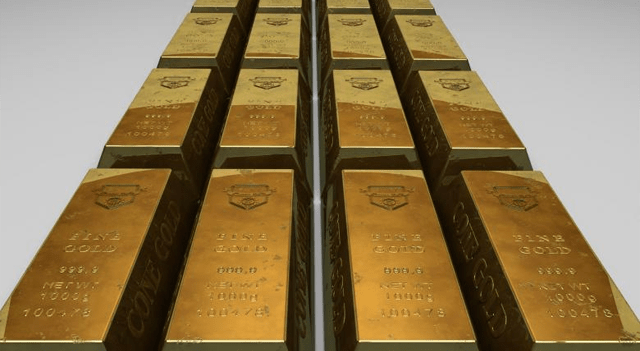
Gold and silver extended their declines on Tuesday, building on the previous session’s weakness as investors stayed cautious ahead of important U.S. economic releases scheduled for later this week.
Market nerves were also heightened by impending talks between Washington and Tehran regarding Iran’s nuclear program. At the same time, public holidays in both China and the United States led to thinner trading volumes, while a modest strengthening of the dollar added pressure to precious metals.
Spot gold dropped 1.9% to $4,898.51 per ounce, with April gold futures down 2% at $4,916.66 per ounce as of 01:22 ET (06:22 GMT).
Silver followed suit, with spot prices falling nearly 3% to $74.4875 per ounce. Platinum declined 0.7% to $2,007.43 per ounce.
Geneva nuclear discussions ahead
Officials from the United States and Iran are scheduled to meet in Geneva on Tuesday to address their longstanding dispute over Tehran’s nuclear ambitions.
The negotiations come against a backdrop of rising geopolitical tensions in the Middle East. The U.S. has increased its military presence in the region, while President Donald Trump has repeatedly warned of potential military action if Iran declines to reach an agreement with Washington.
On Monday, Trump told reporters he would play an indirect role in the talks and expressed confidence that Iran is seeking a deal.
In recent weeks, the U.S. has deployed two aircraft carriers and additional naval assets to the region. Iran, in turn, launched military exercises in the Strait of Hormuz, a critical shipping route for global energy supplies.
Despite the escalation in tensions, precious metals have not attracted significant safe-haven demand. Investors remain wary following a sharp correction from late-January highs, when speculative buying had pushed gold and other metals to record levels.
Attention turns to U.S. data and Fed minutes
This week’s spotlight is firmly on upcoming U.S. macroeconomic releases, along with minutes from the Federal Reserve’s January meeting, scheduled for Wednesday.
Industrial production figures are due midweek, while the Personal Consumption Expenditures (PCE) price index — the Fed’s preferred inflation measure — will be released on Friday.
The PCE data, in particular, will be closely scrutinized for fresh insight into inflation trends and the likely path of interest rates.
Uncertainty surrounding U.S. monetary policy has weighed on gold in recent weeks, especially after President Donald Trump nominated Kevin Warsh as the next Federal Reserve Chair.
Warsh is widely perceived as less dovish, and his nomination contributed to heavy selling in precious metals, as traders also locked in profits following January’s sharp rally.
Recent U.S. data have painted a mixed picture, with inflation moderating slightly in January even as labor market indicators showed resilience.
A firmer dollar in holiday-thinned trading on Monday further pressured commodity prices, adding to gold’s downside momentum.