Global markets weakened on Monday as oil prices surged past $100 per barrel amid escalating tensions involving Iran, raising concerns about supply disruptions and broader economic fallout.
Media reports indicated that the Group of Seven (G7) advanced economies may consider releasing strategic oil reserves to stabilize supply. According to the Wall Street Journal, citing French and European Union officials, finance ministers from the G7 nations are scheduled to meet to discuss the conflict and its potential economic consequences. The Financial Times had previously reported on the planned discussions.
The reports come as crude prices climb toward levels last seen following Russia’s invasion of Ukraine, reflecting fears that the conflict in the Middle East may persist.
Investor concerns intensified after Mojtaba Khamenei was named Iran’s new supreme leader following the assassination of his father, Ayatollah Ali Khamenei, during joint U.S.-Israeli airstrikes at the beginning of the conflict on February 28. U.S. President Donald Trump described Mojtaba Khamenei as an “unacceptable” choice.
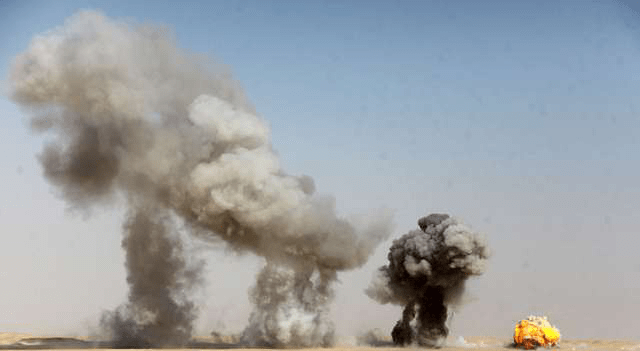
Meanwhile, violence continued across the region. Iran launched strikes against Israel and U.S.-aligned countries in the Persian Gulf, while airstrikes over the weekend targeted Iranian fuel-storage facilities.
Oil shock concerns grow
Highlighting the global impact of rising oil prices, International Monetary Fund Managing Director Kristalina Georgieva warned that a sustained 10% increase in crude prices could push global headline inflation higher by roughly 0.4 percentage points.
Speaking during a keynote address at an event in Japan, Georgieva said: “Think of the unthinkable and prepare for it.”
By 10:10 ET (14:10 GMT), Brent crude—the global benchmark—had jumped 13.3% to $104.83 per barrel, while U.S. West Texas Intermediate crude climbed 14% to $103.62 per barrel.
The sharp move in oil prices weighed on equities worldwide. Major U.S. stock indexes fell more than 1%, while markets across Europe and Asia also declined. At the same time, government bond yields moved higher as bond prices fell.
Markets have been particularly focused on the Strait of Hormuz, located just south of Iran, amid concerns that tanker traffic could remain severely disrupted. The strategic waterway handles roughly one-fifth of the world’s oil and gas supply, much of which is shipped to Asia.
Shipping activity has been affected by rising safety risks and difficulties obtaining insurance for vessels transiting the region. Tankers have reportedly been stranded on both sides of the strait, while container shipping companies have begun rerouting vessels away from the area. Analysts at ING also noted that some oil producers have started to shut in output due to storage constraints.
“The combination of these production shut-ins and no signs of de-escalation in the war means the market is having to aggressively price in a prolonged supply disruption. The bottom line is that, as long as we don’t see oil moving through the Strait of Hormuz, oil prices will only move higher,” ING analysts said in a note.
Oil’s surge moderated slightly after reports that Saudi Arabia, which has itself been targeted by Iranian drones and ballistic missiles, may increase supply to help stabilize markets. However, Reuters later reported that Saudi oil giant Aramco has begun cutting production at two of its oilfields.
Elsewhere, Bahrain’s state-backed energy company declared force majeure on some operations, stating it was unable to meet contractual obligations after a recent attack on one of its refineries.