Futures tied to major U.S. stock indices edged slightly lower while oil prices resumed their upward move as fighting involving Iran continued. The escalation comes despite President Donald Trump announcing a delay to planned U.S. military strikes targeting Iran’s power grid. Fresh attacks have been reported across parts of the Middle East, while Tehran has rejected Trump’s claims that the two sides held “good” talks about ending the conflict. Investors are now turning their attention to upcoming U.S. business activity data, which may offer early clues about how the conflict is affecting the broader economy.
Futures subdued
U.S. stock futures traded cautiously on Tuesday as markets tried to gauge the likely direction of the conflict with Iran following Trump’s decision to postpone strikes on Iranian power plants.
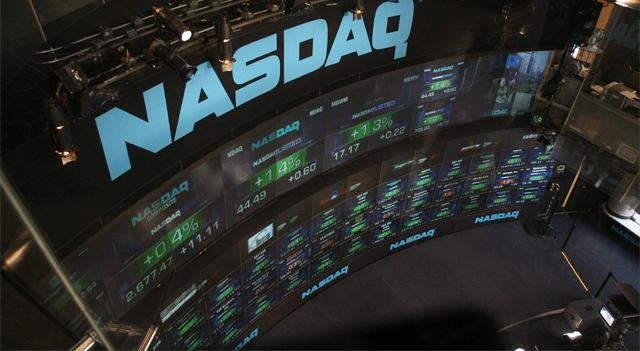
By 04:20 ET, Dow futures were down 25 points, or 0.1%, while S&P 500 futures and Nasdaq 100 futures were broadly flat.
Wall Street’s main indices closed higher in the previous session, supported by Trump’s remarks that the U.S. had engaged in “productive” talks with Tehran. Iranian authorities, however, rejected the claim and accused Trump of fabricating the story in an attempt to calm nervous financial markets.
“[T]here is a ton of skepticism about the conflict coming to an end anytime soon,” analysts at Vital Knowledge said in a note to clients. They added that equities could still have room to rise, but warned the S&P 500 faces a “hard ceiling” between 6,900 and 7,000. The benchmark index ended Monday’s session at 6,565.55.
New attacks reported across the Middle East
Despite hopes that Trump’s announcement might indicate the conflict could soon ease, new missile strikes have been reported across the region.
Media reports said several locations in Israel, including areas in Tel Aviv, were hit. According to the Wall Street Journal, Kuwait and Saudi Arabia have also been targeted by drone and missile attacks. Israel, meanwhile, said it struck sites in Lebanon linked to Iran-backed Hezbollah.
A key flashpoint remains the Strait of Hormuz — the strategic channel south of Iran through which roughly one-fifth of global oil supply flows. The waterway has effectively remained closed to tanker traffic, becoming a central element of the joint U.S.–Israeli campaign against Iran. The disruption threatens global energy supplies, particularly for major importers in Asia.
Oil prices have surged as a result, raising fears that a fresh wave of global inflation could emerge and potentially force central banks to reconsider raising interest rates.
Brent crude futures, the global benchmark, briefly fell below $100 a barrel following Trump’s announcement — the first time in weeks that prices dipped under that level. Even so, prices remain far above pre-conflict levels, when Brent traded near $70 a barrel.
At 04:34 ET, Brent crude futures for May were up 1.6% at $101.58 per barrel.
Gold steadies
Gold prices stabilized during European trading, benefiting from the pullback in oil prices which helped the metal recover some of its recent losses.
The precious metal had been under pressure in recent sessions as higher energy costs fueled concerns that inflation could stay elevated.
As a result, markets have reduced expectations for interest-rate cuts, with investors increasingly betting that central banks — including the Federal Reserve — may keep borrowing costs higher for longer.
Higher interest rates tend to weigh on gold because the metal does not generate yield, making interest-bearing assets such as government bonds relatively more attractive.
Spot gold was last down 0.1% at $4,403.98 per ounce by 04:52 ET.
Dollar holds firm
The U.S. dollar remained supported as traders digested conflicting signals coming from Washington and Tehran.
The uncertain messaging and renewed fighting have reinforced the greenback’s appeal as a safe-haven asset.
After slipping to nearly a two-week low following Trump’s social media announcement on Monday, the dollar index — which measures the currency against a basket of major peers — was up 0.3% at 99.25 by 04:48 ET.
“The dollar continues to be bounced around by the latest headlines on the war in the Middle East,” analysts at ING said in a note. “Traders will be eager to hear, particularly from the Iranian side, whether there is any realistic chance of ceasefire negotiations getting started. Until then, any further rally in risk assets and sell-off in the dollar will prove limited.”
U.S. flash PMIs in focus
On the economic calendar, markets are also preparing for the release of the U.S. flash purchasing managers’ index for March.
The early snapshot of business activity could offer one of the first indications of how the conflict with Iran is affecting economic conditions, analysts at Vital Knowledge said.
Last week, Federal Reserve Chair Jerome Powell said it was “too soon to know the scope and duration of the potential effects on the economy” stemming from the conflict, though he noted that rising energy prices are likely to push inflation higher in the near term.
Separately, investors are also awaiting a weekly employment indicator from payroll processor ADP. Signs of a weakening U.S. labor market, combined with the possibility that an Iran-related energy shock could reignite inflation, have become major concerns for Federal Reserve policymakers trying to determine the future path of interest rates.