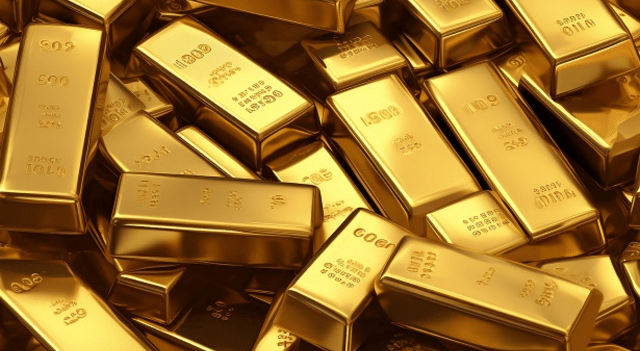
Gold prices continued to weaken in Asian trading on Tuesday, marking a tenth straight session of losses after Iran rejected claims that it had held discussions with the United States following President Donald Trump’s decision to delay additional strikes on Iran’s energy infrastructure.
Spot gold was down 0.7% at $4,376.04 per ounce by 02:46 ET (06:46 GMT), while U.S. gold futures slipped 0.6% to $4,413.59.
In the previous session, the precious metal had dropped to its lowest level in four months before recovering slightly, ultimately closing about 2% lower.
Middle East strikes continue despite Trump’s negotiation claims
On Monday, President Trump postponed a threatened attack on Iran’s electricity grid, saying the decision followed “very good and productive” talks with unidentified Iranian officials.
The U.S. decision to hold off on further action initially helped ease tensions in financial markets and led to a sharp fall in oil prices, allowing gold to recover part of its earlier losses during the previous session.
However, Iran’s parliament speaker, Mohammad Baqer Qalibaf, said on social media that no such negotiations had taken place, adding fresh uncertainty.
Meanwhile, the Israeli military said Tuesday that Iran had launched several waves of missiles toward Israel, suggesting there were no clear signs of de-escalation.
Gold prices remained under pressure as investors also continued to focus on the broader macroeconomic outlook, particularly expectations for interest rates.
The metal has struggled to regain momentum despite its traditional role as a safe-haven asset during periods of geopolitical tension.
Precious metals pressured by strong dollar and Fed outlook
Gold has faced sustained selling pressure in recent sessions as rising energy prices have fueled concerns that inflation could remain elevated.
As a result, markets have scaled back expectations for monetary easing, with investors increasingly anticipating that central banks — including the Federal Reserve — will keep interest rates higher for longer.
Higher borrowing costs typically weigh on gold because the metal does not generate income, making yield-bearing assets such as government bonds relatively more attractive.
The U.S. Dollar Index was up 0.4% early on Tuesday.
Among other precious metals, silver slipped 0.4% to $68.91 per ounce, while platinum declined 0.3% to $1,883.05 per ounce.
Copper prices also moved lower. Benchmark copper futures on the London Metal Exchange dropped 1.4% to $12,022.33 per ton, while U.S. copper futures fell 1.3% to $5.41 per pound.