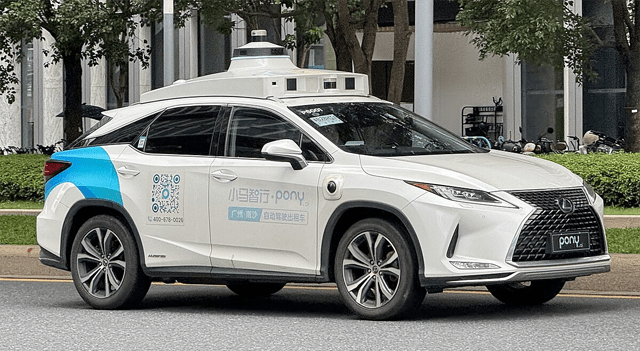
Pony AI Inc. (NASDAQ:PONY) reported fourth-quarter results on Thursday that topped analyst forecasts, posting adjusted earnings per share of $0.12 and revenue of $29.1 million. The company also unveiled a strategic agreement to introduce what it described as the first commercial robotaxi service in Europe, with operations set to begin soon in Zagreb.
Shares of the autonomous driving company rose 2.81% in pre-market trading following the release, supported by the earnings beat, strong growth in robotaxi-related revenue and the newly announced partnership with Uber Technologies (NYSE:UBER).
Revenue from robotaxi services surged 160% year over year to $6.7 million during the quarter, while fare-based revenue jumped more than 500% compared with the same period last year. Overall revenue declined 18% to $29.1 million from $35.5 million in the year-earlier quarter, largely due to the timing of project-based revenue recognition within the licensing and applications segment, where revenue fell 53% to $9.4 million. Robotruck services revenue edged up 1.2% to $13.1 million.
“2025 marked an amazing year for Pony.ai,” said Dr. James Peng, Chairman and CEO. “We realized scaling-up in top-line, Robotaxi fleet size, operational footprint and user base, while validating our business model by achieving unit economics breakeven in multiple tier-one cities in China.”
The company said it reached consecutive unit economics breakeven in Guangzhou and Shenzhen within four months of launching its Gen-7 robotaxi platform. On March 22, 2026, daily net revenue per Gen-7 vehicle hit a record RMB394, supported by around 25 rides per vehicle in Shenzhen.
Pony AI’s fleet expanded to more than 1,400 vehicles as of March 25, 2026, and the company aims to grow that number to over 3,000 units by the end of 2026. Operations have recently expanded to Croatia, Hangzhou and Changsha, with the firm targeting deployments in more than 20 cities worldwide by the end of the year.
Adjusted net loss widened to $49 million from $41.3 million in the same quarter last year, reflecting increased upfront investments aimed at accelerating commercialization. Cash and cash equivalents stood at $1.5 billion as of December 31, 2025.