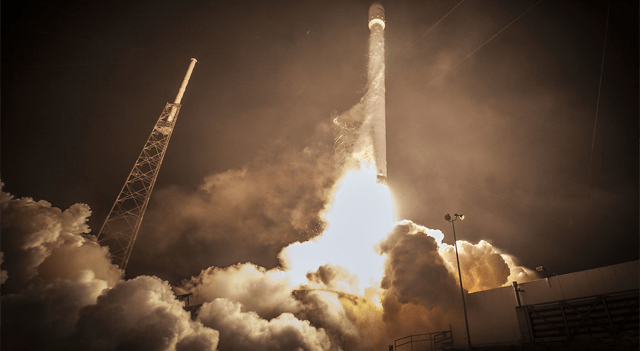
Rocket Lab Corporation (NASDAQ:RKLB) has completed its 85th mission, successfully launching two satellites for the European Space Agency’s Celeste navigation technology demonstration. The mission, named “Daughter Of The Stars,” lifted off on March 28 at 10:14 pm NZT from Rocket Lab’s Launch Complex 1 in New Zealand.
The launch placed the two spacecraft into a 510-kilometer low Earth orbit. The satellites will evaluate how a constellation in low Earth orbit could operate alongside Europe’s existing Galileo navigation system, which functions in medium Earth orbit. Developed by teams led by Spain’s GMV and France’s Thales Alenia Space, the spacecraft will test capabilities supporting autonomous transport, maritime navigation, wireless communications, emergency response services, and infrastructure monitoring throughout Europe.
The flight represented Rocket Lab’s sixth launch of 2026 and its first dedicated mission for the European Space Agency. The company noted that it continues to maintain a 100% mission success record for national space agency customers including NASA, JAXA, KASA, and now ESA.
“Orbital accuracy is critical for the beginning of a new constellation,” said Rocket Lab founder and CEO Peter Beck. “It’s why satellite operators across all mission types choose Electron for a dedicated launch, because they know they can rely on our rocket’s precision and accuracy.”
Francisco-Javier Benedicto Ruiz, ESA’s Director of Navigation, said the Celeste mission “will demonstrate how a complementary layer in low Earth orbit can enhance Europe’s current navigation systems, making them more resilient, more robust, and capable of delivering entirely new services.”
According to the company, Rocket Lab has additional launches planned throughout 2026, including missions supporting commercial Earth observation programs, international space agencies, national security payloads, and hypersonic technology development.