AST SpaceMobile (NASDAQ:ASTS) has secured regulatory approval in the United States to operate its satellite-to-smartphone network, positioning the company to compete directly with SpaceX’s Starlink Mobile service.
The approval, granted by the Federal Communications Commission (FCC) on Tuesday, allows AST to deploy its full planned constellation of 248 satellites and provide what it describes as “supplemental coverage from space,” both within the U.S. and internationally.
“This action allows AST to dramatically improve services in the United States and globally,” the FCC said, highlighting the company’s ability to deliver connectivity to everyday mobile devices in areas with little or no cellular coverage.
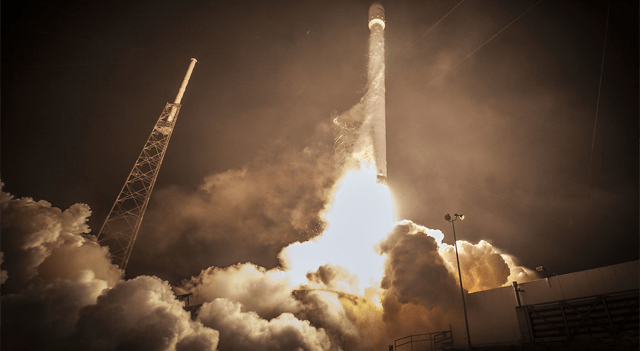
The decision comes shortly after a setback for AST, when a Blue Origin launch failed to place one of its “BlueBird” satellites into the correct orbit, resulting in its loss during re-entry.
Similar to Starlink Mobile, AST aims to bring high-speed broadband directly to standard smartphones in coverage gaps, including support for services such as video calls. Its BlueBird satellites are notable for their large antenna arrays, effectively functioning as space-based cell towers capable of delivering voice, data, and video without requiring modified handsets.
The company had previously received limited FCC approval in 2024 for its first five BlueBird satellites, but had not yet been authorized to offer full satellite-to-phone services. The latest decision clears the way for commercial deployment and the rollout of its broader low-Earth orbit network, centered around altitudes of roughly 530 kilometers.
AST has also been cleared to provide coverage using radio spectrum from key partners AT&T and Verizon, though the authorization currently applies only to lower-frequency bands between 698 and 960 MHz, rather than the mid-band spectrum acquired more recently.
Additionally, the FCC has permitted AST to use frequencies in the 430–440 MHz range as a backup for satellite control and tracking in emergency situations, despite concerns raised by amateur radio operators.
The regulator concluded that “AST has shown that harmful interference from AST’s transmissions to other authorized operations, including to amateur operations, in the 430-440MHz band is extremely unlikely, and, if such interference should occur, AST is capable of ceasing such transmissions.”
It also noted: “We have continued to not receive any complaints of harmful interference for AST’s already-authorized operations in the 430-440MHz band.”
The approval was granted despite objections from competitors such as T-Mobile and SpaceX, which flagged potential interference and collision risks. The race to provide direct satellite connectivity to smartphones is intensifying, with Amazon recently announcing a multibillion-dollar investment to expand into the space.
A key hurdle for AST remains deployment. The company currently has six BlueBird satellites in orbit, along with its earlier test satellite BlueWalker 3. To deliver reliable nationwide coverage in the U.S., it estimates it will need between 45 and 60 satellites operational by the end of 2026.
The recent launch failure could raise concerns about whether AST can meet its near-term rollout targets. However, the company said it is continuing production, with BlueBird satellite 32 already underway and units 8 through 10 expected to be ready for shipment within about 30 days.
AST had initially planned multiple launches by early 2026, though the recent Blue Origin mission marked the first step in that schedule.