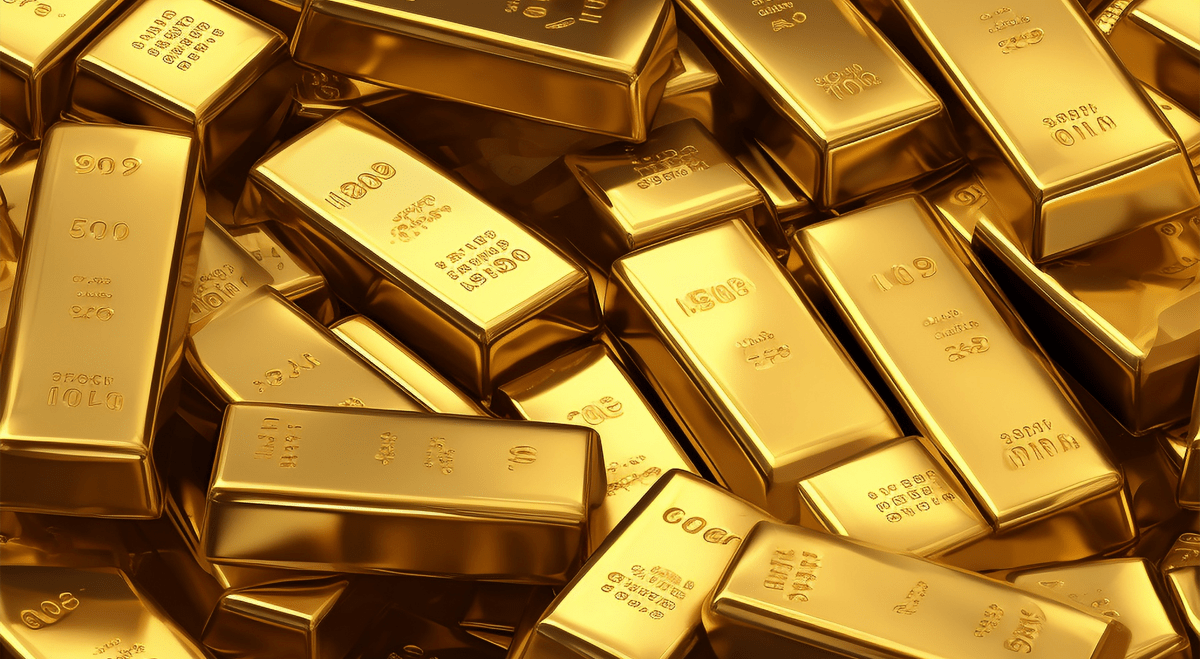
Gold prices moved lower on Wednesday as escalating tensions in the Middle East pushed oil prices higher, reinforcing concerns that inflationary pressures could remain elevated and delay potential interest-rate cuts from major central banks.
By 05:42 ET (09:42 GMT), spot gold had fallen 1.0% to $4,444.86 per ounce, while U.S. gold futures were also down 1.0% at $4,475.62 per ounce.
Renewed Conflict Clouds Prospects for U.S.-Iran Agreement
Investors continued to monitor developments in the Middle East after reports of fresh military exchanges between the United States and Iran.
According to Reuters, the U.S. military said Iranian attacks targeting Kuwait, Bahrain and other locations were either intercepted or unsuccessful. At the same time, Iranian state media reported that the Islamic Revolutionary Guard Corps had targeted the headquarters of the U.S. Fifth Fleet in Bahrain in response to a U.S. strike on a communications facility located south of Qeshm.
The latest escalation has weakened expectations that Washington and Tehran are nearing an agreement to end a conflict that has now lasted for more than three months, despite U.S. President Donald Trump maintaining that discussions between the two countries continue.
“[T]he market remained cautiously watchful regarding U.S.-Iran negotiations,” said Neil Walsh, Head of Metals at Britannia Global Markets, in a note.
Higher Oil Prices Revive Inflation Fears
Crude oil prices advanced amid diminishing confidence that a diplomatic breakthrough will soon reopen the Strait of Hormuz, a key shipping route that handles roughly 20% of global oil flows.
The rise in energy prices has reignited concerns that inflation could accelerate worldwide, potentially prompting central banks to maintain tighter monetary policy or even raise interest rates further.
Market participants broadly expect the U.S. Federal Reserve to leave rates unchanged at its June meeting. However, traders continue to assign some probability to an additional rate increase later this year.
Higher interest rates generally reduce the appeal of non-yielding assets such as gold, making bullion less attractive relative to income-generating investments.
Stronger Dollar Adds Further Pressure
Gold also faced headwinds from a firmer U.S. dollar, which can make the precious metal more expensive for buyers using other currencies.
The greenback has attracted support during the ongoing conflict, with some investors viewing the United States as relatively insulated from energy-market disruptions due to its position as a major oil and gas producer.
The stronger dollar has therefore added another layer of pressure on precious metals markets.
Investors Await Key U.S. Economic Reports
Attention is now shifting toward a series of important U.S. economic releases that could influence expectations for Federal Reserve policy.
Data published on Tuesday showed that U.S. job openings unexpectedly increased in April, reinforcing the view that the labor market remains resilient and that policymakers may keep monetary conditions restrictive for longer.
Later on Wednesday, investors will be watching the ADP private-sector employment report, the ISM services index and factory orders data for additional clues about the strength of the U.S. economy.
Those reports will serve as a lead-in to Friday’s closely followed nonfarm payrolls release, which is expected to play a key role in shaping market expectations for the Fed’s next policy moves.
Markets Balance Geopolitical Risks Against Monetary Policy Expectations
While geopolitical uncertainty would typically support demand for safe-haven assets such as gold, the accompanying rise in oil prices and inflation expectations has complicated the outlook.
For now, concerns that persistent inflation could keep interest rates elevated appear to be outweighing gold’s traditional appeal as a defensive asset, leaving traders focused on both developments in the Middle East and upcoming U.S. economic data.