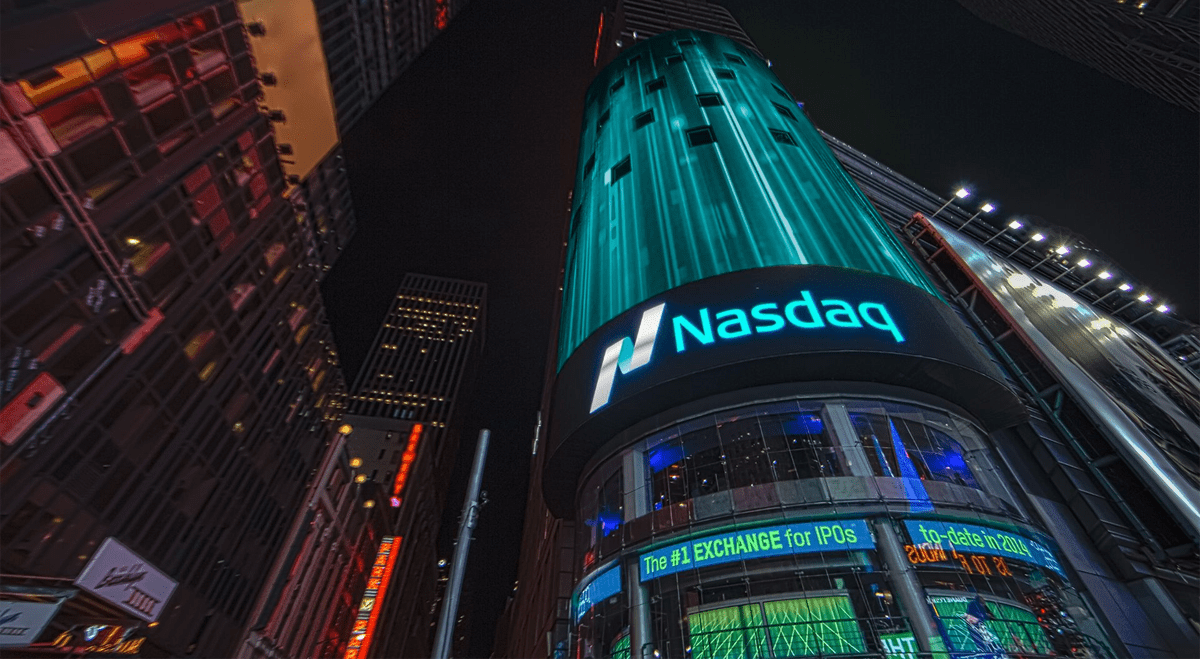
U.S. equity futures traded mixed on Monday as investors weighed renewed military exchanges between Iran and Israel alongside growing doubts over the sustainability of the artificial intelligence-driven market rally. Attention is also turning to Apple’s (NASDAQ:AAPL) annual Worldwide Developers Conference, where artificial intelligence initiatives are expected to take centre stage.
Futures mixed after Wall Street sell-off
By 03:32 ET (07:32 GMT), Dow futures were down 102 points, or 0.25%, while S&P 500 futures rose 20 points, or 0.3%, and Nasdaq 100 futures gained 193 points, or 0.7%.
The moves followed a difficult session on Wall Street, where the major indices fell sharply. A stronger-than-expected U.S. employment report for May increased expectations that the Federal Reserve could raise interest rates later this year to combat inflationary pressures linked to higher energy prices.
The S&P 500 dropped 2.64%, recording its largest single-day decline of the year and snapping a nine-week winning streak. The Nasdaq Composite also suffered significant losses, weighed down by a decline of more than 10% in the Philadelphia Semiconductor Index after chipmaker Broadcom (NASDAQ:AVGO) delivered quarterly results that disappointed investors hoping for stronger evidence of AI-related growth.
Analysts at Deutsche Bank noted: “[W]hat a backdrop for the main economic event of the week, namely Wednesday’s May U.S. CPI report.”
They added: “The timing is critical with the [Fed]’s next policy meeting, and Kevin Warsh’s first as Chair, a week later. For a while now the case for hiking has looked notably stronger than the case for a cut and last Friday’s payrolls has hugely reinforced that.”
Renewed conflict between Iran and Israel raises geopolitical risks
Market sentiment was further unsettled by a fresh escalation in hostilities between Iran and Israel, raising concerns that the fragile ceasefire brokered by the United States could collapse.
The latest attacks mark the first direct military exchange between the two countries since the truce reached in April.
Reports indicate that the confrontation began with an Israeli strike on Beirut. Iran subsequently responded with attacks of its own, prompting additional Israeli operations targeting locations in central and western Iran.
According to the Wall Street Journal, Israel reported activating warning systems in response to new attacks from Iran and said it had intercepted a ballistic missile launched from Yemen. The newspaper also cited Iran’s Islamic Revolutionary Guard Corps as saying it had targeted military airbases in southern Israel.
Despite the deteriorating situation, U.S. President Donald Trump insisted that the conflict would not derail ongoing diplomatic efforts. However, an Iranian official familiar with the negotiations told MS NOW that an agreement is “no longer feasible at this stage.”
Oil prices climb as Hormuz concerns persist
Brent crude rose 5.1% to $97.81 per barrel, remaining below previous highs above $100 but significantly above levels seen before the conflict escalated.
Energy markets continue to focus on the Strait of Hormuz, a critical shipping route through which roughly 20% of global oil and liquefied natural gas supplies pass. Continued restrictions on traffic through the waterway have intensified concerns over potential supply disruptions.
Investors fear that sustained increases in energy prices could trigger another wave of inflation, forcing central banks to maintain tighter monetary policies.
Analysts at RBC observed that “it seems as though good news is being treated as bad news if it stokes fears of higher interest rates.”
Gold falls to an eleven-week low
Gold prices extended their recent decline, reaching their lowest level in eleven weeks.
The precious metal has remained under pressure as rising interest-rate expectations reduce the appeal of non-yielding assets. At the same time, the U.S. dollar has benefited from safe-haven demand and perceptions that the American economy may be relatively insulated from energy-related disruptions.
Analysts at ING noted: “The geopolitical backdrop is also shifting dollar-positive, with most surprised that Brent is not trading even higher now that Iran and Israel are directly exchanging fire.”
Apple developers conference in focus
Investors are also watching Apple’s (NASDAQ:AAPL) Worldwide Developers Conference, which begins on Monday.
The technology giant is expected to unveil a series of software enhancements, developer tools and artificial intelligence updates. Market participants will be looking for evidence that Apple is accelerating its AI strategy as competition intensifies across Silicon Valley.
Recent delays to upgrades for Siri and a lukewarm reception to some of the company’s initial AI offerings have fuelled concerns that Apple may be losing ground to rivals.
According to analysts at BofA Global Research, “[The] key announcements to watch include an enhanced Siri experience, progress on Gemini-enabled Apple AI, potential Siri app, & broader app-intent/developer tools that could help define Apple’s agentic AI roadmap.”