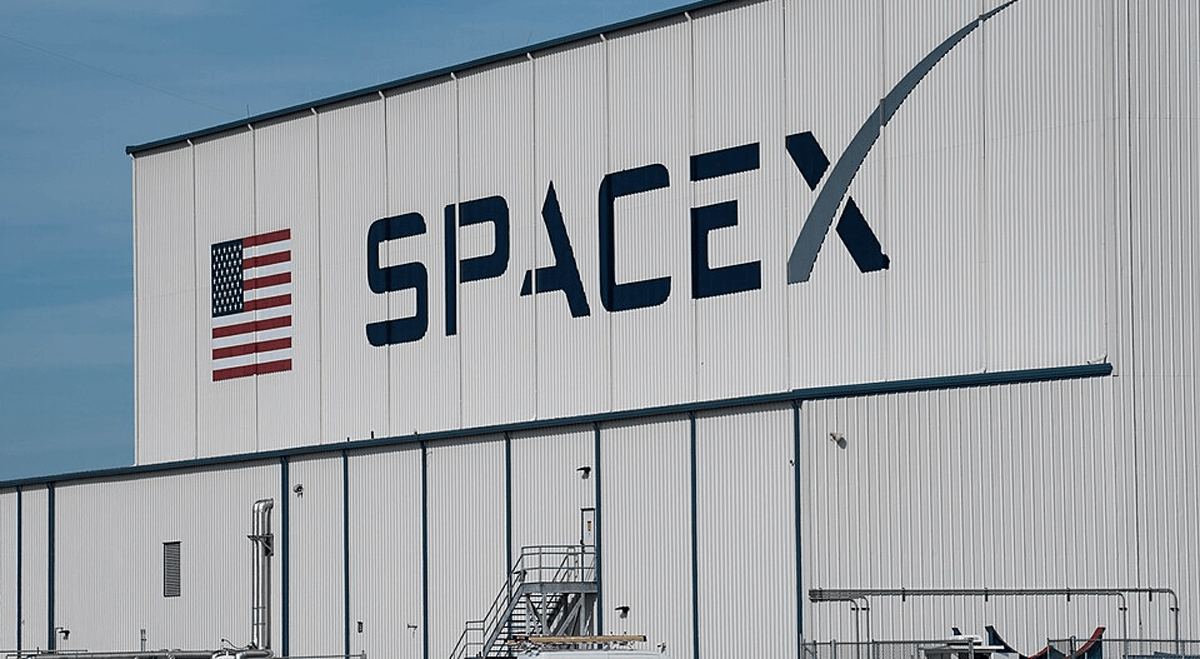
SpaceX (NASDAQ:SPCX) has raised $75 billion (£56 billion) from institutional investors ahead of its public market debut on Friday, positioning the aerospace and artificial intelligence company for what is expected to be the largest stock market listing ever.
According to a filing with the US Securities and Exchange Commission, the company sold $75 billion worth of shares at $135 each. The offering price matches the level outlined by SpaceX last week and implies a market capitalisation of almost $1.8 trillion when trading begins.
The valuation would push founder and chief executive Elon Musk, already the world’s wealthiest individual, into trillionaire territory. However, once trading starts, the stock’s performance will depend on investor demand and the number of shares available in the market.
Should SpaceX shares open at or above the $135 offer price, the company would instantly rank among the world’s most valuable publicly traded businesses. Whether investors are prepared to support that valuation remains to be seen.
Strong Investor Demand Expected
Demand for the stock is expected to be strong among both institutional and retail investors. Several analysts have already published targets above the IPO price. Brokerage Oppenheimer, for example, said on Thursday that it sees potential for the shares to reach $190.
The final market price will be determined once trading begins through the normal process of supply and demand on the Nasdaq exchange.
Early Employees Reflect on SpaceX’s Growth
Tom Mueller, SpaceX’s first employee and now founder of Impulse Space, told the BBC’s Michelle Fleury that “it’s unbelievable” to see what the company has become.
Reflecting on the company’s early years, Mueller recalled the first successful rocket engine tests, subsequent failures and crashes, and the breakthrough orbital launch achieved in 2008.
“It’s just been an incredible ride,” he said.
Mueller departed SpaceX in 2020 but continues to hold a significant financial interest in the company.
IPO Seen as Benchmark for Other AI Giants
The flotation is also being viewed as a key indicator for other highly valued private technology firms considering public listings. Companies such as Anthropic and OpenAI, both recently linked to IPO plans, are expected to watch the outcome closely.
Musk Retains Firm Control
Despite becoming a publicly traded company, Musk is set to retain overwhelming control of SpaceX. Through a dual-class share structure consisting of Class A and Class B stock, he will continue to own roughly 40% of the company’s equity while controlling more than 84% of voting rights.
The arrangement mirrors structures used by other technology founders. For example, Mark Zuckerberg maintains enhanced voting control at Meta Platforms, although his influence is estimated at around 60% of voting power, significantly below Musk’s position at SpaceX.
Because of this ownership structure, SpaceX is not required to maintain independent directors on its board. Musk would also remain firmly in control even if he sold part of his economic stake in the future, according to analysis from Harvard Law School.
Governance Questions Remain
Governance experts have highlighted potential concerns for investors, noting that the concentration of voting power gives insiders broad authority over major corporate decisions, including acquisitions involving Musk-controlled businesses and executive compensation arrangements.
SpaceX has already completed one such transaction, acquiring Musk’s AI venture xAI. That company had previously acquired the social media platform X, formerly known as Twitter, which Musk purchased in 2022.
Want to stay up-to-date on the SpaceX IPO? Find the top asked questions from investors and follow their every move here: https://invest.investorshub.com/spacex-ipo-watch/