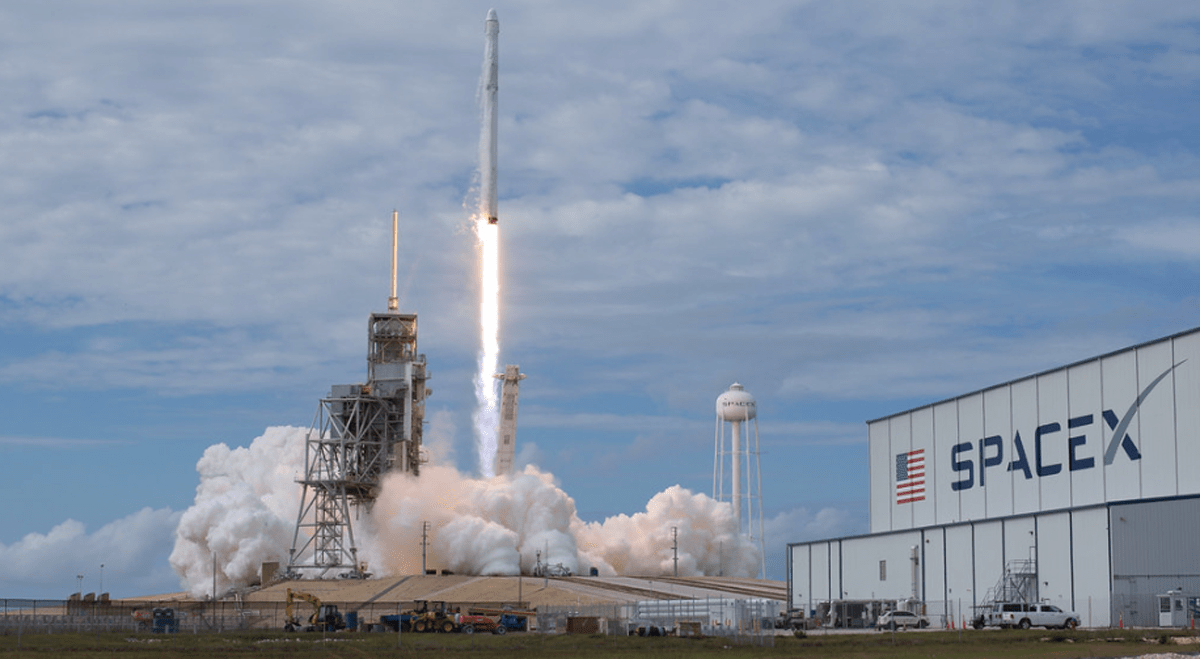
SpaceX (NASDAQ:SPCX) continued its strong momentum in premarket trading on Monday after soaring 19% during its Nasdaq debut on Friday. The aerospace and satellite operator completed the largest initial public offering in history, ending its first trading session with a market value of approximately $2.1 trillion.
The company’s shares, trading under the ticker SPCX, opened at $150 following the completion of its $75 billion share sale, climbed to an intraday peak of $176.52 and finished the session at roughly $161.
Premarket Gains Add Further Value
By 04:08 ET (08:08 GMT), the stock had gained a further 5.8% in premarket dealings, adding an estimated $120 billion to the company’s valuation.
Investor demand remained exceptionally strong throughout the debut session, with more than 500 million shares changing hands. That volume approached the roughly 580 million shares traded during Facebook’s landmark stock market debut in 2012.
Musk Outlines Ambitious Growth Plans
Speaking during a JPMorgan Chase livestream ahead of the listing, Chief Executive Elon Musk said SpaceX had remained cash-flow positive since around 2015 and described the public offering as the beginning of “a significant growth phase.”
Musk highlighted several long-term initiatives, including plans to deploy more than 100,000 communications satellites and establish artificial intelligence data centres in orbit.
Analysts See Expanding Opportunities in the Space Economy
In a research note reissued on Friday to coincide with the IPO, Jefferies outlined a bullish outlook for the wider space industry.
The broker argued that “space is now a strategic industrial sector” and suggested that government policy, geopolitical competition and defence spending by the United States and China will increasingly shape investment returns.
According to Jefferies, the global space economy is currently worth around $600 billion and could expand to $1.8 trillion by 2035, with defence-related activities expected to deliver the fastest growth.
Government Spending Remains a Key Driver
The United States accounts for roughly 60% of worldwide government expenditure on space activities, spending around $80 billion annually, more than the rest of the world combined. China’s spending is estimated at approximately $20 billion.
Meanwhile, the U.S. Space Force budget increased by 40% year-on-year in fiscal 2026, driven largely by the Golden Dome missile defence initiative. The increase lifted Space Force spending to $40 billion, comfortably exceeding NASA’s $24 billion budget.
Strong Links to Federal Programmes
SpaceX is currently NASA’s second-largest commercial contractor by contract value, behind only Caltech. The company secured approximately $2.1 billion in contracts during 2025 across launch services, communications and IT infrastructure projects.
Jefferies analysts noted: “The U.S. government has effectively outsourced significant space activity to SpaceX, creating an inextricable linkage between federal spending priorities and the company’s business.”
The broker believes this close relationship with government programmes positions SpaceX to benefit from continued growth in both commercial and strategic space-related spending.
Want to stay up-to-date on the SpaceX IPO? Find the top asked questions from investors and follow their every move here: https://invest.investorshub.com/spacex-ipo-watch/