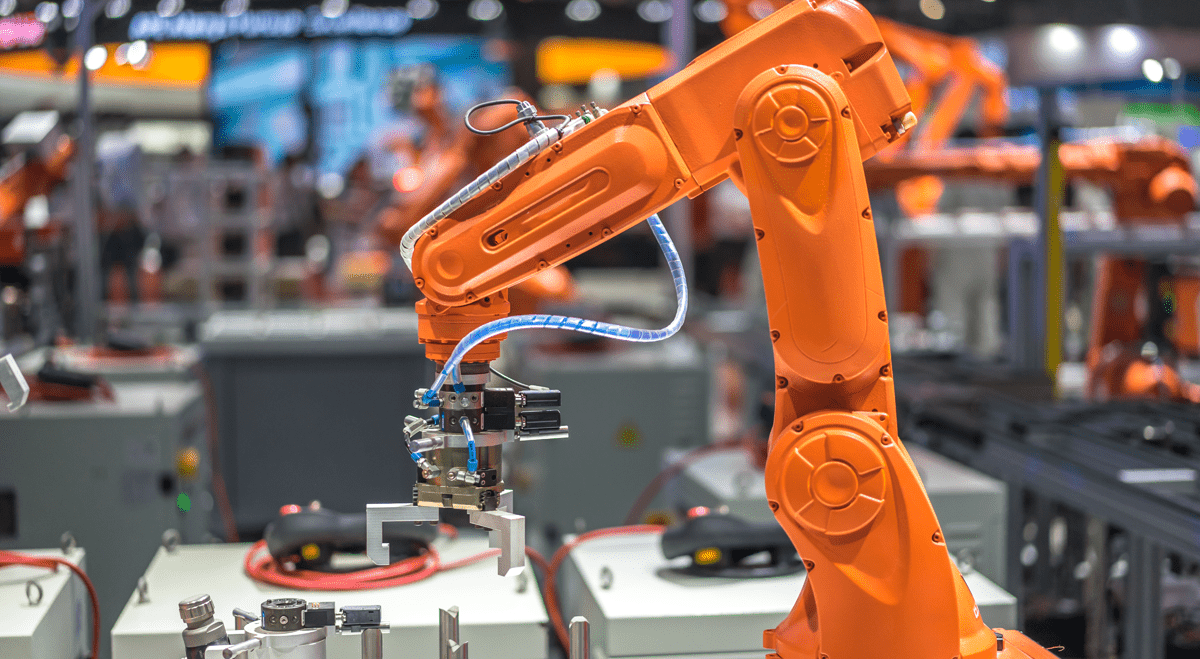
Artificial intelligence is increasingly moving beyond digital applications and into physical environments, marking an important shift in the evolution of automation. While generative AI has transformed software and knowledge work, the next stage of AI adoption is expected to take place across factories, warehouses, logistics networks, construction sites and critical infrastructure.
Businesses are investing more heavily in robotic systems as labour shortages, rising operating costs and supply-chain resilience become long-term strategic priorities. Rather than replacing workers across entire industries overnight, physical AI is being deployed to automate specific, repetitive tasks where efficiency gains can be measured more easily.
Commercial Deployment Brings New Challenges
Unlike software-based AI, physical AI depends on a combination of hardware, sensors, robotics, power systems and real-world operating data. Success is determined not only by the intelligence of the underlying models but also by how reliably machines perform in unpredictable environments.
Robots must operate safely around people, adapt to changing conditions and function across different locations, making commercial deployment significantly more complex than releasing a cloud-based AI application.
This means scaling physical AI requires investments in manufacturing, maintenance, servicing, safety certification and customer support alongside continued software development.
Real-World Data Creates Competitive Advantages
Data remains one of the industry’s most valuable assets.
Where digital AI models learn from vast online datasets, physical AI systems improve through real-world experience. Every completed task, operational failure and environmental change provides information that helps improve future performance.
Companies capable of collecting large volumes of high-quality operational data may build sustainable competitive advantages as their robotic systems become increasingly efficient over time.
Infrastructure Will Benefit Alongside Robotics
The growth of physical AI extends well beyond robot manufacturers.
Industrial automation depends on sensors, industrial networking, motion control systems, embedded software, advanced semiconductors, batteries and machine vision technologies. Companies supplying these components could benefit as automation projects become more widespread.
Rather than focusing exclusively on humanoid robots, many businesses continue to prioritise specialised machines designed for warehousing, manufacturing, inspection and logistics, where returns on investment can often be achieved more quickly.
Flexible Business Models Could Drive Wider Adoption
Another important development is the expansion of Robotics-as-a-Service (RaaS).
Instead of requiring customers to make significant upfront capital investments, subscription-style models allow businesses to access robotic systems through recurring operating expenses.
This approach lowers barriers to adoption, particularly for small and medium-sized businesses, while giving providers recurring revenue and closer long-term relationships with customers.
Long-Term Opportunity Remains Intact
Physical AI is likely to develop at a different pace from generative AI.
Deploying robots into industrial environments requires time, testing and continuous operational improvements. Progress may therefore appear slower than in software markets, but each successful deployment helps strengthen future adoption.
As artificial intelligence becomes increasingly integrated into the physical economy, opportunities are expected to extend across robotics, industrial automation, semiconductor technology, sensors, networking equipment and software platforms.
For investors, the sector represents a long-term structural theme rather than a short-term technology cycle. Companies enabling automation throughout the industrial ecosystem may ultimately benefit just as much as those building the robots themselves.