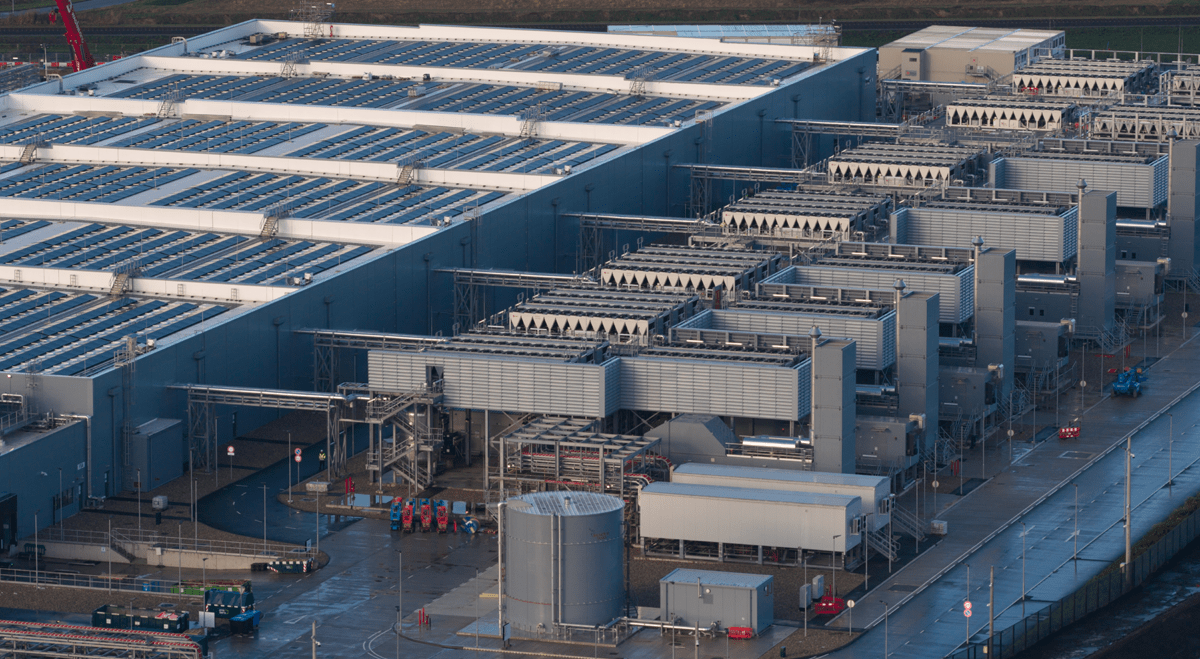
JPMorgan believes faster revenue growth across the artificial intelligence industry is making the huge wave of infrastructure investment underpinning the sector look increasingly sustainable from an economic perspective.
“The recent acceleration in AI companies’ revenues makes the AI capex cycle look more economically viable than it did six months ago,” strategist Nikolaos Panigirtzoglou wrote in a note to clients.
He added that stronger revenue growth improves the case for the sector’s exceptionally high capital requirements, although the long-term economics will ultimately depend on companies converting those revenues into sustainable margins and sufficient returns on invested capital.
AI infrastructure spending could reach trillions by 2030
Estimates for the amount of capital required to build AI data-centre infrastructure through the end of the decade vary considerably.
JPMorgan’s credit research team estimates cumulative spending of approximately $5.5 trillion through 2030, while some external projections put the figure as high as $10 trillion. That produces a midpoint of roughly $7.5 trillion for the potential AI infrastructure investment cycle.
Against those enormous capital requirements, JPMorgan’s equity analysts expect AI cloud providers, model developers and neocloud companies to generate a combined annualised revenue run-rate of approximately $1.6 trillion by the end of 2026.
Assuming annual growth of between 10% and 20%, that figure could increase to between $2.5 trillion and $3 trillion by 2030.
Enterprise AI adoption could provide major source of demand
Large companies are expected to account for a substantial portion of future AI spending.
A JPMorgan survey of businesses across Asia Pacific found that average expenditure on artificial intelligence is expected to increase from 4.5% of combined operating expenses and capital expenditure during the past 12 months to 5.8% over the coming year.
If a similar spending pattern were applied globally, JPMorgan estimates it would translate into approximately $1.7 trillion of AI expenditure.
Reaching $2.5 trillion in annual spending by 2030 would require AI expenditure to rise to roughly 6.5% to 7% of corporate expenses and capex.
“This is a meaningful increase from the expected 5.8% over the next 12 months, but not an implausible one if AI shifts from experimentation to scaled deployment and if enterprises can fund AI budgets through productivity savings, labour substitution, revenue uplift, or reduced spend on legacy technology,” wrote Panigirtzoglou.
The bank’s analysis suggests the economics of the AI investment cycle have improved as commercial adoption accelerates. However, the ultimate sustainability of current infrastructure spending will depend on whether growing AI revenues can produce durable profitability and attractive returns on the trillions of dollars being committed to data centres and computing capacity.