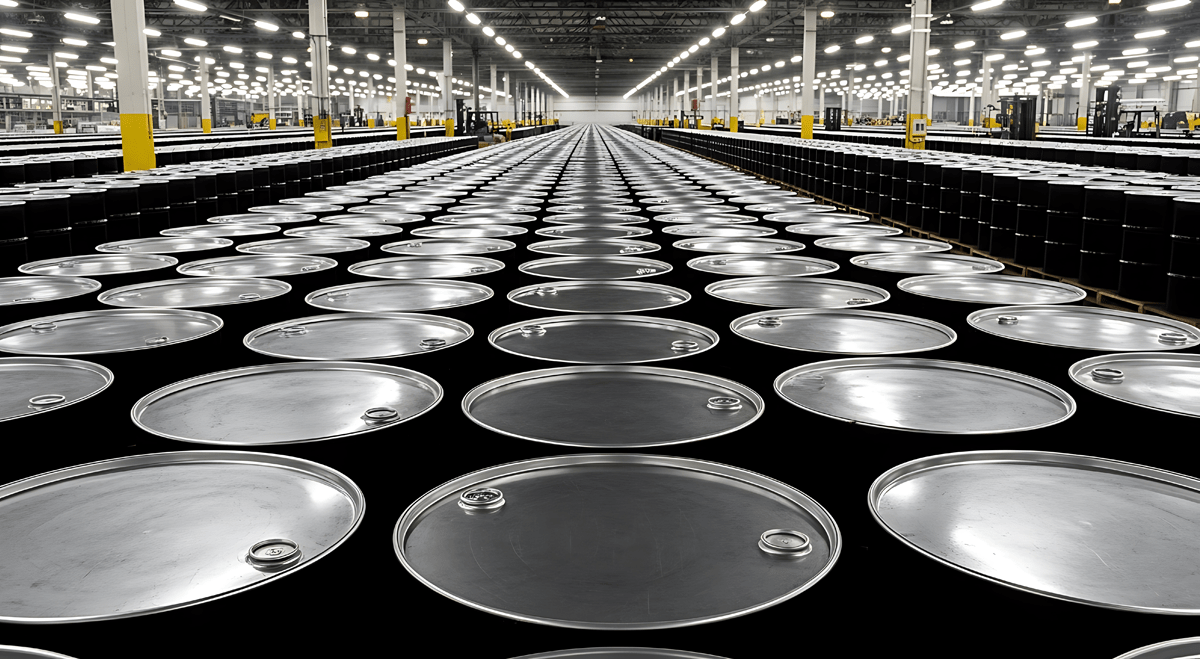
Global oil inventories are falling rapidly as the U.S.-Iran conflict and disruption to shipping through the Strait of Hormuz continue to affect supplies, but Citi estimates it could take several years before overall stockpiles approach levels associated with previous major oil crises.
In a note to clients, Citi analysts estimated that observed global inventories declined at a rate of approximately 3 million barrels per day between February and August 2026. That translates into a cumulative draw of around 519 million barrels over the period.
If inventories continue declining at a similar pace, Citi projects that OECD stocks could reach approximately 70 days of supply cover by the end of 2027. Inventories outside China could fall to that threshold around the middle of 2028, while global stockpiles could reach it during the first quarter of 2029.
The 70-day level is significant because, according to Citi, it was reached during the second oil shock of the 1970s and 1980s. At that time, energy expenditure climbed to approximately 8% of GDP. The bank estimates that a comparable burden today would imply all-in oil prices above $200 per barrel, compared with roughly $120 currently.
However, Citi warned that looking only at aggregate inventories could obscure much more immediate pressure in individual parts of the energy market.
“Specific refined products (especially diesel) are already facing distress now, which could worsen further, meaning more localized, product-specific crises earlier than these projections would suggest,” Citi wrote.
Recent price movements illustrate those pressures. Brent crude has climbed above $93 per barrel from an early-August low of around $80, while WTI has moved above $86 after trading near $75 earlier in the month. The increases have come as investors become less confident that an agreement capable of resolving the disruption will be reached quickly.
The strain is particularly pronounced in diesel markets. U.S. wholesale diesel prices have risen to more than $100 per barrel above WTI, while Citi said the weighted refinery margin has surged approximately 350% this year to $33.
Despite the tightening supply picture, Citi’s base-case forecast continues to assume that an agreement will eventually be reached and that the Strait of Hormuz will reopen during the fourth quarter. Under that scenario, the bank expects Brent crude to retreat into the $60-per-barrel range during 2027.