Key takeaways
- Warren Buffett has become Berkshire Hathaway’s chairman emeritus but will remain on its board.
- His son Howard Buffett becomes non-executive chairman, while Greg Abel retains operational control as chief executive.
- The transition completes Berkshire’s planned separation of management, governance and cultural oversight after six decades under Buffett.
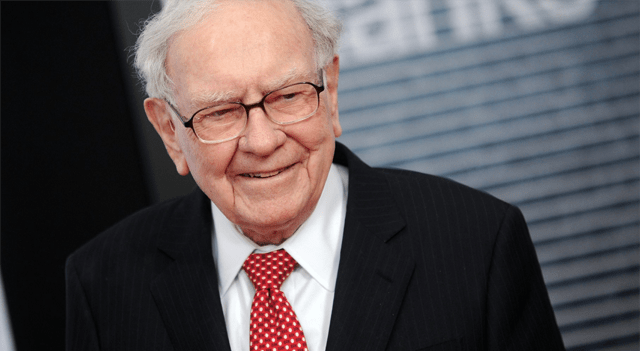
Warren Buffett has stepped down as chairman of Berkshire Hathaway Inc. (NYSE.BRK.B), completing the most significant leadership transition in the conglomerate’s history.
The 96-year-old investor becomes chairman emeritus with immediate effect and will remain a director, allowing him to continue providing advice without retaining formal control of the board.
Buffett’s eldest son, Howard Buffett, succeeds him as non-executive chairman. Greg Abel, who took over as chief executive at the beginning of 2026, will continue running Berkshire’s operations.
Management and oversight remain separate
The new structure divides responsibility among three people.
Abel retains authority over capital allocation and Berkshire’s collection of insurance, energy, railroad, manufacturing, service and retail businesses.
Howard Buffett will oversee the board without taking an executive management role. He has served as a Berkshire director since 1993 and has long been identified as the person expected to protect the company’s culture after his father’s departure.
Warren Buffett will remain available to the board and management through his chairman emeritus position.
The arrangement is intended to preserve Berkshire’s decentralized operating model while giving Abel sufficient authority to make decisions independently.
“The culture Warren built and the values he championed will remain at the heart of Berkshire,” Abel said in a statement, adding that Howard would act as their guardian.
Susan Decker will continue as Berkshire’s lead independent director.
Why Howard Buffett was chosen
Howard Buffett is not replacing his father as Berkshire’s primary investor or operational leader.
His appointment instead creates a governance safeguard designed to protect Berkshire’s values, including managerial autonomy, long-term ownership and straightforward communication with shareholders.
Howard, 71, has experience across agriculture, business, conservation and philanthropy. He chairs the Howard G. Buffett Foundation and has previously served on the boards of companies including Coca-Cola, Archer-Daniels-Midland and Conagra.
His Berkshire position is non-executive, meaning responsibility for acquisitions, investments and day-to-day performance remains with Abel and his management team.
That distinction limits the risk of uncertainty over who controls the company following Warren Buffett’s departure.
Succession enters its final stage
Warren Buffett took control of Berkshire in 1965 when it was a struggling textile manufacturer.
Over the following six decades, he transformed it into a conglomerate valued at approximately $1.1 trillion, with businesses including Geico, BNSF Railway, Berkshire Hathaway Energy and Dairy Queen.
He stepped down as chief executive on January 1, handing operational control to Abel after announcing the succession plan in May 2025.
The chairman transition represents a further withdrawal rather than an unexpected departure. Buffett said he remains confident in Berkshire’s leadership, while acknowledging that “Father Time always wins.”
Berkshire’s recent results indicate that the operational handover has not materially disrupted the business.
Second-quarter operating earnings increased 16 per cent to $12.98 billion. Net income more than doubled to $25.67 billion, although that figure included volatile gains from Berkshire’s investment portfolio.
The company also held approximately $365 billion in cash and short-term Treasury bills, giving Abel substantial capacity for investments, acquisitions and share repurchases.
What investors should watch
Berkshire’s succession has always carried unusual importance because Buffett’s reputation contributed to investor confidence in the company.
Its price-to-book ratio has declined from approximately 1.62 to 1.53 since Buffett announced that he would relinquish the chief executive position, according to LSEG data cited by Reuters.
That decline suggests part of the market’s former “Buffett premium” has already faded.
The central question is now whether Abel can maintain Berkshire’s investment discipline while putting its enormous cash position to productive use.
Investors should also watch whether Howard Buffett intervenes if future management decisions threaten Berkshire’s decentralized structure or long-term culture.
The shares showed little immediate reaction Friday. Class B stock was trading near $509, while Class A shares were around $764,000 during the session.
The muted response reflects the planned nature of the announcement. Buffett remains available, Abel has already been running the company for nine months and Howard’s role has been discussed for years.
The change is historically significant, but its success will ultimately be measured through Berkshire’s future capital allocation and operating performance rather than the title beside Buffett’s name.