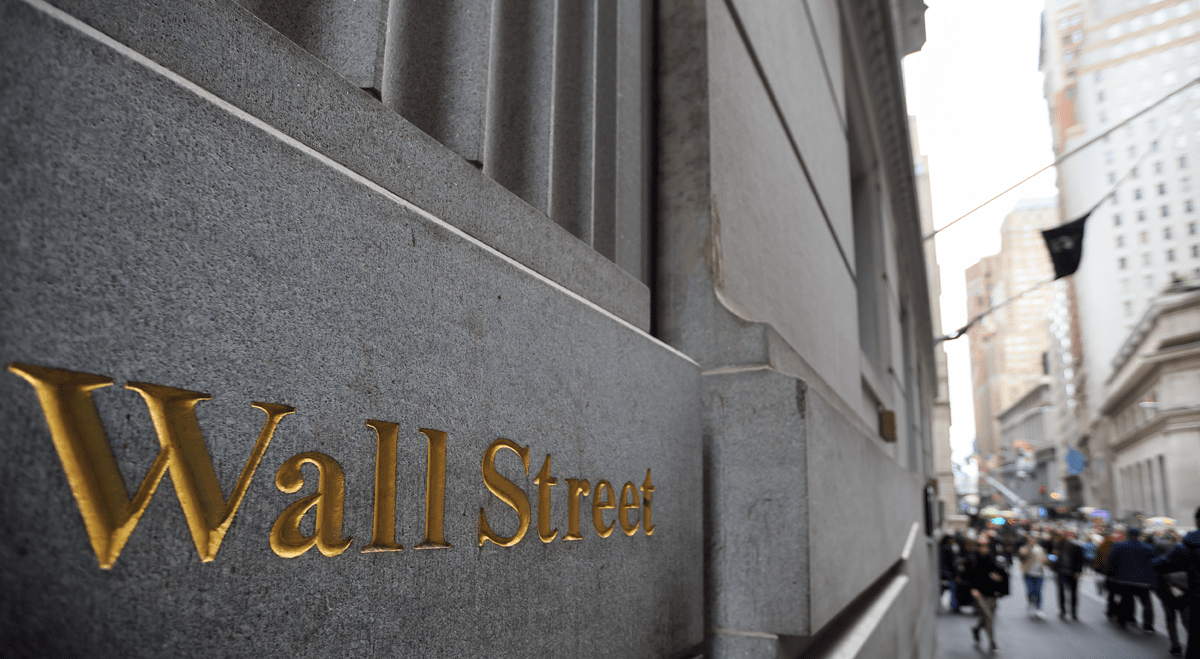
US stock futures advanced on Monday as investors assessed developments in the Middle East, declining oil prices and artificial intelligence policy discussions between Washington and Beijing.
At 06:58 GMT, Dow Jones Industrial Average futures were up 239 points, or 0.5%, while S&P 500 futures gained 39 points, also rising 0.5%. Nasdaq 100 futures advanced 218 points, or 0.7%.
Wall Street ended Friday’s session with mixed results. The S&P 500 and Nasdaq Composite closed higher, while the Dow Jones Industrial Average declined slightly.
US Treasury yields increased across maturities as market expectations for another Federal Reserve interest rate increase before the end of 2026 remained broadly unchanged.
Analysts at Vital Knowledge attributed much of Friday’s equity market gains to companies supplying infrastructure and components for artificial intelligence, including semiconductor manufacturers.
The analysts also noted that the Bank of Japan’s latest interest rate increase was less restrictive than some investors had anticipated, with two policymakers voting to leave rates unchanged.
The yen weakened following the decision, prompting concerns among the analysts about the possibility of Japanese authorities selling US Treasury securities to support the currency.
Fighting in Yemen Raises Shipping Concerns
Investors continued to monitor the conflict in Yemen after reports of intensified fighting between Iran-backed Houthi forces and Saudi-aligned groups over the weekend.
The New York Times, citing a Saudi army officer, reported clashes in mountainous areas of southwestern Yemen on Sunday.
The fighting comes amid competition for positions near the Bab el-Mandeb Strait, a shipping passage connecting the Gulf of Aden with the Red Sea.
Saudi Arabia has increasingly relied on this route to export crude oil following disruptions to shipping through the Strait of Hormuz.
According to The New York Times, the Houthis also said they had launched missiles and drones towards Riyadh and targeted Saudi oil facilities in response to Saudi air strikes inside Yemen.
The reported attacks and military developments have added uncertainty to the outlook for regional shipping and energy exports.
Brent Crude Falls as Saudi Exports Recover
Oil prices declined on Monday despite continued tensions between the United States and Iran.
US President Donald Trump threatened further action against Iran’s leadership if Tehran did not pursue an agreement, while Iranian military officials warned of retaliation against renewed attacks.
Shipping analytics firm Kpler reported that Saudi oil exports had recovered to slightly more than 4 million barrels per day so far in September, compared with 2.4 million barrels per day in August.
Saudi Arabia is also seeking to restore flows through its damaged East-West pipeline, although analysts cited in media reports have questioned how quickly operations can resume.
Reuters reported that the head of US Central Command said volumes of crude oil, cargo and liquefied natural gas transported over the preceding two weeks were higher than at any point in the previous six months.
Brent crude futures fell 2.1% to $101.66 a barrel, after briefly trading around $110 during the previous week.
The decline reflected an improving picture for some oil shipments, although further disruptions remain possible given the continuing regional conflict.
US and China Discuss AI Safety Notification Mechanism
US Treasury Secretary Scott Bessent and Chinese Vice Premier He Lifeng concluded talks on Sunday that included a proposal to establish an artificial intelligence safety notification mechanism.
Bessent said the proposed system would focus particularly on national security threats.
The initiative is expected to be considered by Trump and Chinese President Xi Jinping during their scheduled summit later this week.
The discussions follow warnings from some technology executives and researchers about potential risks associated with increasingly advanced AI systems, including concerns about cybersecurity and the ability to maintain control over certain technologies.
Other industry figures have challenged more extreme assessments of these risks.
Nvidia Chief Executive Jensen Huang told CBS News that there was a “0% chance” of humanity becoming extinct in 2030 as a result of AI, rejecting a scenario raised by some industry figures.
Huang also said: “scaring people is unnecessary. It is irresponsible.”
Trump Plans New AI Adviser
Trump separately announced plans over the weekend to appoint a new adviser tasked with establishing an AI-focused initiative, which he described as an “AI force.”
The president did not provide further details about its structure, responsibilities or timetable.
In a social media post, Trump indicated that his administration intended to support the development of the AI industry while addressing potential wrongdoing through existing legal mechanisms.
The announcement adds another policy development for investors to monitor as US and Chinese officials prepare for discussions on technology and national security.