The price of copper (Cu), up by almost 50 per cent year-over-year, sits near a record high at about US$14,500 per ton, reflecting short-term concerns about US tariffs and disruptions at major mines, most recently at Las Bambas in Peru. This is in addition to longer-term worries, including:
- Declining average grades among operating mines, which, according to a report from the International Energy Agency (IEA), have fallen by 40 per cent since 1991 to about 0.6 per cent, with many developing projects registering as low as 0.39 per cent.
- How only 5 per cent of copper discoveries over the past 35 years have been made within the past decade.
This dynamic is serving to increase capital intensity for copper projects, which average around 18 years from discovery to production, as well as increase demand for the critical metal, whose future-facing use cases sit at the heart of construction, transportation, electronics and the renewable energy transition, leading the IEA to estimate a 30 per cent deficit by 2035.
This article is disseminated in partnership with Viridian Metals Inc. It is intended to inform investors and should not be taken as a recommendation or financial advice.
Copper’s rapidly tightening market, likely to require more metal than has been mined in human history to meet demand through 2050, is, in turn, raising the risk of supply insecurity, highlighting the pressing need for copper-rich nations to support new mines. This creates attractive opportunities for investors who can identify these mines at early stages of development.
Introducing Viridian Metals
A nanocap explorer that fits neatly into long-term copper demand is Viridian Metals (USOTC:VIRMF) (CSE:VRDN), the largest mineral claim holder in Labrador with a market cap of C$34 million. Viridian’s flagship Kraken Project is also prospective for nickel (Ni) and cobalt (Co), and benefits from the scale to place the company among multi-billion-dollar peers. It is supported by a top mining jurisdiction, with Newfoundland and Labrador ranking #7 in the Fraser Institute’s 2025 Survey of Mining Companies Its’ leadership team is highly aligned with shareholders at 62 per cent insider ownership, whose exploration, capital markets and business development experience equip it well to close the gap.
The Kraken Project
Kraken‘s differentiation, suggesting Viridian’s market cap is vastly understated, centres on mounting evidence for the project’s strong economics. For starters, its 185-square-kilometre land package has yielded drill intercepts up to 4.1 per cent copper, multiples ahead of most copper exploration or production assets active today.
When we look a little closer, we see that multi-kilometre mineralization uncovered to date occurs mostly at surface, a sign that ore could potentially be mined at a favourable margin and at considerable scale.
When we direct our gaze underground, we notice that the Kraken story, staked in 2022, may be only beginning to unfold, should a mere fraction of the property’s numerous conductive anomalies bear fruit.Over 60 conductors representing more than 64 km of strike length are within 150 metrs of surface.
Kraken’s Main zone
Kraken’s primary area of interest is its Main Zone, where a 5-km conductor, including high-grade copper, nickel and cobalt targets within 14 m of surface, speaks to the presence of substantial mineralization. This includes more than 1 km of exposed mineralization, double the length of the original open pit for the Voisey’s Bay mine, whose world-class Cu+Ni+Co deposit (>65 million tons at 2.4 per cent Ni, 1.3 per cent Cu and ~0.1 per cent Co, production + reserves) sits only 250 km away within analogous geology.
The Main Zone’s targets are supported by historical intercepts from Noranda/Kennecott and Teck/Altius, including 46 m at 0.3 per cent Cu+Ni+Co from 2 m depth. Viridian’s own drilling, including 14.8 m at 0.42 per cent Cu+Ni+Co from the bedrock surface, bolsters the potential for a long-life, open-pit resource. Viridian’s initial exploration target of 100-300 million tons grading 0.3-0.7 per cent Cu+Ni+Co may turn out to be conservative, based on how the Main Zone has yet to be explored at depth, unlike Voisey’s Bay, whose underground potential has been paying off since late 2024.
The company interprets the Main Zone to be prospective for bulk mining, potentially keeping production costs low, leveraging the likely low level of waste material to be cleared to reach the near-surface ore. In the mining industry, this relationship is expressed as a strip ratio, X:Y, with X representing units of waste material and Y representing units of ore. The lower the strip, the higher the production margin. The Main Zone’s nearly flat-lying band of mineralization sits under unconsolidated sediment, material easier to move than rock, a further point in favour of low-cost development.
Leadership is well aware of the discovery’s unconventional nature, sporting an elongate pancake shape that stands in stark contrast to more common narrow, carrot-like deposits, opening the door for pursuing higher-grade prospects – which may extend for as many as 30 m underground according to in-house estimates – once the more readily accessible ore is processed.
Should shallow drilling at the Main Zone successfully establish a large initial resource, pointing to deeper, high-grade extensions, Viridian would have a strong case for outgrowing its nanocap status over the short term.
Next steps
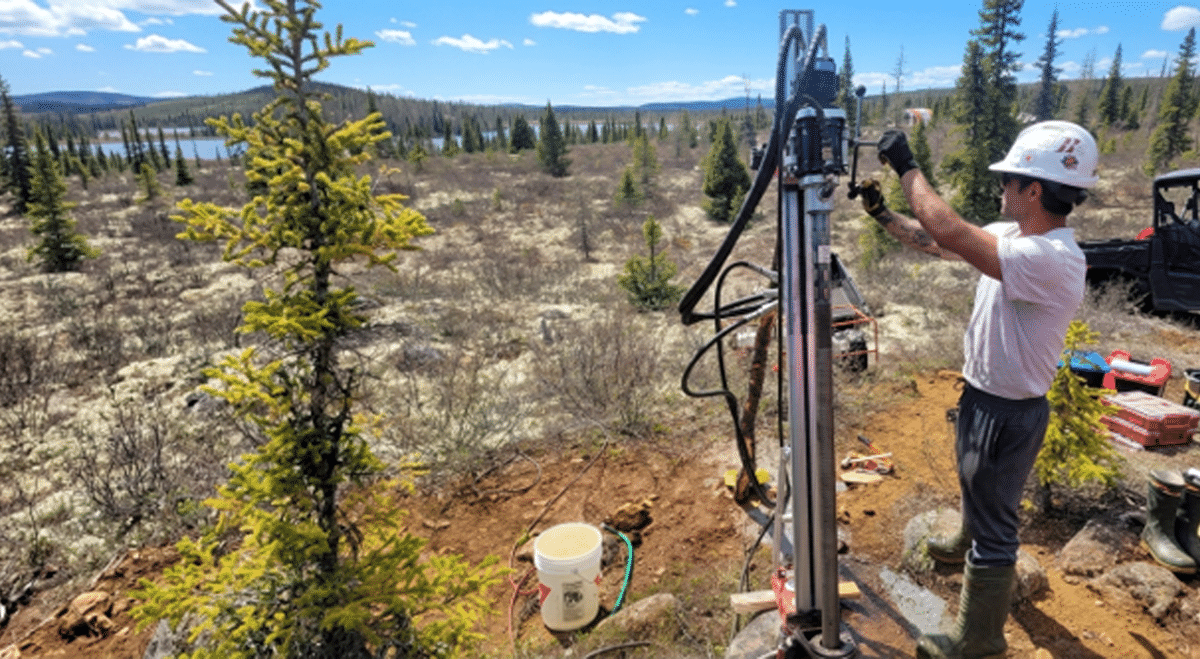
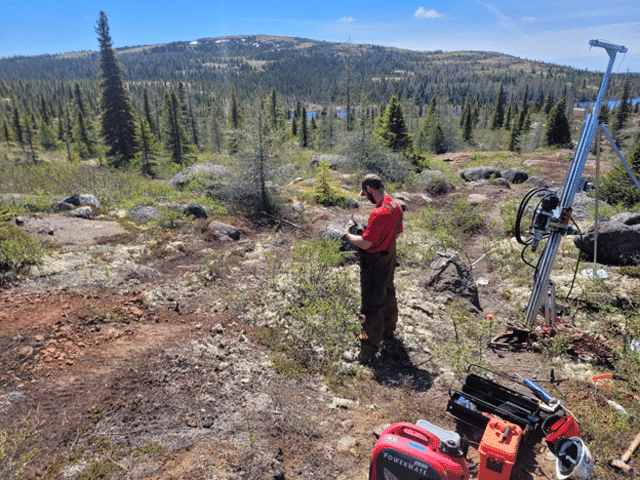
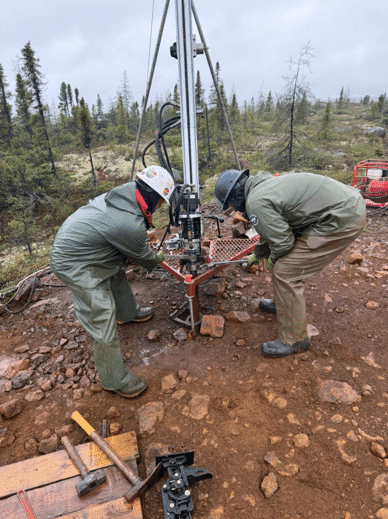
Viridian’s fully-funded 2026 drilling program at the Main Zone will complete 25 drillholes by November evaluating mineralization up to 50 m depth, more than doubling the average hole depth from the 2025 program. This illustrates that Viridian is keen to define the discovery’s scale in considerably greater detail.
The company’s strategyaims to delineate continuous mineralization aligned with the 5-km conductor that could form a viable near-surface starter pit. This will be done by infilling existing drillholes spaced up to 1 km apart, while testing potential extensions based on past exploration. Several existing drillholes have also yet to be thoroughly sampled, leaving room for mineralized growth within previously drilled intervals, reflecting the focus of past operators on zones greater than 1 per cent copper equivalent (CuEq).
Initial assays from the 2026 drilling program, expected over the coming weeks, include the extension of drillhole VKS25-024, which initially yielded 24.05 m at 0.77 per cent CuEq (0.21 per cent Cu, 0.30 per cent Ni, 0.04 per cent Co) from 1 m. The company notes that sulphides, a known indicator for copper and other critical metals, continue from the end of the original drillhole to about 51 m depth, further substantiating scale and mineral continuity.
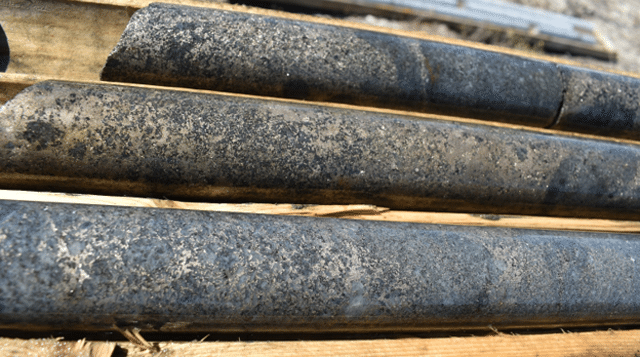
In this way, as drilling progresses and more core reaches the assay lab, Viridian is advancing Kraken towards a maiden NI 43-101 resource estimate, diligently increasing its understanding of what is shaping up to be a globally significant copper discovery. One whose shallowness and established scale position it to move rapidly up the development queue.
A high-conviction addition to North America’s critical minerals supply chain
As we discussed earlier, new copper discoveries are few and far between, with grades from operating mines on a long-term downtrend, making it increasingly difficult for governments to secure reliable supplies and reinforce domestic industries.
Looming copper shortages are particularly worrisome in North America. The United States imports more than half of what it consumes, predominantly from Chile, Canada and Peru, while more than half of Canada‘s copper export and import value ends up in the US. This calls on miners with vastly untapped projects to follow the data and spin their drills accordingly.
Viridian’s Kraken Project, and particularly its Main Zone, presents itself as a highly prospective part of the solution, offering a multi-kilometre target, near one of the world’s pre-eminent copper deposits, that may soon substantiate massive mineralized scale as 2026 drilling assays are plugged into the news flow.
Looking into 2027, the emerging resource stands to add further heft, as the company turns its attention to systematically exploring deeper, carrot-like zones to better define grades and metals distribution, further clarifying the Main Zone’s path to resource development and shareholder value creation.
Over the coming years, Viridian’s growth runway remains a high-conviction one, with more than 60 conductors at its disposal to potentially replicate Main Zone’s success across the broader Kraken system, five of which have been drill tested, yielding sulphides meriting follow-up exploration.
The company would only need to develop a handful of these conductors into ore zones to graduate Kraken from a single mine into a new mining district – potentially stabilized by cobalt and nickel-rich zones – whose scale would rival companies with market capitalizations valued in the billions.
Considering Viridian’s significant data-driven upside and only 55.6 million shares outstanding, it’s no surprise that its stock has more than doubled since inception in 2024, gradually gaining momentum as leadership diligently strengthens the company’s alignment with a supply-starved copper market.
That said, investors that open a position today have by no means missed the boat, given that they have the majority of Kraken’s mining lifecycle to look forward to, with each new drill result, the upcoming resource estimate and potential future economic studies, primed to usher the project’s global relevance further into the realm of common knowledge.
Sponsored Article: InvestorsHub.com Inc. dba The Market Link has been compensated SECURITIES: 2,620 shares valued at $1,100 by Viridian Metals (USOTC:VIRMF) for the publication and distribution of this content. This is not independent editorial content. For full compensation disclosure visit investorshub.advfn.com/boards/disclaimer.aspx