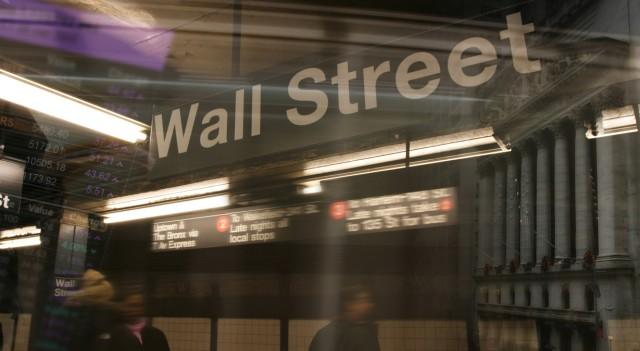
The major U.S. index futures are currently pointing to a higher open on Thursday, with stocks likely to regain ground after moving mostly lower over the two previous sessions.
Traders may look to pick up stocks at somewhat reduced levels following the pullback seen to start the week, which dragged the Dow down to its lowest closing level in almost a month.
The tech-heavy Nasdaq may benefit from a surge by shares of Apple (AAPL), with the tech giant jumping by 2.1 percent in premarket trading after Bank of America upgraded its rating on the company’s stock to Buy.
Buying interest may be somewhat subdued, however, as treasury yields have advanced following the release of a Labor Department report showing an unexpected decrease in first-time claims for U.S. unemployment benefits in the week ended January 13th.
The report said initial jobless claims fell to 187,000, a decrease of 16,000 from the previous week’s revised level of 203,000.
Economists had expected jobless claims to inch up to 207,000 from the 202,000 originally reported for the previous week.
With the unexpected decline, jobless claims dropped to their lowest level since hitting 182,000 in the week ended September 24, 2022.
After coming under pressure early in the session, stocks remained mostly lower throughout the trading day on Wednesday. The major averages added to the losses posted during Tuesday’s session, with the Dow falling to its lowest closing level in almost a month.
The major averages regained ground going into the close of trading but remained in negative territory. The Dow dipped 94.45 points or 0.3 percent to37,266.67, the Nasdaq slid 88.73 points or 0.6 percent to14,855.62 and the S&P 500 fell 26.77 points or 0.6 percent to 4,739.21.
The early weakness on Wall Street partly reflected ongoing uncertainty about the outlook for interest rates amid recent concerns the Federal Reserve won’t lower rates as early as previously anticipated.
Adding to worries the Fed will hold off on cutting rates, the Commerce Department released a report this morning showing U.S. retail sales increased by more than expected in the month of December.
The report said retail sales climbed by 0.6 percent in December after rising by 0.3 percent in November. Economists had expected retail sales to advance by 0.4 percent.
Excluding a jump in sales by motor vehicle and parts dealers, retail sales rose by 0.4 percent in December after inching up by 0.2 percent in November. Ex-auto sales were expected to edge up by another 0.2 percent.
“As long as the primary indicators of economic activity like personal spending and the labor market are showing no signs of weakness, the Fed will be comfortable extending its rate pause through the March FOMC decision at least,” said FHN Financial Macro Strategist Will Compernolle.
A separate report released by the Federal Reserve showed an unexpected uptick in U.S. industrial production in the month of December.
The Fed said industrial production inched up by 0.1 percent in December, while revised data showed production was unchanged in November.
Economists had expected industrial production to come in unchanged compared to the 0.2 percent increase originally reported for the previous month.
Airline stocks turned in some of the market’s worst performances on the day, resulting in a 3.2 percent nosedive by the NYSE Arca Airline Index. The index fell to its lowest closing level in well over a month.
Shares of Spirit Airlines (SAVE) plummeted after a federal judge blocked JetBlue’s (JBLU) proposed $3.8 billion acquisition of the discount airline.
Gold stocks also saw considerable weakness amid a decrease by the price of the precious metal, dragging the NYSE Arca Gold Bugs Index down by 2.3 percent.
Commercial real estate, telecom and utilities stocks also showed notable moves to the downside, moving lower along with most of the other major sectors.